Profile
Effa Manley
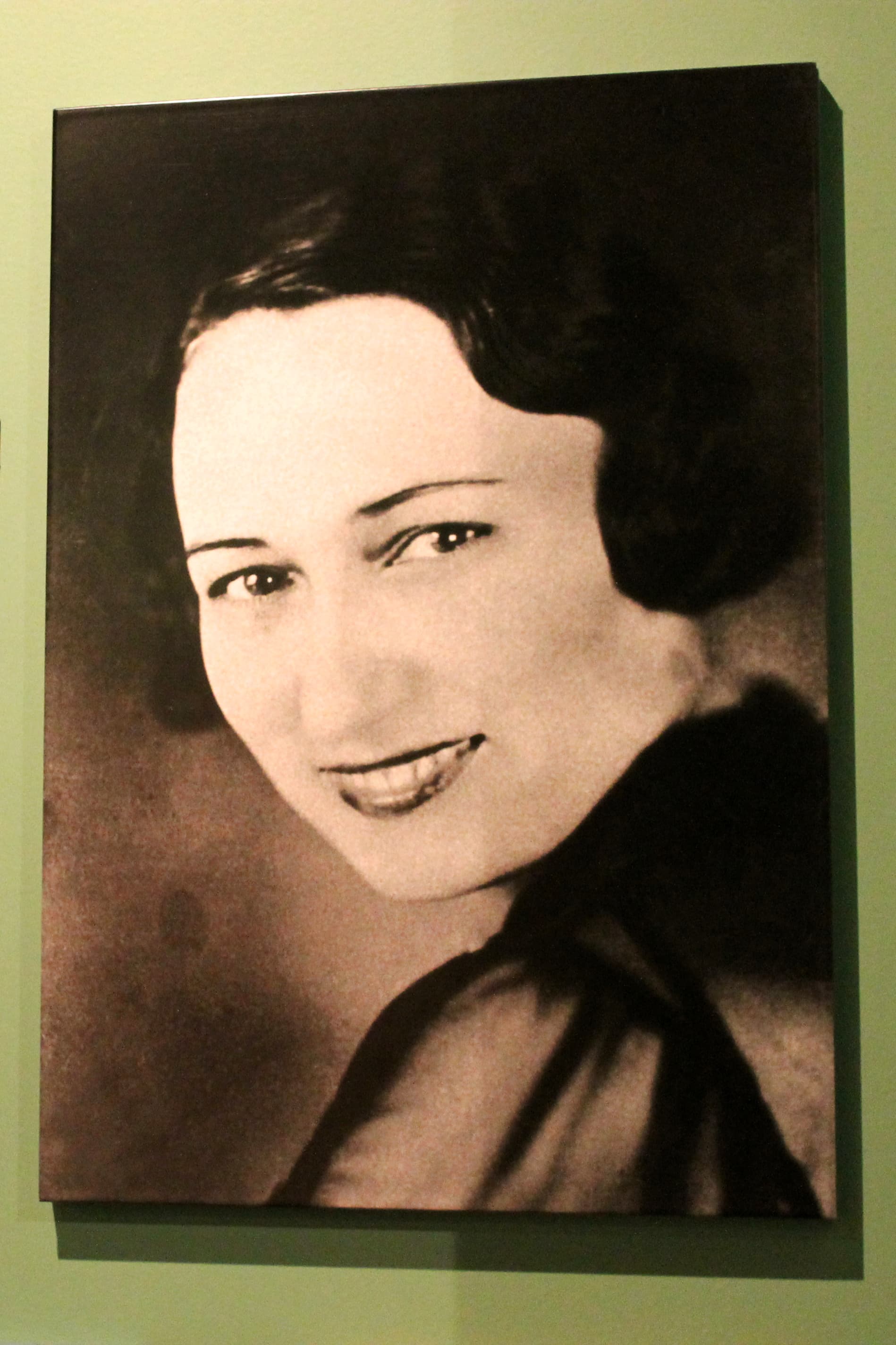
Effa Manley display photograph at the Baseball Hall of Fame.
Photo credit: EricEnfermero via Wikimedia Commons (CC BY-SA 4.0)
Effa Manley is the only woman inducted into the National Baseball Hall of Fame. The Hall's Special Committee on Negro Leagues selected her in 2006, twenty-five years after her death, recognizing a career as co-owner and business manager of the Newark Eagles that combined sharp baseball operations with relentless civil rights activism. Manley ran a franchise, fought for her players' fair treatment, and used her platform to challenge racial injustice at every opportunity. She did all of this in a world that gave her credit for none of it during her lifetime.
A Complicated Identity
Manley was born Effa Louise Brooks in Philadelphia. Her racial identity was complex and contested throughout her life. Her mother was white; her biological father was white. She was raised, however, by a black stepfather, grew up in a black community, and identified as a black woman. She attended school in black neighborhoods in Philadelphia and later in New York. Her light complexion allowed her to pass as white when it suited her purposes, and she sometimes used that ability strategically, attending whites-only events to gather information or make business contacts. But she lived her life within black America, married a black man, and devoted her professional energy to black institutions.
Building the Newark Eagles
In 1933, Effa married Abe Manley, a numbers runner from Camden, New Jersey, who had purchased the Brooklyn Eagles of the Negro National League. The couple moved the team to Newark in 1936 and renamed it the Newark Eagles. Abe provided the money. Effa ran the business.
She handled player contracts, negotiated scheduling, managed finances, arranged travel logistics, promoted games, and dealt with the press. She was a sophisticated negotiator who fought for better pay for her players and better conditions at their ballpark, Ruppert Stadium. She recruited talent aggressively. The 1946 Newark Eagles featured Larry Doby, Monte Irvin, Leon Day, and other future Hall of Famers. That team won the Negro World Series, beating the Kansas City Monarchs in seven games. It was the franchise's crowning achievement.
Civil Rights on the Grandstand
Manley saw the Eagles as more than a baseball team. She organized "Stop Lynching" days at the ballpark, coordinating with the NAACP to raise awareness and funds during games. She held Anti-Lynching Day promotions where fans received buttons and literature alongside their scorecards. She picketed stores on 125th Street in Harlem that refused to hire black workers and used the Eagles' public profile to draw attention to segregation in housing, employment, and public accommodations.
She fought publicly with major league teams over their raids on Negro Leagues rosters after Jackie Robinson's signing in 1945. When the Cleveland Indians signed Larry Doby from the Eagles in 1947, Manley demanded compensation and eventually received $15,000, one of the few payments a Negro Leagues team ever extracted from a major league club for its players. She argued, correctly, that integration as practiced by major league baseball was a one-way transaction that enriched white owners while destroying black-owned teams.
After the Eagles
The Negro Leagues collapsed in the late 1940s and early 1950s as integration drained their best talent and their fan base. The Eagles folded after the 1948 season. Abe died in 1952 in Pennsylvania. Effa later moved to Los Angeles. She lived another three decades, largely out of the public eye, and spent her later years advocating for greater recognition of the Negro Leagues and their contributions to baseball.
She wrote letters to the Hall of Fame, to sportswriters, and to anyone who would listen, insisting that the men and women who built black baseball deserved a permanent place in the sport's official history. She died on April 16, 1981, in Los Angeles, at age 84.
The Hall of Fame inducted her twenty-five years later. Her plaque hangs in Cooperstown alongside the players she managed, recruited, fought for, and refused to let the sport forget.