Era Overview
The Modern Era
1994–present
A strike cancelled the World Series, a home run chase brought fans back, steroids nearly broke the sport's credibility, and analytics remade how teams build rosters and play the game.
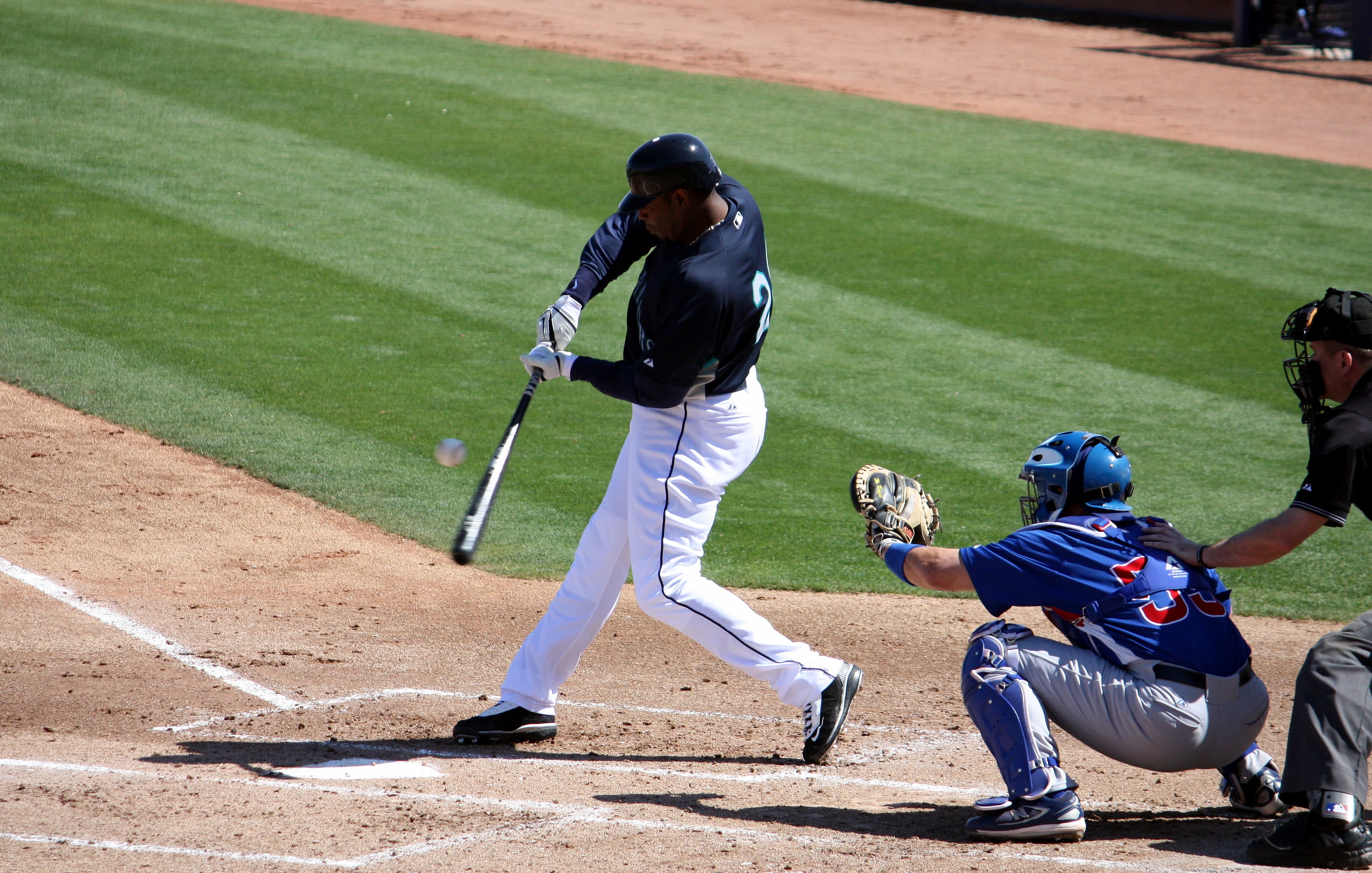
Ken Griffey Jr., spring training 2009. A defining superstar of baseball's modern era.
Photo credit: Turboball via Wikimedia Commons (CC BY-SA 3.0)
The Modern Era opened with the worst self-inflicted wound in baseball history and has spent three decades trying to recover. Since 1994, the sport has endured a canceled World Series, a steroid scandal that tainted a generation of records, a revolution in how teams evaluate players, and repeated attempts to speed up a game that younger audiences found too slow. Through all of it, the talent has been exceptional, the global pipeline has deepened, and the game on the field has changed more than in any comparable stretch since the dead-ball days.
The 1994 Strike
On August 12, 1994, major league players went on strike over the owners' demand for a salary cap. The strike wiped out the final 48 days of the regular season, the entire postseason, and the World Series. It was the first time since 1904 that no World Series was played. The Montreal Expos, who had the best record in baseball at 74-40 when play stopped, never recovered. The franchise limped through another decade of declining attendance and ownership neglect before relocating to Washington, D.C., in 2005 as the Nationals.
Fans were furious. Attendance dropped by nearly 20 million in 1995, and many stadiums stayed half-empty for years. Baseball needed something dramatic to win people back.
The Home Run Chase
It got Mark McGwire and Sammy Sosa. In 1998, both sluggers chased Roger Maris's single-season record of 61 home runs, and the country watched. McGwire hit number 62 on September 8 against the Cubs at Busch Stadium, with Maris's children in attendance. He finished with 70. Sosa hit 66. The race captivated casual fans who had ignored baseball since the strike, and attendance surged. Nobody asked hard questions about how two players had suddenly gotten so much bigger and stronger, even though a reporter had spotted a bottle of androstenedione in McGwire's locker during the season.
Three years later, Barry Bonds hit 73 home runs, breaking McGwire's record. Bonds had been a lean, supremely skilled player for the first decade of his career with the Pittsburgh Pirates and San Francisco Giants. By 2001, he was visibly larger and hitting the ball with a force that defied aging. He drew 232 intentional walks in 2004, a number so absurd that pitchers were willing to put the tying run on base rather than let him swing.
The Steroid Reckoning
The truth came out in stages. Ken Caminiti admitted to steroid use in a 2002 Sports Illustrated interview. Jose Canseco's 2005 book named names. Congressional hearings in March 2005 featured McGwire refusing to answer questions and Rafael Palmeiro wagging his finger at senators while insisting he had never used steroids. Palmeiro tested positive five months later.
The Mitchell Report, released in December 2007 after a 20-month investigation led by former senator George Mitchell, named 89 players linked to performance-enhancing drug use. Roger Clemens, Andy Pettitte, Miguel Tejada, and dozens of others appeared in its pages. Baseball implemented drug testing in 2004, and suspensions followed for players including Manny Ramirez, Alex Rodriguez, and Ryan Braun. The Hall of Fame became a referendum on the era. Bonds, Clemens, Sosa, and McGwire all spent years on the ballot without induction. Bonds and Clemens were denied entry entirely through the regular voting process.
Analytics and Moneyball
While the steroid debate consumed public attention, a quieter revolution remade front offices. The Oakland Athletics, operating with one of the smallest payrolls in baseball, used statistical analysis to identify undervalued players and won 20 consecutive games in 2002. Michael Lewis's 2003 book "Moneyball" documented Billy Beane's approach, and it spread rapidly. On-base percentage, which had been undervalued for decades, became a standard metric. Teams hired statisticians. Defensive shifts, where infielders repositioned based on spray charts, proliferated. By the 2010s, every major league front office had an analytics department, and decisions about lineups, pitching changes, and roster construction were driven by data as much as intuition.
The consequences reshaped play. Strikeouts rose steadily as hitters prioritized launch angle and exit velocity over contact. Defensive shifts suppressed batting averages for left-handed pull hitters. Bullpen usage changed dramatically, with starters throwing fewer innings and relievers becoming specialized by role and matchup. Complete games, which numbered in the hundreds annually through the 1990s, became rare events.
The International Pipeline
Latin American players had been part of the major leagues since the 1950s, but the Modern Era saw the pipeline widen into a flood. The Dominican Republic, Venezuela, Cuba, Japan, South Korea, and Taiwan all became significant sources of talent. Ichiro Suzuki arrived from Japan in 2001 and collected 262 hits, breaking a record that had stood since 1920. Pedro Martinez, from Manoguayabo in the Dominican Republic, posted a 1.74 ERA in 2000 while pitching in the peak of the steroid era, one of the most dominant seasons by any pitcher in baseball history. Mariano Rivera, from Panama, retired in 2013 as the greatest closer who ever lived, with 652 career saves and a postseason ERA of 0.70.
Rule Changes and the Pace of Play
Baseball spent the 2010s and 2020s trying to speed up. A pitch clock was tested in the minor leagues and implemented in the majors for the 2023 season, cutting average game times by roughly 30 minutes. Defensive shifts were restricted starting in 2023, requiring teams to keep two infielders on each side of second base. Larger bases were introduced to encourage stolen base attempts. These changes represented the most significant rule adjustments since the mound was lowered in 1969, and they produced immediate results. Stolen bases increased. Batting averages ticked upward. Games moved faster.
Replay review arrived in limited form in 2008 and expanded to cover most calls in 2014. Managers could challenge plays, and a replay center in New York adjudicated disputes. The system reduced obvious blown calls but introduced delays and debates about what constituted "clear and convincing evidence" to overturn a ruling.
Shohei Ohtani
The Modern Era's most singular player is Shohei Ohtani, who arrived from Japan's Nippon Professional Baseball in 2018 and did something no one had done since Babe Ruth. He pitched and hit at an elite level simultaneously. In 2023 with the Los Angeles Angels, Ohtani hit 44 home runs while posting a 3.14 ERA as a starting pitcher, winning the American League MVP award unanimously. He signed a 10-year, $700 million contract with the Los Angeles Dodgers after that season, the largest in professional sports history, and helped them win the 2024 World Series. Ohtani's two-way ability is a redefinition of what a single player can be, and no one in the sport's history has combined both skills at his level.
Related Articles
The Season That Stopped
On August 12, 1994, major league baseball players walked off the field. They didn't come back for 232 days. The World Series was cancelled for the first time since 1904, and the sport lost a generation of fans.
Continue Reading
The 1998 Home Run Chase Saved Baseball (and Then Destroyed It)
In the summer of 1998, Mark McGwire and Sammy Sosa chased Roger Maris's home run record. The chase revived a sport still recovering from the 1994 strike. Within a decade, nearly all of it was tainted by performance-enhancing drugs.
Continue Reading
The 2004 Red Sox and the Greatest Comeback in Postseason History
No team in MLB history had ever come back from a 3-0 deficit to win a best-of-seven series. The 2004 Red Sox did it against the Yankees, then swept the Cardinals to end the 86-year Curse of the Bambino.
Continue Reading
A Field Guide for Sorting, Valuing, and Selling Attic Baseball Finds
In 2012, two cousins found roughly 700 pristine 1910 baseball cards under a dollhouse in a Defiance, Ohio attic. The collection sold for around $3 million. Most attic finds produce nothing close to that, but a disciplined triage process can separate common keepsakes from items worth grading, authentication, or consignment.
Continue Reading
From Intellivision to MLB The Show
The first commercially successful baseball video game was Major League Baseball for the Mattel Intellivision in 1980. For many fans under 30, their first exposure to Hall of Famers came from selecting them in a video game roster.
Continue Reading
Bonds, McGwire, and the Summer of '98
Mark McGwire and Sammy Sosa chased Roger Maris in 1998 and saved baseball from the wreckage of the 1994 strike. Within a decade, the home runs that rescued the sport had become the evidence against it.
Continue Reading
Comiskey Park and Eighty Years on 35th Street
Built on a city dump for $750,000 and christened the Baseball Palace of the World, Comiskey Park stood at 35th and Shields for eighty seasons, hosting the first All-Star Game, the Black Sox scandal, and Disco Demolition Night before the wrecking ball arrived in 1991.
Continue Reading
The Curse of the Bambino
The Red Sox sold Babe Ruth to the Yankees in January 1920 and didn't win a World Series for the next 86 years. The drought produced so many near-misses, so many collapses in exactly the wrong moment, that it stopped looking like bad luck and started looking like something else.
Continue Reading
The Curse of the Colonel
In 1985, Hanshin Tigers fans threw a Colonel Sanders statue into a river in Osaka. The Tigers waited 38 years before winning another Japan Series.
Continue Reading
The Pitcher Who Wore Babe Ruth's Hat
David Wells smuggled a cap Babe Ruth had worn in 1934 onto the mound at Yankee Stadium. He pitched one inning in it before Joe Torre made him take it off. Less than a year later, he threw a perfect game on the same mound.
Continue Reading
The Death of the Complete Game
Complete games once defined ace pitching. Over the last century, bullpens, role specialization, and third-time-through data pushed the complete game from expectation to rarity.
Continue Reading
The Designated Hitter and the 50-Year War Between the Leagues
For 49 years, the AL and NL played by different rules. The designated hitter split the sport in 1973 and stayed a fault line until the universal DH arrived in 2022.
Continue Reading
Fernandomania Begins on Opening Day
Fernando Valenzuela's complete-game shutout on Opening Day 1981 launched Fernandomania and changed the relationship between the Dodgers and Los Angeles forever.
Continue Reading
Field of Dreams and the Selling of Baseball Nostalgia
Phil Alden Robinson's 1989 film grossed $84 million, was nominated for Best Picture, and turned a cornfield in Iowa into a permanent tourist destination. It is the film most responsible for the idea that baseball is more religion than sport.
Continue Reading
Game-Used Memorabilia and the MLB Authentication Standard
MLB's authentication program, launched in 2001, created a traceable chain-of-custody system that separated verifiable game-used items from the guesswork that had defined the market for decades.
Continue Reading
George Steinbrenner and the Business of Winning
Steinbrenner purchased the Yankees for $10 million in 1973. When he died in 2010, the franchise was worth over $1.6 billion. His legacy is contradictory, but no owner in modern baseball history matched his results.
Continue Reading
The History of Baseball Cards, from Tobacco Inserts to Modern Hobby Culture
Baseball cards began as photographic keepsakes in the 1860s, became marketing tools for tobacco companies, survived a monopoly in the gum era, and evolved into a collectibles market shaped by professional grading.
Continue Reading
"Homer at the Bat" and the Greatest Guest Cast in TV History
On February 20, 1992, The Simpsons aired an episode featuring nine real ballplayers voicing themselves. It was the first episode to beat The Cosby Show in the ratings and remains the most successful intersection of baseball and television comedy.
Continue Reading
How to Spot Fake Cards and Use Grading Without Getting Burned
The difference between a card in excellent condition and one in near mint can be tens of thousands of dollars. The grading industry exists because nobody trusts that call without a neutral third party.
Continue Reading
The Invisible Rectangle That Runs the Game
The strike zone has shifted for more than a century, but the core argument never changes: who controls the boundary between pitcher and hitter, the rulebook or the umpire?
Continue Reading
The Junk Wax Era Collapse and What It Taught Collectors
Between 1986 and 1993, the card industry produced more baseball cards than at any point in its history. Collectors bought boxes as investments. Supply buried every one of them.
Continue Reading
How Ken Burns's Baseball Framed the Game as National History
PBS's Baseball reached a mass audience in 1994 and shaped how many fans discuss race, labor, and mythology in the sport's long history.
Continue Reading
Kevin Costner's Baseball Trilogy
Kevin Costner appeared in three baseball movies across eleven years. In Bull Durham, baseball is work. In Field of Dreams, baseball is religion. In For Love of the Game, baseball is elegy.
Continue Reading
The Kingdome and the Season That Saved Seattle
The Kingdome was ugly from the day it opened. Then the 1995 Mariners, down 13 games in August, came all the way back, and the building that everyone wanted to demolish saved baseball in Seattle.
Continue Reading
Lost Ballparks and the Artifact Market
When Ebbets Field came down in 1960, pieces of the Dodgers' home scattered across the country. Seats, signs, bricks, and structural pieces from demolished ballparks now form a niche collectibles market where provenance is the central pricing driver.
Continue Reading
Mariano Rivera and One Pitch
Mariano Rivera built a Hall of Fame career on a cutter everyone knew was coming, then proved in October that predictability and dominance can live in the same inning.
Continue Reading
Minor League Baseball and the Players Nobody Pays
In 2019, a minor league player earning the typical salary of $1,100 per month took home approximately $5,500 before taxes for the entire season. Some qualified for food stamps. This was not an accident. It was a business model.
Continue Reading
Moneyball and the Data Revolution
A night-shift security guard in Kansas started writing about baseball statistics in the 1970s. Three decades later, a small-market general manager used those ideas to build a 103-win team on a third of the Yankees' payroll.
Continue Reading
Moneyball and the Movie That Made Spreadsheets Cool
Michael Lewis published Moneyball in 2003. Bennett Miller's film starred Brad Pitt as Billy Beane. Between them, the book and the movie made front-office decision-making interesting to people who didn't care about front-office decision-making.
Continue Reading
How Baseball's Revenue Sharing Works (and Why Small Markets Still Struggle)
Revenue sharing redistributes money from high-revenue teams to low-revenue teams. Whether it works depends on whom you ask and what your definition of competitive balance looks like.
Continue Reading
RFK Stadium and the Fans Who Stole the Final Game
On September 30, 1971, the Washington Senators led the Yankees 7-5 with two outs in the ninth. One out from a victory in their final game, several hundred fans stormed the field and stole everything they could carry.
Continue Reading
The Rise and Fall of the Montreal Expos
The Expos had the best record in baseball when the 1994 strike hit. They never recovered. Montreal has been without baseball since 2004.
Continue Reading
When Baseball Banned the Spitball (But Let 17 Pitchers Keep Throwing It)
MLB outlawed the spitball and other doctored pitches in 1920, then grandfathered 17 established pitchers, creating a contradiction that shaped pitcher enforcement for decades.
Continue Reading
The T206 Honus Wagner and the High-End Card Market
The T206 Wagner sits at the center of card-collecting mythology because authentic examples are scarce, historically loaded, and constantly scrutinized.
Continue Reading
104 Years of Baseball at Michigan and Trumbull
From a wooden grandstand built on a former hay market in 1896 to Robert Fick's rooftop grand slam in 1999, the corner of Michigan and Trumbull hosted professional baseball longer than any other site in America.
Continue Reading
Veterans Stadium and the Jail in the Basement
Veterans Stadium installed a courtroom and holding cell in the basement, staffed by a municipal judge during games, to process fans arrested for fighting. The jail became the stadium's most famous feature.
Continue Reading
Why the Pitcher Stands 60 Feet, 6 Inches Away
Baseball tried multiple pitching distances before settling on 60 feet, 6 inches in 1893, a rules change that restored offense and has endured for more than a century.
Continue Reading
The Year of the Pitcher and the Mound That Came Down
1968 pushed pitching dominance to the edge, and MLB responded by lowering the mound and shrinking the strike zone for 1969 to restore offense.
Continue Reading