The Death of the Complete Game
Complete games once defined ace pitching. Over the last century, bullpens, role specialization, and third-time-through data pushed the complete game from expectation to rarity.
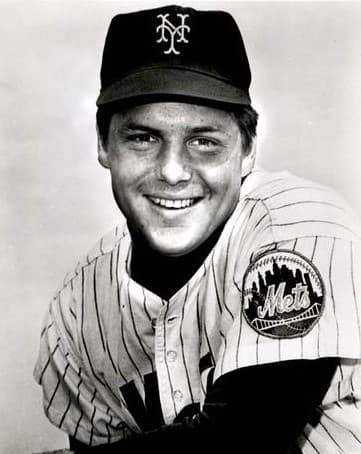
Tom Seaver with the New York Mets, circa 1971.
Photo credit: New York Mets via Wikimedia Commons (Public domain)
In the early 1900s, complete games were routine. In modern baseball, they are rare enough that league leaders often finish with only two or three. No shift captures the sport's strategic evolution more clearly.
When Pitchers Finished What They Started
In the early decades of professional baseball, the complete game was an expectation. Rosters were small. Bullpens barely existed. A starting pitcher took the mound with the understanding that he would pitch until the game was over, unless he was getting hit so hard that leaving was the only option.
Cy Young, the pitcher for whom the sport's most prestigious pitching award is named, completed 749 games in his career, a record so far beyond anything in the modern game that it will never be approached. Young pitched from 1890 to 1911, an era when there was simply no alternative. You finished the game or you lost it.
Through the 1900s and 1910s, complete games stayed central to pitcher value. Even as rosters grew and teams began carrying more pitchers, the expectation remained that the starter would go the distance. In 1904, Jack Chesbro of the New York Highlanders started 51 games and completed 48.
The Slow Decline
The decline began in the 1920s. As the live ball era produced more offense and games became higher-scoring, pitchers tired faster and managers reached for help more often. The complete game percentage dropped to about 50 percent in the 1920s and into the 40s in the 1930s and 1940s.
The concept of the relief pitcher emerged during this period, though it was nothing like what exists today. A "reliever" in the 1920s or 1930s was usually a starter between starts or an older pitcher nearing the end of his career. Firpo Marberry of the Washington Senators is often credited as one of the first pitchers used primarily in relief, appearing in 50 or more games out of the bullpen in the mid-1920s. But the idea of a bullpen as a structured unit with defined roles was decades away.
Through the 1950s and 1960s, the complete game percentage continued to fall, dropping into the low 30s and then the mid-20s. Managers began to understand that pitchers lost effectiveness as their pitch counts climbed, even if the terminology of "pitch counts" didn't exist yet. Teams carried more pitchers. Relief specialists began to emerge.
The Closer Changes Everything
The modern decline accelerated in the 1970s and 1980s with the rise of the closer. The idea of a dominant pitcher whose sole job was to protect a lead in the ninth inning transformed bullpen strategy entirely. Sparky Anderson's use of relievers with the Cincinnati Reds in the 1970s, Tony La Russa's deployment of Dennis Eckersley as a one-inning closer with the Oakland Athletics in the late 1980s, and the emergence of Mariano Rivera with the Yankees in the late 1990s all pushed the game further from the complete game model.
By the 1980s, the complete game percentage had fallen below 16 percent. By the 1990s, it was under 8 percent. By the 2000s, it was below 5 percent. The decline was relentless and accelerating.
The Analytics Era
The final blow came from data. As front offices began applying statistical analysis to every aspect of the game, one finding kept recurring. Starting pitchers get worse the third time through the batting order. Hitters who had seen a pitcher twice in a game adjusted. The data showed that even good starters gave up significantly more hard contact on their third pass through the lineup. Managers responded by pulling starters earlier.
At the same time, organizations began investing in their bullpens as never before. Where a team in the 1970s might carry nine or ten pitchers, modern rosters carry thirteen. Bullpens have setup men, middle relievers, left-handed specialists, and closers. The labor is divided into smaller and smaller pieces.
The pitch count became the governing metric. Once a starter reached 100 pitches, regardless of how well he was throwing, the leash tightened. Some managers pulled pitchers at 90. The idea that a starting pitcher should throw 130 or 140 pitches in a game, something that was routine in the 1970s, became unthinkable.
In the current game, the league leader board itself tells the story. Each season, only a small handful of pitchers record multiple complete games. That is a collapse from the era when elite starters were expected to finish almost every outing.
What Was Lost
The complete game carried a romantic weight that no other statistic in baseball could match. A pitcher who went the distance had done something elemental. He had stood on the mound in the first inning and was still standing there in the ninth. He had faced every challenge the other team could throw at him and had outlasted all of it.
That is mostly gone now. What replaced it is a more efficient, more scientific, arguably more effective approach to pitching. Modern bullpens are weapons. The 2015 Kansas City Royals rode their bullpen to the World Series. The 2019 Washington Nationals won a championship with a bullpen that had been terrible all season but caught fire in October. The game has adapted.
But the adaptation came at a cost. Nobody makes a movie about a reliever pitching two innings. The complete game was baseball's version of a solo performance, one man against the world for nine innings, and when it disappeared, something irreplaceable went with it.
Sources
- Baseball-Reference - Career leaders for complete games
- Baseball-Reference - Yearly leaders and records for complete games
- Baseball-Reference - 1904 Major League standard pitching
- MLB Glossary - Third time through the order penalty
- FanGraphs Library - The beginner's guide to pulling a starting pitcher
- SABR - Effect of Relief Pitching
- SABR - Relief Pitching Strategy, Past, Present, and Future