Era Overview
The Statcast Era
2015–present
MLB-wide tracking systems turned movement, contact quality, and defensive range into measurable inputs for coaching, scouting, and game strategy.
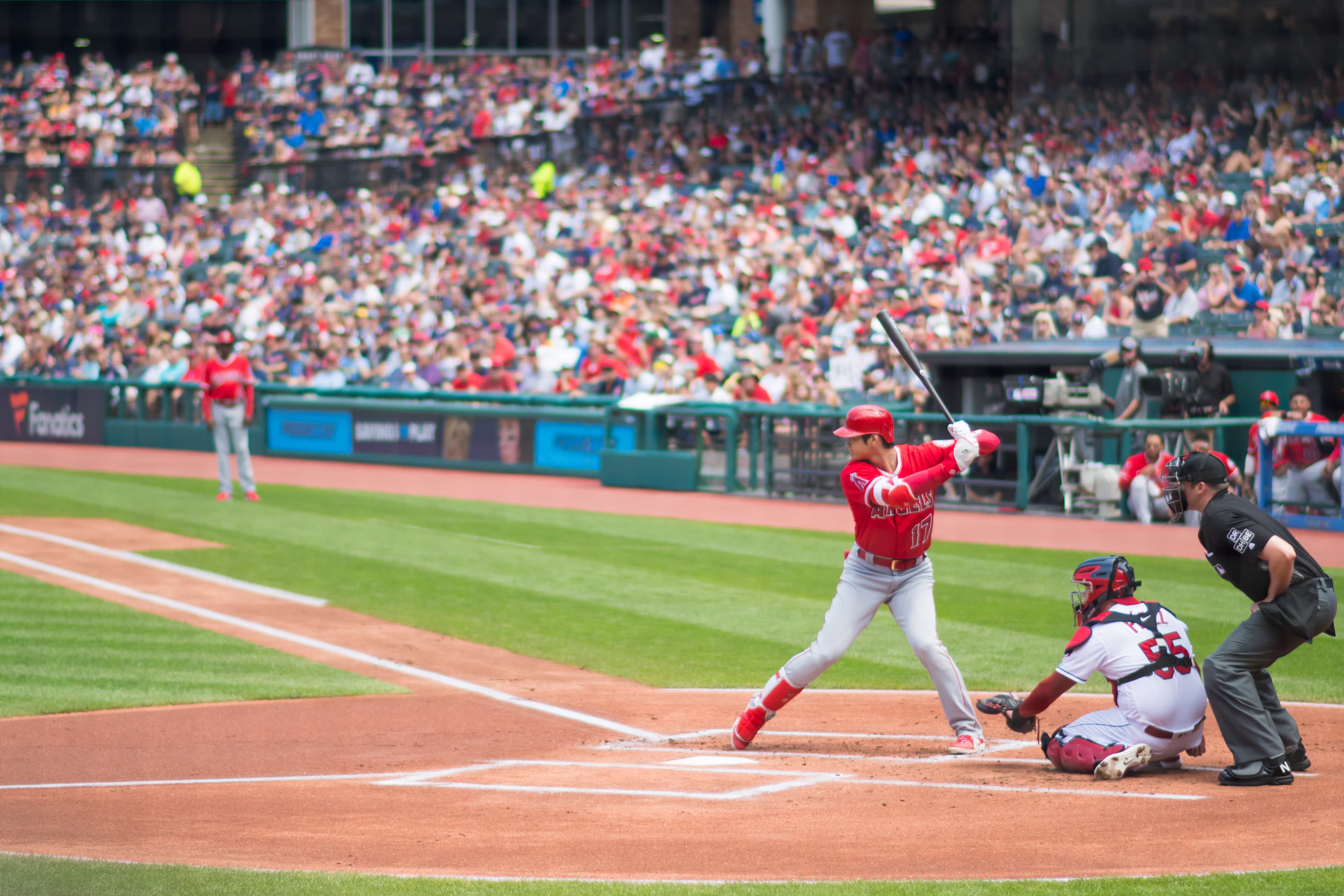
Shohei Ohtani, 2018. Two-way stardom defines the Statcast era.
Photo credit: Erik Drost via Wikimedia Commons (CC BY 2.0)
Statcast became fully available across Major League Baseball in 2015 and changed what teams could know about every play. Instead of relying on outcomes alone, clubs could now measure how those outcomes happened, including exit velocity, launch angle, sprint speed, route efficiency, arm strength, and pitch movement at scale.
Better Inputs, Not Just Better Box Scores
Traditional stats still matter, but Statcast added context that old box scores could not provide. A .250 hitter with elite contact quality might be a breakout candidate. A pitcher with average ERA but excellent expected metrics might be worth betting on. Teams gained a better way to separate skill from short-term variance.
Player Development Rewired
Coaches began building training plans around measurable traits. Hitters worked on bat path and attack angle. Pitchers optimized shapes, seam orientation, and release characteristics. Organizations also improved defensive positioning and route training by measuring first steps, jump quality, and closing speed.
Front Office and Broadcast Impact
The Statcast era changed more than coaching. Front offices integrated tracking models into roster decisions, and broadcasts brought fans into the data conversation with expected stats and batted-ball profiles in real time. The game is still baseball, but the language around it now includes measurements that didn't exist in public discussion a decade earlier.
Related Articles
42 and the Jackie Robinson Movie That Took 66 Years
Jackie Robinson broke baseball's color line in 1947. Hollywood did not make a major theatrical film about it until 2013. The gap tells its own story.
Continue Reading
From Intellivision to MLB The Show
The first commercially successful baseball video game was Major League Baseball for the Mattel Intellivision in 1980. For many fans under 30, their first exposure to Hall of Famers came from selecting them in a video game roster.
Continue Reading
The Curse of the Colonel
In 1985, Hanshin Tigers fans threw a Colonel Sanders statue into a river in Osaka. The Tigers waited 38 years before winning another Japan Series.
Continue Reading
The Death of the Complete Game
Complete games once defined ace pitching. Over the last century, bullpens, role specialization, and third-time-through data pushed the complete game from expectation to rarity.
Continue Reading
Game-Used Memorabilia and the MLB Authentication Standard
MLB's authentication program, launched in 2001, created a traceable chain-of-custody system that separated verifiable game-used items from the guesswork that had defined the market for decades.
Continue Reading
The Invisible Rectangle That Runs the Game
The strike zone has shifted for more than a century, but the core argument never changes: who controls the boundary between pitcher and hitter, the rulebook or the umpire?
Continue Reading
Baseball's Dirty Secret Comes From a Hole in the Ground
Every Major League baseball is rubbed with mud harvested from one secret New Jersey location, a supply chain that has lasted for generations.
Continue Reading
Minor League Baseball and the Players Nobody Pays
In 2019, a minor league player earning the typical salary of $1,100 per month took home approximately $5,500 before taxes for the entire season. Some qualified for food stamps. This was not an accident. It was a business model.
Continue Reading
Moneyball and the Data Revolution
A night-shift security guard in Kansas started writing about baseball statistics in the 1970s. Three decades later, a small-market general manager used those ideas to build a 103-win team on a third of the Yankees' payroll.
Continue Reading
How Baseball's Revenue Sharing Works (and Why Small Markets Still Struggle)
Revenue sharing redistributes money from high-revenue teams to low-revenue teams. Whether it works depends on whom you ask and what your definition of competitive balance looks like.
Continue Reading
Shohei Ohtani and the Player Who Shouldn't Exist
For a century, baseball operated on a simple principle. Pitchers pitch. Hitters hit. Shohei Ohtani does both at the highest level simultaneously, something nobody has done since Babe Ruth gave up pitching after 1919.
Continue Reading