Profile
Mariano Rivera
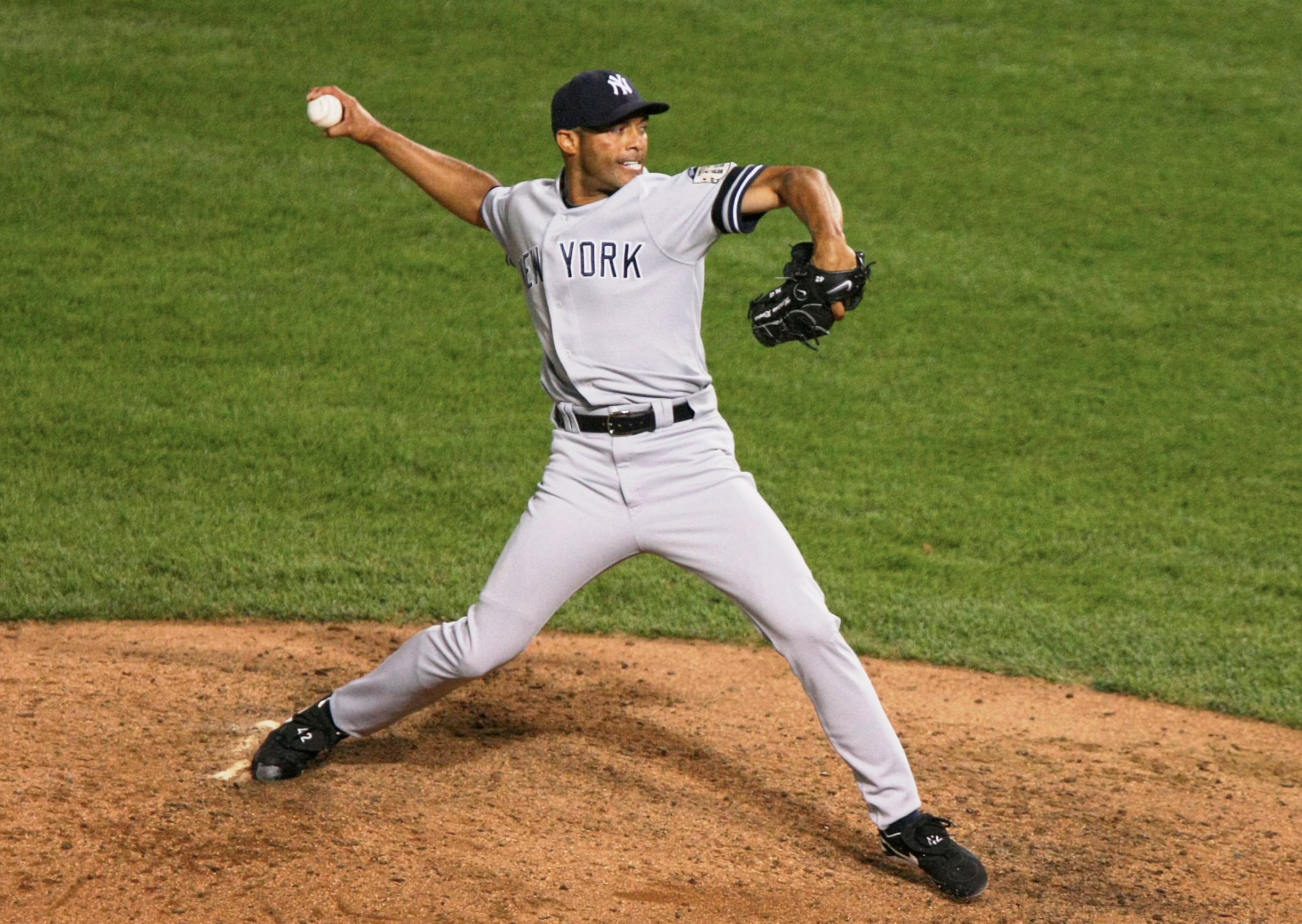
Mariano Rivera pitching for the Yankees in Baltimore, 2008.
Photo credit: Keith Allison via Wikimedia Commons (CC BY-SA 2.0)
Mariano Rivera threw one pitch better than anyone else has ever thrown any pitch. His cut fastball broke bats, broke up rallies, and broke the will of left-handed hitters for nineteen seasons. He retired with 652 saves, the most in baseball history, and a career ERA of 2.21 that dropped even lower in the postseason. In 2019, he became the first player elected to the Hall of Fame by a unanimous vote, all 425 ballots. No one who watched him pitch found the margin surprising.
From Panama to the Bronx
Rivera grew up in Puerto Caimito, a small fishing village on the Pacific coast of Panama. His family was poor. He played baseball with a cardboard glove and balls made from tape wrapped around rocks. The Yankees signed him as an amateur free agent in 1990 for $2,000, and he spent five years in the minor leagues, pitching without distinction. His fastball sat in the upper 80s. He was a long shot.
In 1995, the Yankees promoted Rivera as a starter, and he struggled. Then something changed. His fastball jumped to 95-96 mph, and the movement tightened into a late, sharp cut that jammed hitters on their hands. Manager Joe Torre moved him to the bullpen in 1996 as a setup man for closer John Wetteland, and Rivera posted a 2.09 ERA in 107 and two-thirds innings. The Yankees won the World Series. Wetteland left via free agency. Rivera became the closer.
The Cutter
Rivera's cutter didn't behave like other pitches. It moved late, sometimes very late, with a hard horizontal break that shattered bats and jammed hitters inside. Left-handed batters found it nearly impossible to hit. They knew it was coming and could not adjust. Rivera threw the cutter roughly 90% of the time. Everyone in the stadium knew what was coming. It didn't help them.
He led the American League in saves three times. He recorded 30 or more saves in fifteen seasons. His WHIP of 1.000 is the lowest of any reliever in history. He allowed earned runs so infrequently that when he did, it felt like a malfunction.
October
Rivera's regular-season numbers were historic. His postseason numbers were absurd. In 96 career playoff appearances, he posted a 0.70 ERA. That number is real. Over 141 postseason innings, he allowed 11 earned runs. He converted 42 of 47 save opportunities. He won five World Series rings with the Yankees, serving as the final piece of championships in 1996, 1998, 1999, 2000, and 2009.
His most famous failure came in the 2001 World Series, Game 7, when the Arizona Diamondbacks rallied for two runs in the bottom of the ninth inning to win the championship. Luis Gonzalez blooped a single over a drawn-in Derek Jeter to score the winning run. It was the only walk-off loss Rivera allowed in a save situation during the postseason. The anomaly reinforced the norm.
Enter Sandman
Every Rivera save began the same way. Metallica's "Enter Sandman" blared over the Yankee Stadium speakers as Rivera jogged in from the bullpen. The entrance became a ritual, one of the most recognizable in American sports. Opposing fans dreaded the song because it meant the game was over. Yankee fans stood and roared. The walk from the bullpen to the mound took about thirty seconds. The at-bats that followed rarely lasted much longer.
The Final Season
Rivera announced that 2013 would be his last year, and every American League city gave him a farewell tribute. At Yankee Stadium on September 26, 2013, Derek Jeter and Andy Pettitte walked to the mound in the ninth inning to remove Rivera from a game for the final time. Rivera, who had maintained stoic composure for nineteen years, broke down and wept on Pettitte's shoulder.
He finished with 652 saves, a 2.21 ERA, and a career WAR that ranked among the highest for any reliever in history. The unanimous Hall of Fame vote in 2019 confirmed what every hitter who faced the cutter already knew. There was no one like him, and there will not be again.