Profile
Minnie Minoso
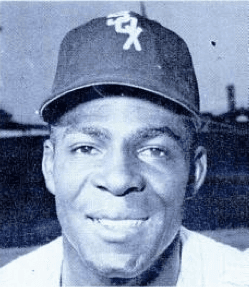
Minnie Miñoso portrait, 1953.
Photo credit: Boston Public Library / New York Journal-American via Wikimedia Commons (Public domain)
Saturnino Orestes Armas Minoso Arrieta was the first black Latino star in American League history, a seven-time All-Star, a three-time Gold Glove winner, and a player who appeared in major league games across five decades. He was also, for most of his career, overlooked by the same institutions that celebrated his white and African American contemporaries. Minoso's exclusion from the Hall of Fame during his lifetime became one of baseball's most persistent injustices, a wrong that was partially corrected only after his death.
Cuba to the South Side
Minoso was born in Perico, in the Matanzas province of Cuba, and played in the Cuban professional leagues before signing with the Cleveland Indians' organization in 1948. He debuted with Cleveland in 1949, appearing in nine games, then was traded to the Chicago White Sox in a three-team deal on April 30, 1951. The trade changed everything. In his first at-bat as a White Sox player, he hit a home run off Vic Raschi of the New York Yankees. He finished 1951 hitting .326 with 10 home runs, 76 RBI, and a league-leading 14 triples, finishing second in the Rookie of the Year voting behind Gil McDougald.
Minoso became the face of the White Sox during the 1950s. He led the American League in triples three times, in stolen bases three times, and in hit-by-pitches a remarkable ten times, a career total of 192 that reflected both his crowding of the plate and his refusal to back down from inside pitches. He hit .300 or better in eight seasons and drove in 100 or more runs four times.
Playing in the Shadows
Minoso was a contemporary of Willie Mays, Mickey Mantle, and Hank Aaron, and he produced at a level that belonged in their company during his peak years. Between 1951 and 1961, he posted an OPS+ of 133, won three Gold Gloves in left field, and was one of the most exciting players in the American League. But he played for a White Sox team that won only one pennant during his tenure (the 1959 Go-Go Sox, who lost the World Series to the Dodgers), and he played in a city whose baseball attention was split between two teams. The national media gave him less coverage than his performance deserved.
He also navigated the racism that all black and Latino players faced during the integration era, and he did so as someone who occupied an intersection the sport had not previously encountered. He was both black and Cuban, subject to Jim Crow laws in American cities and to suspicion about his age and background that white players never faced. His birth year has been listed variously as 1922, 1923, and 1925 in different sources, a discrepancy that opponents of his Hall of Fame candidacy occasionally used against him.
Five Decades
Minoso's final years in the majors became a deliberate pursuit of a record. He played his prime seasons from 1951 through 1964, then returned for three games with the White Sox in 1976 at age 50 (or 53, depending on which birth year you accept) and two at-bats in 1980 at age 54 (or 57). The 1976 and 1980 appearances were promotional stunts arranged by White Sox owner Bill Veeck, who loved Minoso and understood the symbolic value of a player spanning five decades. Minoso singled in one of his 1976 at-bats, making him the oldest player to record a hit in the American League at that time.
The five-decade distinction was both celebrated and used to diminish him. Critics argued that the late appearances were gimmicks that cheapened his record. Supporters argued that the gimmicks were irrelevant to the 1,963 hits, the .298 career average, and the 186 home runs he compiled during his actual playing career.
The Hall of Fame Question
The Veterans Committee and various Era Committees considered Minoso multiple times and rejected him each time during his lifetime. He died on March 1, 2015, in Chicago, at age 89. In December 2021, the Golden Days Era Committee voted him into the Hall of Fame, and the Hall inducted him posthumously in the class of 2022.
The belated recognition pleased his family and his advocates but could not undo the decades of exclusion. Minoso had campaigned for his own induction openly and without embarrassment, attending committee meetings and making his case to anyone who would listen. He deserved to walk into Cooperstown on his own legs, and the sport didn't give him that chance. The plaque is there now. The timing remains a stain.