The 1869 Cincinnati Red Stockings, Baseball's First Fully Professional Team
When Cincinnati paid every player on its roster in 1869, baseball crossed from club recreation into a professional entertainment business.
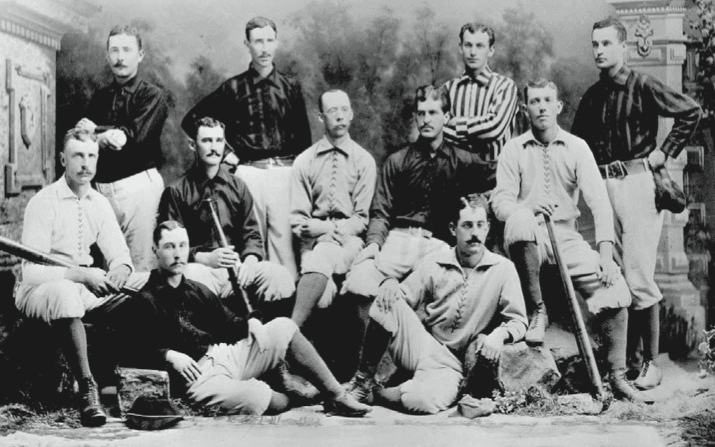
1882 Cincinnati Red Stockings team photograph, including Bid McPhee, Pop Snyder, and Will White.
Photo credit: Unknown author via Wikimedia Commons (Public domain)
Paid play existed in baseball before 1869. Some clubs quietly compensated players through jobs, stipends, or travel arrangements. The Cincinnati Red Stockings made payment explicit, public, and central to roster construction. Every player drew a salary. No one pretended otherwise.
That decision changed the game's economics permanently.
Harry Wright's Operation
Harry Wright managed the club and organized its operations. Born in England in 1835, Wright had played cricket before turning to baseball, and he brought an organizer's instinct to both the field and the front office. He handled tactics, roster discipline, scheduling, travel logistics, and the public presentation of the team.
Wright understood that professionalism required more than a payroll. It required predictable performance. The Red Stockings gave fans competent fielding, organized play, and a recognizable standard of quality wherever the team appeared. That reliability helped convert baseball from a one-off curiosity into a repeat purchase.
His brother George Wright, the team's shortstop, was the highest-paid player on the roster and its best talent. George earned $1,400 for the season, the top salary on a total club payroll of roughly $9,300. Both brothers were later inducted into the Baseball Hall of Fame.
The Undefeated Tour
The 1869 Red Stockings played roughly 57 games without a loss, traveling an estimated 12,000 miles by rail, steamboat, and stagecoach from the East Coast to California. The tour functioned as a traveling demonstration of what professional baseball could look like.
On August 26, 1869, Cincinnati played the Haymakers of Troy, New York, to a tie in a game whose ending remains disputed, but the Red Stockings went through the entire season without a defeat.
The message carried. If one club could recruit elite talent, put it on salary, and then monetize the product through gate receipts and travel, other cities had to follow or fall behind. That competitive pressure accelerated professional adoption far faster than policy discussions alone could have managed.
The First Loss and the Aftermath
The unbeaten streak ended on June 14, 1870, when the Brooklyn Atlantics defeated Cincinnati 8-7 in extra innings. The Red Stockings had won somewhere between 81 and 130 consecutive games depending on which counting method is used, but the loss was decisive. Attendance and financial support declined through the rest of the 1870 season, and the club disbanded at the end of the year.
The franchise did not survive, but the model did. Harry Wright moved to Boston and helped organize the Boston Red Stockings, who became one of the foundational clubs of professional league baseball. The National Association of Professional Base Ball Players formed in 1871, and the National League followed in 1876.
Labor and Leverage
Open salaries created a new relationship. Players became workers whose performance had direct market value. Clubs became employers balancing payroll against gate revenue and travel costs. That dynamic introduced tensions baseball still navigates, including disputes over reserve clauses, salary structures, free agency, and ownership coordination.
The 1869 Red Stockings did not just launch professional entertainment. They launched professional labor relations in baseball, a conflict that would shape the sport for the next 150 years.
The Franchise Connection
The current Cincinnati Reds trace their organizational history to 1882, when a new Cincinnati club began play in the American Association. There is no direct organizational lineage between the 1869 Red Stockings and today's franchise. The name and the city connect them. The business structure does not.
But every modern franchise operates inside the framework the Red Stockings proved viable in 1869. Players can be compensated as full-time professionals. Teams can function as commercial organizations. And a national audience can be converted into recurring baseball revenue. That architecture started in Cincinnati.