Abner Doubleday Didn't Invent Baseball
The Doubleday creation myth was manufactured by a commission with a predetermined conclusion, built on a single uncorroborated letter, and debunked within years. Baseball was not invented. It evolved.
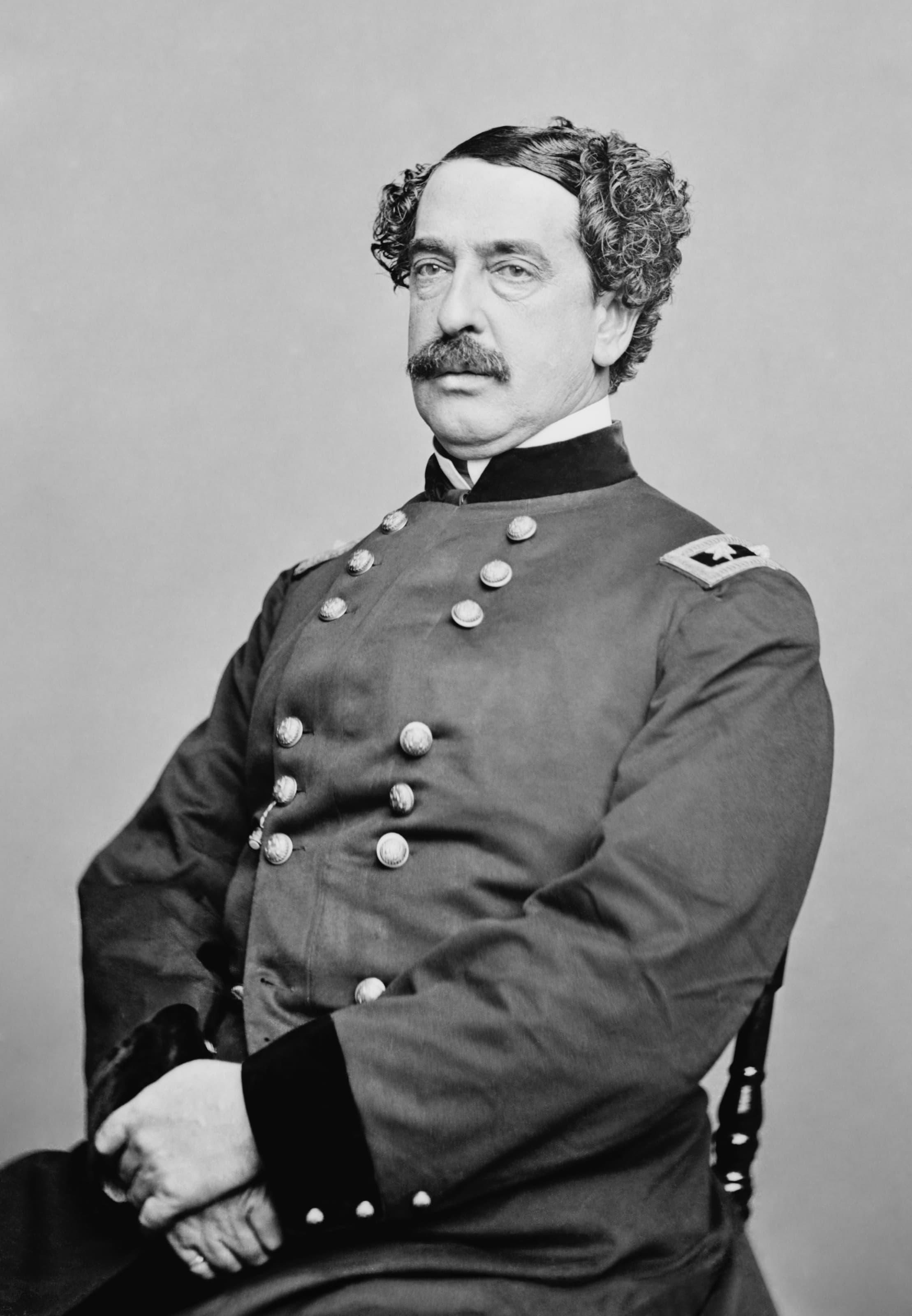
Abner Doubleday portrait photograph.
Photo credit: Mathew Brady Studio (attributed) via Wikimedia Commons (Public domain)
There is a story that baseball was invented by a young man named Abner Doubleday in Cooperstown, New York, in 1839. Doubleday supposedly drew a diamond in the dirt of Elihu Phinney's cow pasture, wrote down the rules, and gave birth to America's national game. The story is false. It has been false since the day it was first told. And it persists anyway, because Americans wanted a creation myth more than they wanted the truth.
The myth was manufactured. In 1905, Albert Spalding, the sporting goods magnate and former player, organized a commission to determine the origins of baseball. Spalding had a stake in the answer. He wanted baseball to be an American invention, not an adaptation of the English game of rounders. The commission, chaired by Abraham G. Mills, the fourth president of the National League, was staffed with Spalding's allies and given a predetermined conclusion to reach.
The key evidence came from a single letter. Abner Graves, a mining engineer in Denver, wrote to the commission claiming he had been present in Cooperstown in 1839 when Doubleday organized the first baseball game. Graves was 71 years old when he wrote the letter. He provided no documentation, no corroboration, and no physical evidence. The commission accepted his account without verification.
On December 30, 1907, the Mills Commission issued its final report, declaring that "the first scheme for playing baseball, according to the best evidence obtainable to date, was devised by Abner Doubleday at Cooperstown, New York, in 1839."
The problems with this conclusion were immediately obvious. Doubleday was at West Point in 1839, not in Cooperstown. His personal papers, which survive in extensive detail, contain no mention of baseball. His obituaries, published after his death in 1893, make no reference to the game. Doubleday himself never claimed to have invented baseball. He was a Union general during the Civil War who fired one of the first shots at Fort Sumter. He was a real and notable person. He simply had nothing to do with the game.
Graves, the sole witness, was later committed to a psychiatric institution after murdering his wife. He died in the Colorado State Insane Asylum in 1926.
Henry Chadwick, the English-born journalist considered the father of baseball statistics, had been arguing for years before the commission that baseball evolved from rounders. He was right. The game developed gradually, from English bat-and-ball games brought to America by immigrants, played in various forms under various names throughout the 18th and 19th centuries. No single person invented it.
The Knickerbocker Base Ball Club of New York, which adopted written rules on September 23, 1845, is the closest thing to a founding moment. Alexander Cartwright, a member of the Knickerbockers, was long credited with formalizing the rules, though SABR research has complicated his role as well. John Thorn, MLB's official historian, has described even the Cartwright narrative as partly mythologized.
As Chadwick put it in 1904, a year before the Mills Commission was formed, "Like Topsy, baseball never had no 'fadder'; it jest growed."
The Baseball Hall of Fame was built in Cooperstown in 1939 specifically because of the Doubleday myth. The town, the museum, and the annual induction ceremony all rest on a foundation of fiction. The Hall of Fame's own exhibits now acknowledge the myth's flaws, but the institution isn't going to relocate. The myth is too deeply embedded in the national imagination.
Tim Arango of the New York Times described the Doubleday story as having "taken a position in the pantheon of great American myths, alongside George Washington's cherry tree, Paul Bunyan and Johnny Appleseed." Harold Peterson, Cartwright's biographer, called it "amusingly fraudulent" while noting its "obstinate durability."
Baseball was not invented. It evolved. It was shaped by dozens of people across decades, in fields and lots and open spaces across the eastern seaboard. The search for a single inventor says more about America's need for origin stories than it does about the game itself.