Pittsfield, 1791, and an Early U.S. Use of the Word "Baseball"
A Massachusetts bylaw from September 5, 1791 records one of the clearest early U.S. uses of the exact word 'baseball' in civic law, and it helps define the game's documentary timeline.
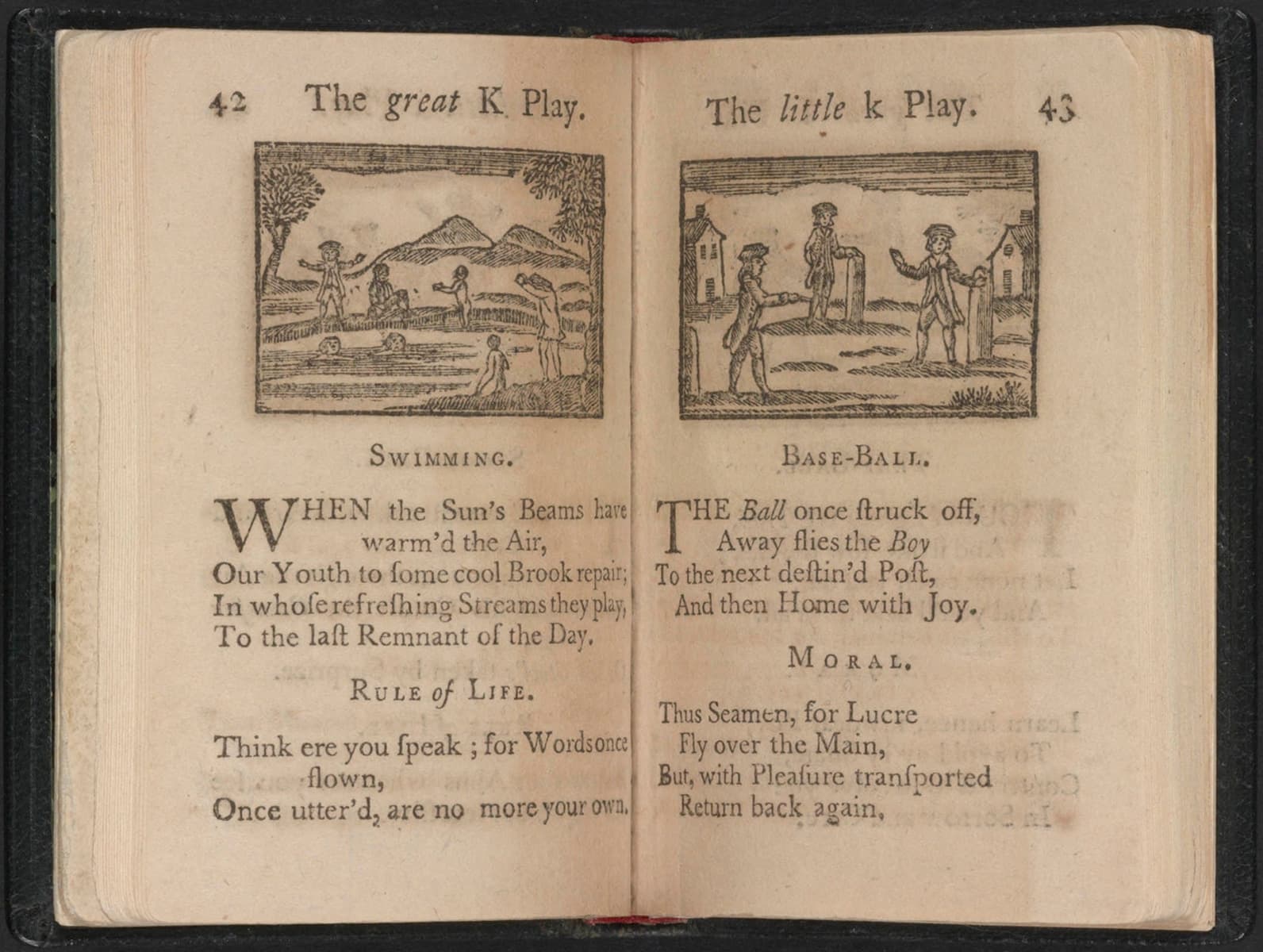
Woodcut baseball illustration from A Little Pretty Pocket-Book (1744), one of the earliest printed game references.
Photo credit: John Newbery (publisher), c. 1744 via Library of Congress
If you want a clean origin story for baseball, history refuses to give you one.
The sport didn't appear in a single dramatic moment. It grew in pieces, by region, and by custom. A key checkpoint in that growth is Pittsfield, Massachusetts, on September 5, 1791.
That day, town officials passed a bylaw that banned "baseball" within eighty yards of the meeting house. The town wanted to protect public property, but the side effect was permanent. The bylaw became the earliest known use of the word "baseball" in an American document. Earlier references to the game exist under variant spellings, including a 1786 Princeton diary entry that mentions "baste ball," but no older American source uses the word "baseball" itself.
What Pittsfield Establishes
The document is brief, but it does two important things.
First, it proves baseball existed in American life before the nineteenth century was fully underway. The game was recognizable enough that lawmakers named it directly, without definition.
Second, it undermines one-man invention myths. Rules and formats for bat-and-ball games were evolving across communities. Pittsfield shows local play was already common enough to require public control.
That is the opposite of a sudden, single invention.
What the Bylaw Establishes and Leaves Open
The 1791 reference anchors the timeline of the exact word "baseball" in U.S. civic records, but it doesn't settle every argument.
It confirms a game called baseball was active enough to be regulated in 1791. It doesn't identify modern nine-inning structure, fixed roster sizes, or a unified governing body.
It provides cultural evidence that baseball activity had already entered civic life.
That is exactly how many sports begin in the historical record. Law and bureaucracy notice them before rulebooks standardize them.
The Long Gap Between Mention and Standardization
Between 1791 and the middle of the nineteenth century, baseball appears in scattered references, diaries, school settings, and local clubs. Names and spellings vary. So do rules.
Some games allowed plugging or soaking, where fielders retired runners by throwing the ball at them. Some used different numbers of bases. Some games blurred into related bat-and-ball traditions.
This is a normal growth pattern for games before national governance and mass media.
By the 1840s, clubs in the New York area were pushing toward codification. In 1845, the Knickerbocker rules helped formalize a version of the game that excluded plugging, defined foul territory, and encouraged consistent play between clubs. In 1846, the often-cited Knickerbocker versus New York Nine game in Hoboken offered one of the earliest detailed game accounts under that emerging rule culture.
Pittsfield belongs to the pre-standardized phase, before New York's rule influence consolidated power.
Why the Doubleday Story Lasted So Long
The Doubleday legend survived because it was simple, patriotic, and easy to teach. A single inventor in a single American town was a cleaner story than decades of local variation and gradual change.
But clean stories are usually bad history.
Serious baseball historians have spent years correcting that narrative by returning to records, municipal documents, and contemporaneous reporting. The Pittsfield bylaw keeps reappearing in that work because it is dated, specific, and verifiable.
When a local government bans a game by name in 1791, you are no longer dealing with folklore. You are dealing with evidence.
The Bigger Lesson
The value of Pittsfield is not just chronology. It changes the question.
Instead of asking who invented baseball, it is more productive to ask how different game traditions merged into a sport that could support common rules, intercity competition, and eventually professional leagues.
The answer is gradual standardization, institutional growth, and market demand. Baseball became "baseball" through repetition, argument, and adaptation.
The 1791 record is not the beginning of the paper trail, but it is one of its strongest early legal markers.