Smoky Joe Wood's 1912 and the Second Career
Smoky Joe Wood won 34 games in 1912, looked like the era's next pitching giant, and then rebuilt his career as a position player after arm trouble changed everything.
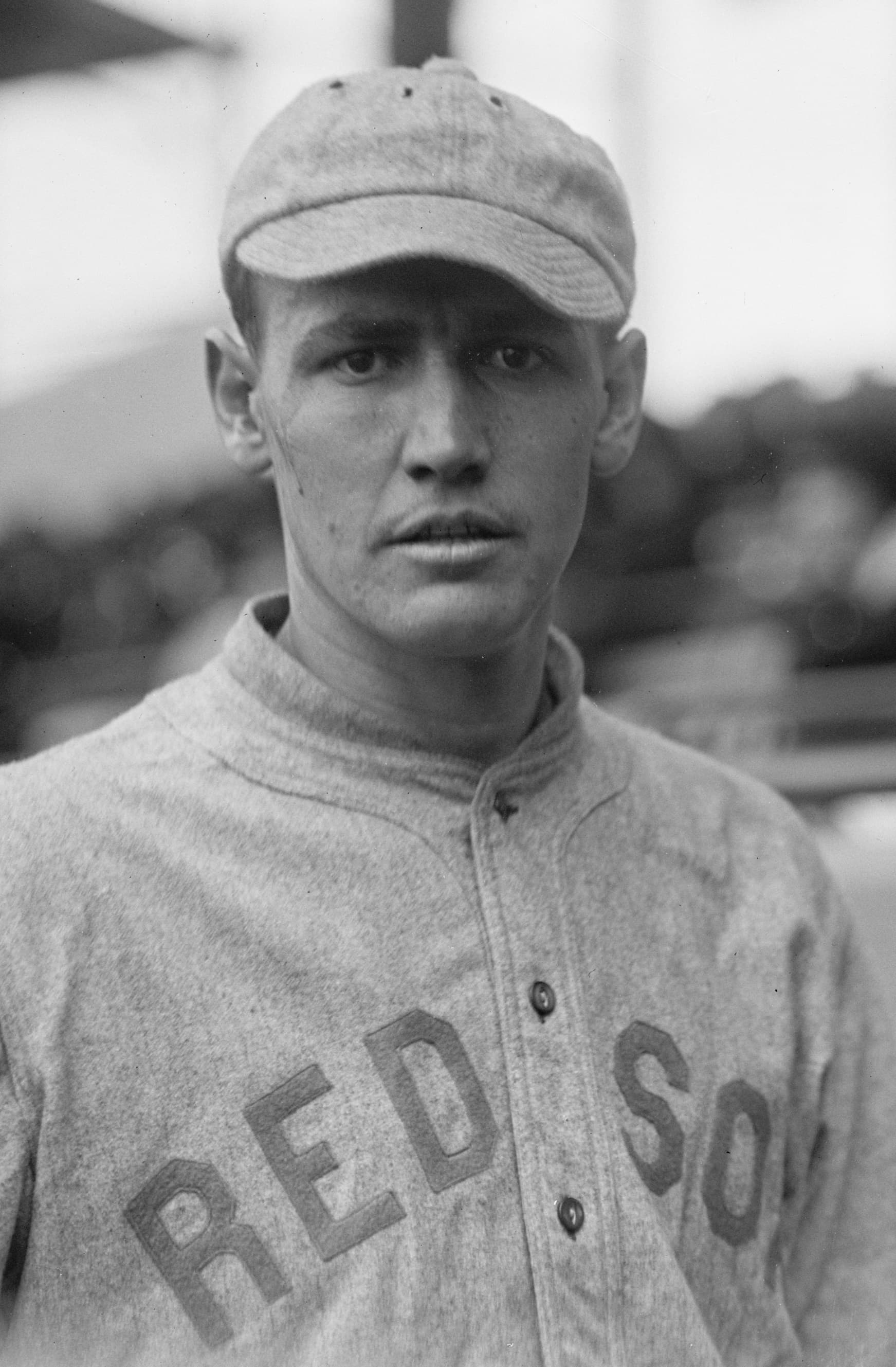
Smoky Joe Wood, Boston AL, 1915.
Photo credit: Harris & Ewing via Wikimedia Commons (Public domain)
In 1912, Smoky Joe Wood looked like the future of pitching.
He went 34-5 for Boston, a season Baseball-Reference and SABR both place among the best of the Dead-Ball era. For one year, he sat in the same conversations as Walter Johnson and seemed built to stay there.
He didn't stay there.
The Peak Year
Wood's combination of velocity and confidence made him a central arm on a championship Boston club. The strikeout totals, workload, and win column all point to the same conclusion. He dominated 1912.
The problem is that peak seasons can hide fragility. SABR's timeline of Wood's career shows how injuries repeatedly interrupted his ascent, culminating in arm trouble that kept him from sustaining that top-tier pitching form.
Reinvention
What separates Wood from other hard-luck stories is the second act. Baseball-Reference credits him with a career that ended in 1922, long after his pitching dominance faded, because he reinvented himself as a position player.
That transition is rare enough on its own. Doing it after a season as large as 1912 made it even stranger. He was no longer the same pitcher, but he remained a useful major leaguer.
Long View
Wood lived until 1985, long enough to become a living bridge to baseball's early modern years. His career line sits in two halves, the ace who won 34 in one summer and the veteran who refused to leave the game when his arm changed the terms.
The first half gets the headlines. The second half is what gives the story its weight.