Profile
Burleigh Grimes
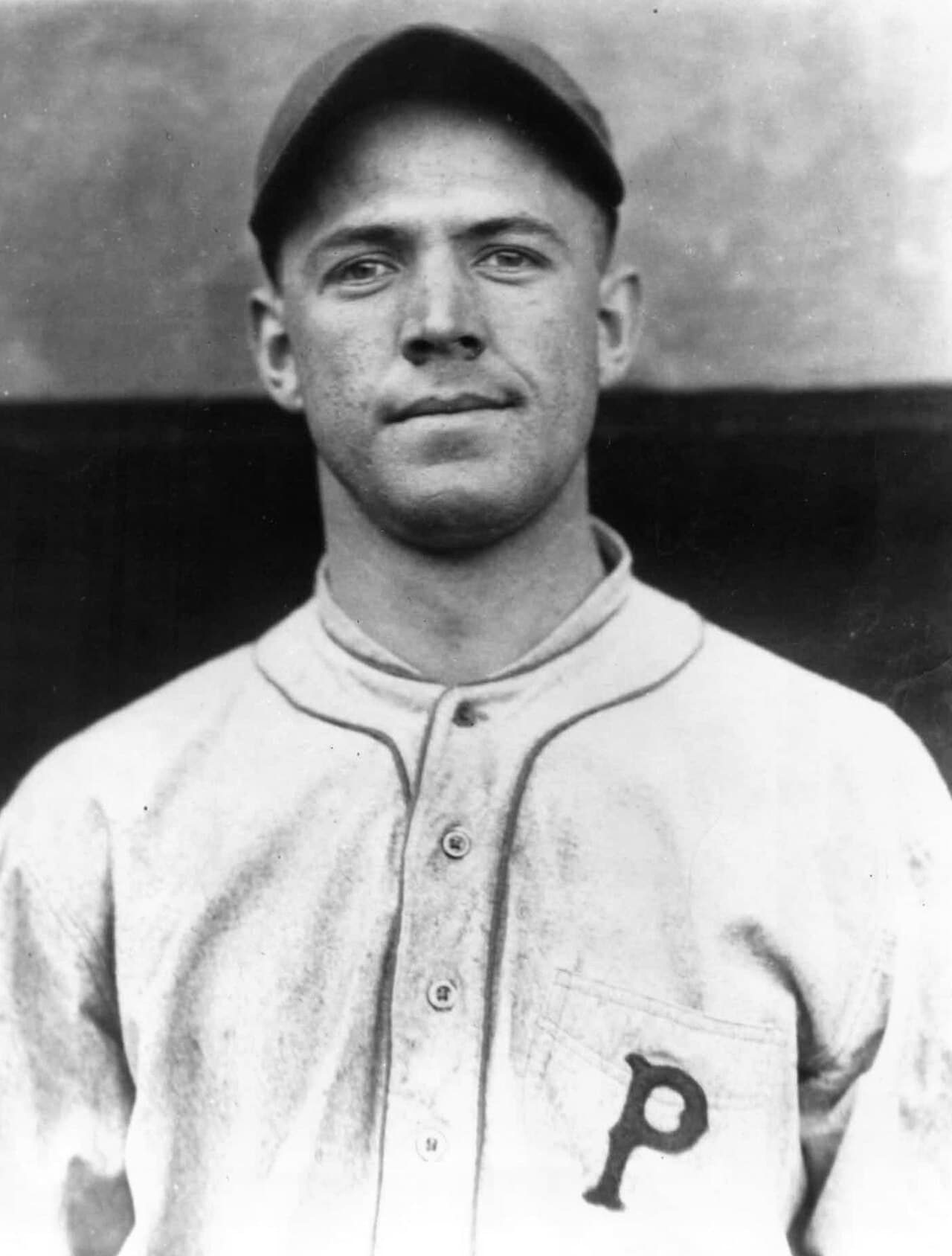
Burleigh Grimes portrait.
Photo credit: Unknown author via Wikimedia Commons (Public domain)
Burleigh Grimes was the last man standing. When Major League Baseball banned the spitball after the 1920 season and grandfathered 17 pitchers who depended on it, Grimes outlasted all of them, throwing the wet one legally until his retirement in 1934. He won 270 games over 19 seasons, pitched for seven different teams, and carried a combativeness on the mound that made him one of the most feared competitors of the 1920s. The Veterans Committee elected him to the Hall of Fame in 1964, three decades after he threw his last spitter.
Emerald
Burleigh Arland Grimes was born on August 18, 1893, in Emerald, Wisconsin, a farming community in the western part of the state. He grew up working on the family farm and developed the physical toughness that defined his pitching career. He reached the major leagues with the Pittsburgh Pirates in 1916 and bounced between Pittsburgh and the Brooklyn Robins (later the Dodgers) before establishing himself as Brooklyn's ace in 1918.
Brooklyn
Grimes pitched for Brooklyn from 1918 through 1926 and became one of the best pitchers in the National League. He won 20 or more games in three of four seasons from 1920 through 1923, reaching a peak of 23 wins in 1920 and 22 in 1921, with another 21-win season in 1923. His spitball was the foundation of his repertoire, a pitch he loaded with slippery elm rather than saliva, rubbing the bark on the ball to create the unpredictable movement that made it so difficult to hit. He also threw a fastball and a curve, and his willingness to pitch inside and knock down hitters who crowded the plate gave him a reputation as one of the most intimidating pitchers in the game.
He pitched in the 1920 World Series against the Cleveland Indians, a best-of-nine affair that Cleveland won five games to two. Grimes started three games and lost two of them, including a Game 5 in which Cleveland's Elmer Smith hit the first grand slam in World Series history and Bill Wambsganss turned the first unassisted triple play in Series history. It was the most eventful World Series game ever pitched, and Grimes was on the wrong side of all of it.
The Spitball
The spitball's ban after 1920 was prompted in part by the death of Cleveland shortstop Ray Chapman, who was struck by a pitch from the Yankees' Carl Mays on August 16, 1920, and died the following morning. The tragedy accelerated efforts to remove pitches that were difficult to see and control, and the spitball was the primary target. The 17 grandfathered pitchers were allowed to continue throwing it until they retired, and Grimes held on longer than any of them.
The pitch gave him an advantage that extended beyond the pitch itself. Hitters who knew Grimes could throw a spitter had to account for the possibility on every pitch, even when he threw a dry fastball or curve. The threat of the spitball changed how batters approached every at-bat against him, and Grimes exploited the uncertainty throughout his career.
Later Career
Brooklyn traded Grimes to the New York Giants after the 1926 season, and he spent the remainder of his career moving from team to team. He pitched for the Giants, the Pirates, the Boston Braves, the St. Louis Cardinals, the Cubs, and the Yankees over the next eight years. His best late-career season came in 1928 with the Pirates, when he won 25 games at age 35. He also won 13 games for the Cardinals in 1930 and 17 in 1931, contributing to the team that won the 1931 World Series.
He retired after the 1934 season with a record of 270-212, a 3.53 career ERA, and 314 complete games. He managed the Brooklyn Dodgers in 1937 and 1938, compiling a 131-171 record before being replaced, and later scouted for several organizations.
Ninety-Two Years
Grimes lived long enough to see baseball transform almost beyond recognition. He was elected to the Hall of Fame by the Veterans Committee in 1964 and died on December 6, 1985, in Clear Lake, Wisconsin, at 92. He was the last of the legal spitballers, the final practitioner of a pitch that the game had tried to eliminate more than six decades earlier, and his longevity gave him a singular distinction that no future pitcher can ever claim.