Profile
Dave Bancroft
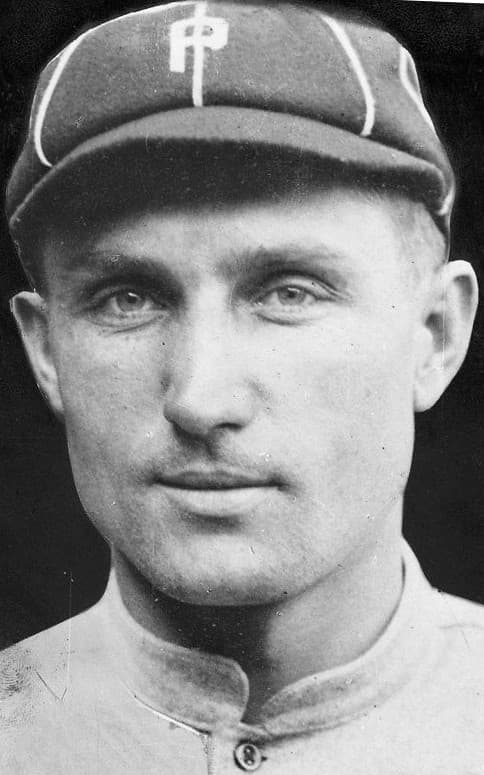
Dave Bancroft portrait, 1915.
Photo credit: Unknown author via Wikimedia Commons (Public domain)
Dave Bancroft was known as "Beauty," a nickname that came from his habit of shouting the word whenever a pitcher threw a good pitch, and the description fit his own work at shortstop as well as anything his contemporaries produced at the position. He was one of the best defensive shortstops of the dead-ball and early live-ball eras, a switch hitter who batted .279 over 16 seasons, and the captain of the New York Giants teams that won four consecutive National League pennants from 1921 through 1924. The Veterans Committee elected him to the Hall of Fame in 1971.
Iowa
David James Bancroft was born on April 20, 1891, in Sioux City, Iowa. He played in the minor leagues for several years before the Philadelphia Phillies purchased his contract in 1915. He became the starting shortstop immediately and hit .254 in his rookie season, but his defensive ability set him apart from the start. He had exceptional range, sure hands, and an arm strong enough to make the long throw from deep in the hole, and he quickly earned a reputation as one of the finest fielders in the National League.
The Phillies won the 1915 National League pennant, and Bancroft played every game of the World Series against the Boston Red Sox, though Philadelphia lost in five games. He played five and a half seasons with the Phillies, developing into a consistent offensive contributor who complemented his defense with a solid approach at the plate.
The Giants
John McGraw acquired Bancroft in a trade with the Phillies on June 7, 1920, sending shortstop Art Fletcher, pitcher Bill Hubbell, and cash to Philadelphia. McGraw named Bancroft the team captain, and the move paid immediate dividends. The Giants won four consecutive pennants from 1921 through 1924, and Bancroft was the anchor of the infield for the first three of those years.
He batted .318 in 1921 and .321 in 1922, his two best offensive seasons, and he handled the responsibilities of captaincy with the leadership McGraw demanded. He communicated constantly on the field, directing positioning and calling plays with a voice that carried across the diamond. His defensive metrics, to the extent they can be reconstructed from the era's records, consistently ranked him among the top shortstops in the league.
The Giants won the World Series in 1921 and 1922, defeating the Yankees in both years, and Bancroft played well in both series. The Giants lost the 1923 and 1924 World Series, to the Yankees and the Washington Senators respectively, but the four consecutive pennants established the franchise's dominance during the early 1920s.
Boston and After
The Giants traded Bancroft to the Boston Braves after the 1923 season, and he served as the team's player-manager from 1924 through 1927. The Braves were a weak team, and Bancroft could not lift them into contention, but he continued to play shortstop at a high level while managing. He played for the Brooklyn Dodgers in 1928 and 1929, then returned to the Giants briefly in 1930 for the final games of his career, retiring with a .279 batting average, 2,004 hits, and the defensive reputation that had defined his career from the beginning.
He died on October 9, 1972, in Superior, Wisconsin, at 81. The Veterans Committee elected him to the Hall of Fame in 1971, recognizing a career built on defense, leadership, and the sustained excellence that three consecutive pennants required from the man who captained those teams.