Profile
David Ortiz
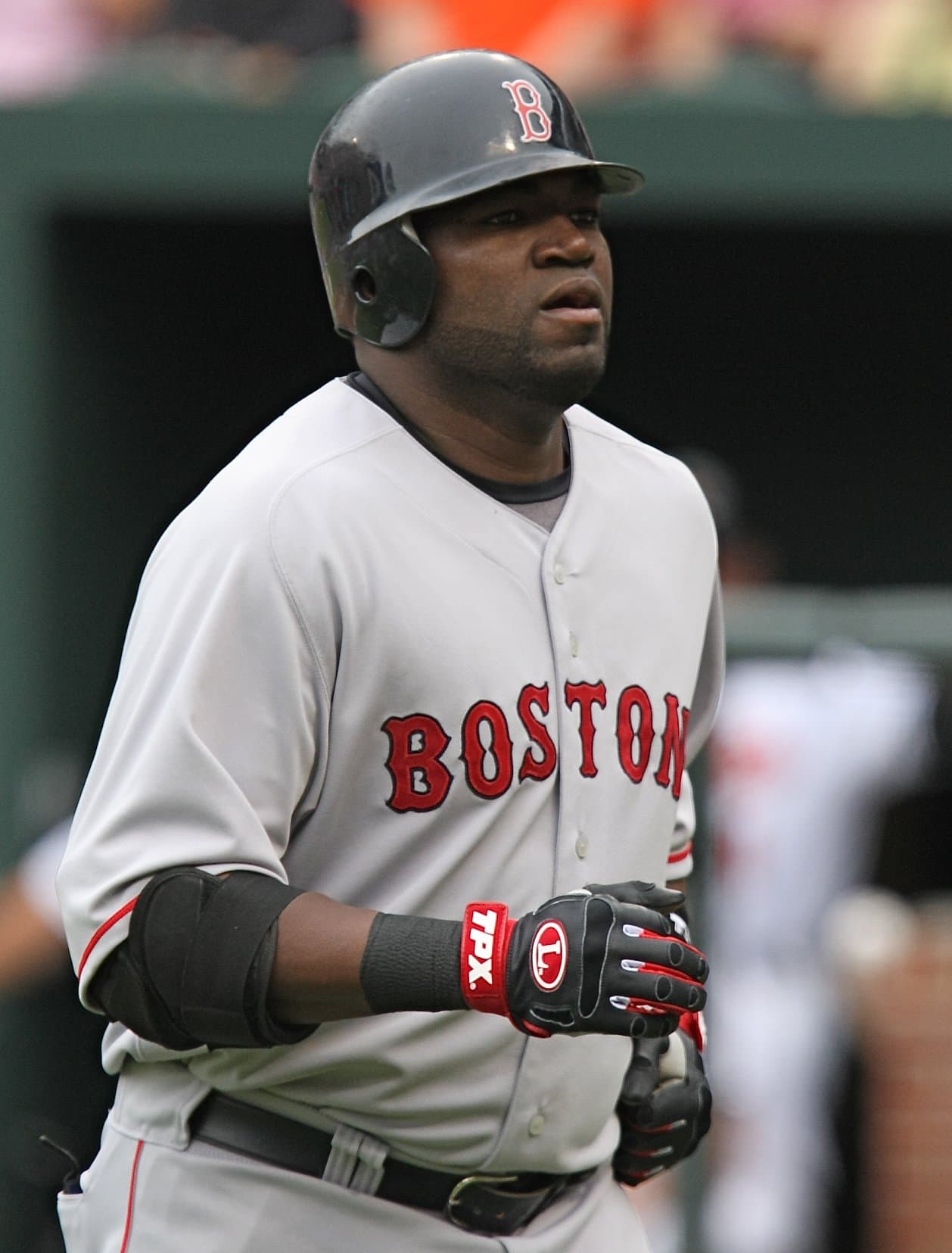
David Ortiz in 2008.
Photo credit: Unknown photographer via Wikimedia Commons
David Ortiz was the most fearsome clutch hitter of his generation and the beating heart of the team that broke the oldest curse in baseball. He came up small, released by the Twins as a player not worth keeping, and grew into Big Papi, the smiling giant who carried the Boston Red Sox to three championships and hit the biggest home runs of a generation. He owned the late innings of October the way few hitters ever have, and he gave a grieving city its voice when it needed one. The BBWAA elected him to the Hall of Fame in 2022, on the first ballot.
The Twins' Mistake
Ortiz was born on November 18, 1975, in Santo Domingo in the Dominican Republic and grew up in a hardscrabble town near the capital. Seattle signed him as a teenager and traded him to Minnesota, where he spent six injury-slowed seasons as a part-time player who flashed power without ever holding a regular job. After the 2002 season the Twins simply let him go, declining to pay a modest arbitration salary, and the Red Sox signed him that winter for a little over a million dollars on the recommendation of his friend Pedro Martínez. It was one of the great bargains in the history of the game, and one of the worst decisions Minnesota ever made.
Big Papi
In Boston, Ortiz became someone else entirely. The broadcaster Jerry Remy hung the nickname Big Papi on him during his first season, and the personality grew to fill it, a charismatic, joyful presence who hugged teammates and stared down pitchers in the same at-bat. He found a permanent home as the designated hitter, freed to focus on the one thing he did better than almost anyone, and the home runs poured out. He would hit 541 of them in his career, more than any designated hitter who ever lived, the centerpiece of a lineup and a city that adored him.
Breaking the Curse
The legend was made in October 2004, when the Red Sox fell behind the Yankees three games to none in the Championship Series, a hole no team had ever escaped. Ortiz refused to let it end. He won Game 4 with a two-run home run in the 12th inning, then won Game 5 with a single in the 14th, dragging Boston back from the dead one impossible at-bat at a time. The Red Sox completed the only comeback from 3-0 in baseball history and went on to win their first World Series since 1918, the 86-year curse finally broken, and Ortiz was the Most Valuable Player of the series that turned it.
This Is Our City
Two more titles followed, in 2007 and in 2013, when Ortiz put on one of the greatest World Series performances ever recorded, batting .688 and winning another Most Valuable Player award. The 2013 season carried a weight beyond baseball, because that April two bombs had torn through the Boston Marathon, and in the first game back at Fenway, Ortiz grabbed a microphone and spoke for the city. "This is our city," he told the crowd, with a defiance the moment demanded, and the words became part of Boston's recovery. He was, by then, more than a ballplayer to the people who watched him.
The Clutch Hitter
The reputation for the big moment was earned in full, across a career of late-inning theater. Ortiz hit 20 walk-off hits in the regular season, the third-most in history, and added three more in the playoffs, the rare slugger whose drama matched his power. He finished with a .286 average, 541 home runs, 1,768 runs batted in, and 632 doubles, and he made 10 All-Star teams, the steady accumulation behind the famous home runs. When the game was on the line, the pitchers feared him and the fans expected the impossible, and often enough he delivered it.
The Long Goodbye and the Shadow
Ortiz went out the way few stars manage, on top. His final season in 2016, at 40, was one of the best last years anyone has played, 38 home runs and a league-leading mark in doubles, slugging, and on-base-plus-slugging, a farewell tour that ended with him still among the best hitters alive. A shadow trailed him, a report that his name had appeared on a confidential 2003 survey test for performance-enhancing drugs, a result he disputed and that the commissioner himself later cast doubt on, with no suspension and no confirmation ever attached to it. Three years after he retired, he survived a shooting in a Santo Domingo bar, a near-fatal attack that the authorities called a case of mistaken identity.
Cooperstown
The Hall of Fame welcomed him on the first try, a verdict that drew its own debate. Ortiz was elected in 2022 with 77.9 percent of the vote, getting in immediately while Barry Bonds and Roger Clemens, dogged by their own steroid clouds, fell short in their final year on the ballot. The writers had judged him on the whole of his career and his character, and they had decided the unconfirmed survey would not keep him out. He went in wearing a Red Sox cap, his number 34 already retired in Boston, the player the Twins gave away who became one of the most beloved figures the game has known.