Profile
Deacon White
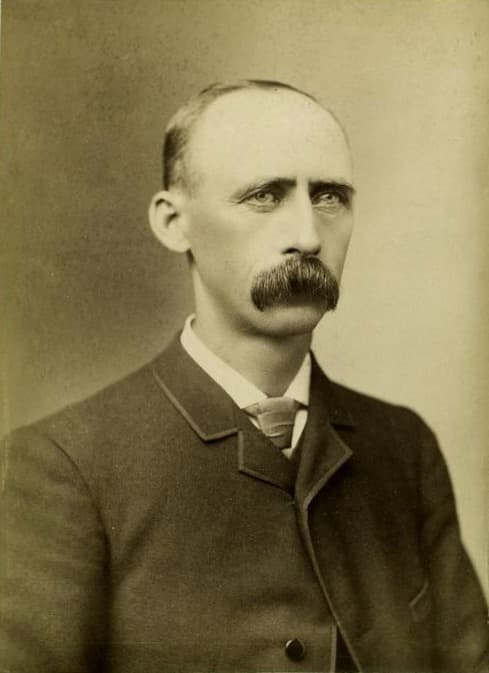
Deacon White portrait.
Photo credit: Unknown photographer via Wikimedia Commons (Public domain)
Deacon White was one of the first stars professional baseball produced, a bare-handed catcher who came to bat in the first game the first professional league ever played and lined the first hit anyone recorded in it. He spent 20 years in the game, caught his own brother, won six championships, and hit into his 40s, a churchgoing, Bible-carrying man who once stood up to the owners with a line that outlived him. He died in 1939, the oldest living ballplayer of his generation, with no plaque in Cooperstown. The Pre-Integration Era Committee finally elected him in 2013, almost 75 years later.
Learning the Game from a Union Soldier
White was born on December 2, 1847, in Caton, New York, near the Pennsylvania line, the son of a farmer. He learned baseball, he said near the end of his life, from a Union soldier who came home in 1865 carrying the game the troops had played during the Civil War. By 1868 White had moved to Cleveland to work and play for the semipro Forest Citys, where a local paper singled out "the play of J. White, the shortstop," and within two years he was the best player on the team. When the National Association formed the first professional league in 1871, White was ready for it.
The First Hit in Professional Baseball
On May 4, 1871, in the league's very first game, White stepped in as the first batter and doubled off Bobby Mathews of the Fort Wayne Kekiongas, the first hit in the history of professional league baseball, and a few batters later he was doubled off second when a fly ball was caught, part of the first double play the league ever turned. History remembers the double. It was a fitting start for a man who would spend the next two decades at or near the top of the new profession.
The Best Catcher of the Bare-Handed Age
White caught in the years before gloves, masks, or padding, taking the pitch with a soft, yielding motion of his hands that let him work closer to the hitter than the men who took the ball on a bounce. "A cat after a mouse is not quicker than James is after a foul ball," one paper wrote, and Al Spalding called him the best catcher he had ever seen. He took to new equipment as fast as the game produced it. When his hands turned black and blue in 1870 he pulled on buckskin gloves and kept playing, and in 1877 he helped a blacksmith hammer out an iron copy of the first catcher's mask he had ever seen.
The First Brother Battery
In 1877 White caught his younger brother Will, a pitcher, the first time two brothers had formed a battery in the major leagues. They played together in Boston and then in Cincinnati, where Will became one of the great workhorses the game has known, throwing 75 complete games and 680 innings in 1879, totals no one has approached since. Will White was also the first major leaguer to wear eyeglasses on the field. The brothers were a matched set, the devout catcher and the bespectacled iron-man pitcher, and they anchored the same teams for years.
The Deacon
The nickname fit a man who did not drink, smoke, or gamble, carried a Bible, and went to church, and in time his teammates started calling him the Deacon, which he, in fact, was. "No one ever yet heard Deacon White say dammit," a Detroit paper wrote, "no one ever saw him spike or trample upon an opponent." His faith ran deep enough that a religious conversion in 1873 nearly drove him out of the game, until he decided a man could play ball and keep his faith at the same time, and he never had to choose between them again.
Champions in Boston and Detroit
White won everywhere he went, leading the National Association in hitting at .367 for the 1875 Boston Red Stockings, a team that went 71-8 and was barely challenged, and his teammates voted him a silver pitcher as their most valuable man. A dozen years later, at 39 and the oldest player in the league, he batted .303 for the Detroit Wolverines, who won the 1887 pennant and then beat the American Association champion St. Louis Browns in a traveling 15-game championship series. It was the sixth title of his career.
No Man Is Going to Sell My Carcass
For all the deacon in him, White had a temper about being treated as property. He had come to Detroit in 1885 as part of the Buffalo "Big Four," four star hitters sold together for $7,000 with Dan Brouthers among them, and when Detroit folded and Pittsburgh bought his contract in 1889 without his consent, he refused to go quietly. "We appreciate the money, but we ain't worth it," he said of himself and his old teammate Jack Rowe. "But I will say this. No man is going to sell my carcass unless I get half." He and Rowe tried to run their own team in Buffalo instead, and when that failed they jumped to the players' revolt of 1890, the line about the carcass becoming a rallying cry for men sick of the reserve clause.
The Oldest Man in Cooperstown
White lived a long, upright life after baseball, farming and running small businesses in New York and Illinois and, by some accounts, holding the literal-minded conviction that the earth was flat, a notion the historian Lee Allen passed down though White's careful biographers never recorded it. He outlived nearly everyone from the game's first generation, the oldest living former major leaguer in his final years, and he was deeply hurt when the new Hall of Fame opened in 1936 without him. He died in Illinois on July 7, 1939, at 91, weeks after a Cooperstown centennial that did not invite him. The Pre-Integration Era Committee elected him in 2013, the oldest man by birth ever enshrined, more than 140 years after he took the first swing in professional baseball.