Player Profile
Jesse Burkett
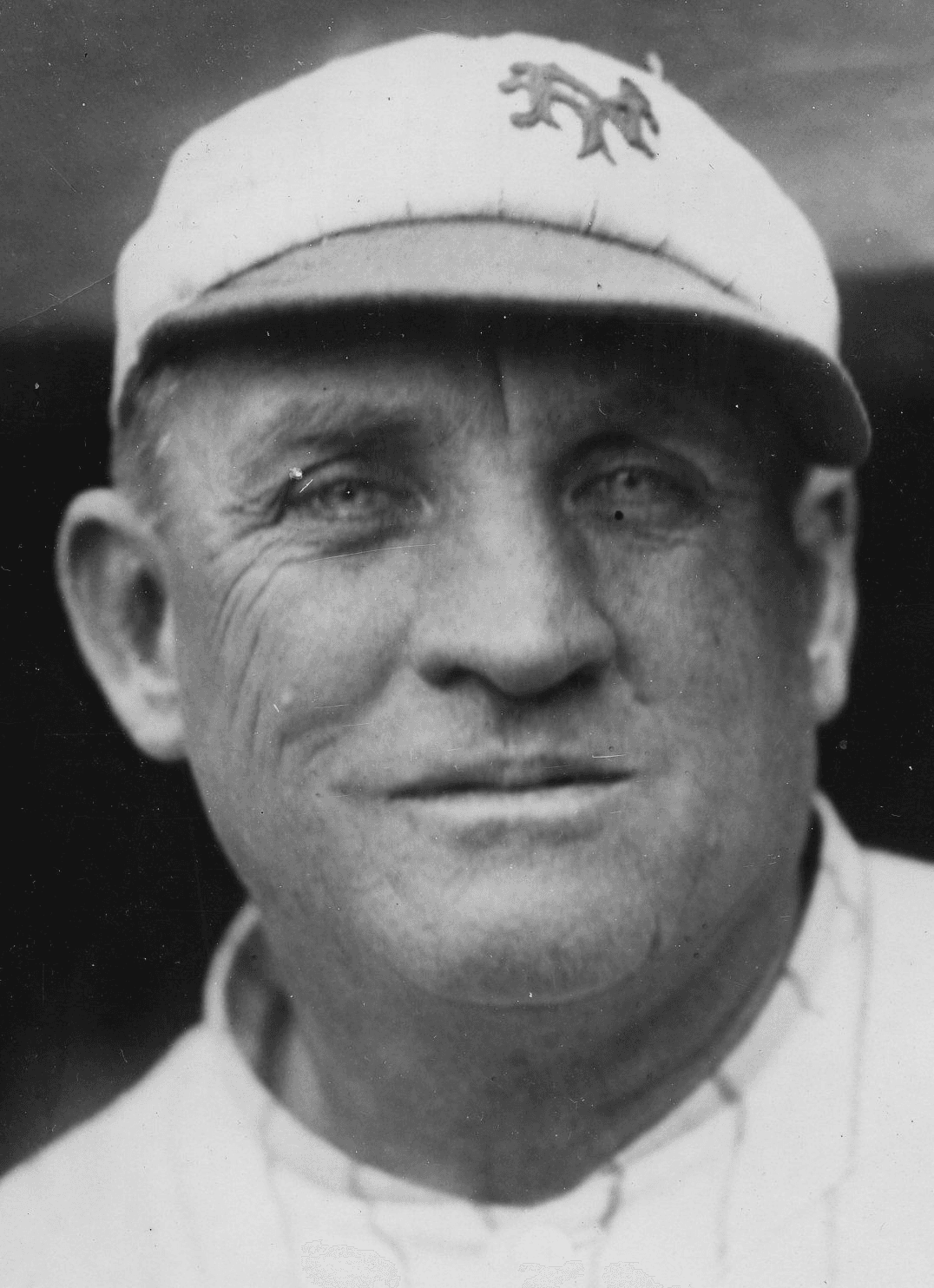
Jesse Burkett portrait, 1920.
Photo credit: Bain News Service via Wikimedia Commons (Public domain)
Jesse Cail Burkett played 16 major league seasons and compiled a .338 career batting average. He won three National League batting titles, hit over .400 in consecutive seasons, and earned a reputation as one of the most combative men in professional baseball. Teammates, opponents, and umpires all called him "The Crab," and he took the name as a compliment.
Wheeling and the Spiders
Burkett was born in Wheeling, West Virginia, in 1868 and started his professional career as a pitcher. He spent two years in the minors before the New York Giants brought him up in 1890. He went 3-10 on the mound and batted .309 across 101 games, but the Giants did not keep him. The Cleveland Spiders signed him before the 1891 season, and he spent most of that year with Lincoln in the Western Association, where he was converted from pitcher to outfielder. The move saved his career. By 1893, Burkett was hitting .348 and establishing himself as one of the most productive bats in the National League.
He played alongside Cy Young in Cleveland, and the two formed the core of a Spiders team that competed through the mid-1890s. Young dominated from the mound while Burkett supplied the most reliable bat in the lineup. The Spiders finished second in 1895 and 1896, never winning the pennant, though the 1895 club defeated the pennant-winning Baltimore Orioles four games to one in the Temple Cup postseason series.
Two Seasons Above .400
In 1895, Burkett hit .405 and won the National League batting title. In 1896, he raised the mark to .410 and won the title again. Consecutive .400 seasons placed him in a small group of hitters who sustained that level across more than one year. His approach at the plate was patient and deliberate. He fouled off pitch after pitch, refusing to chase anything outside his zone, wearing down starters who were expected to finish every game they began. He walked often, struck out rarely, and sprayed the ball to all fields with a precision that made him consistently productive across full seasons rather than in streaks.
He continued hitting through the end of the decade, posting a .383 average in 1897, .341 in 1898, and .396 in 1899, even as the Spiders organization crumbled around him.
The Crab
Burkett fought with everyone. He berated umpires over called strikes, taunted opposing fielders from the batter's box, and snapped at his own teammates when their effort fell short of his standards. The combativeness was not an act. He was a difficult man by disposition, and the baseball diamond only concentrated the trait.
The nickname stuck because it was accurate. Opposing fans booed him at every park, and he seemed to feed off the hostility. No manager tried to smooth his edges because the hitting made everything else tolerable.
St. Louis and Boston
The Cleveland Spiders collapsed in 1899 after their owners, Frank and Stanley Robison, bought the St. Louis franchise and shipped all the best Cleveland players south. The gutted Spiders went 20-134, the worst record in major league history. Burkett was among the players transferred to St. Louis, where he won his third batting title in 1901 with a .376 average. Three batting championships spread across six seasons reflected sustained skill, not a lucky run.
In 1902, Burkett jumped to the American League's St. Louis Browns, where he played three seasons. The Browns traded him to the Boston Americans before the 1905 season. He was 36, his legs had slowed, and he hit .257 in 148 games. He retired from the major leagues after that year and spent the next three decades in baseball's margins. He managed the Worcester Busters in the New England League from 1906 to 1915, coached baseball at Holy Cross, and served as a coach for the New York Giants before eventually leaving the game.
A Late Recognition
The Old Timers Committee elected Burkett to the Hall of Fame in 1946, forty-one years after his final major league game. He was 77. He died in Worcester, Massachusetts, on May 27, 1953, at age 84. His .338 career average and consecutive .400 seasons remain among the most impressive offensive accomplishments of baseball's early years.