Profile
John Clarkson
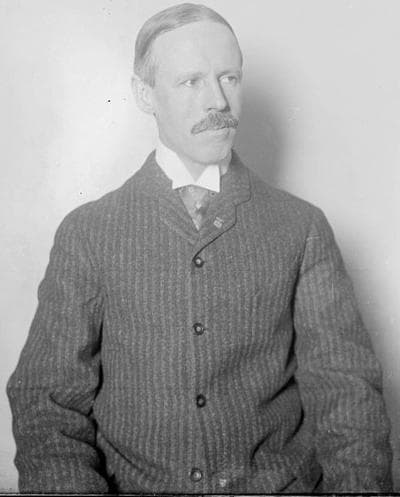
John Clarkson portrait.
Photo credit: Unknown author via Wikimedia Commons (Public domain)
John Clarkson won 53 games in 1885, a total that seems impossible by modern standards and was extraordinary even by the standards of his own era. He pitched for 12 seasons, won 328 games, and ranks among the greatest pitchers of the nineteenth century by any measure. He was also, by the accounts of teammates and managers, a fragile and sensitive man who needed constant encouragement and whose mental health deteriorated after his playing career ended. He died in a psychiatric institution at 47, and the Veterans Committee elected him to the Hall of Fame posthumously in 1963, more than half a century after his death.
Cambridge
John Gibson Clarkson was born on July 1, 1861, in Cambridge, Massachusetts. He came from a baseball family. His brother Arthur "Dad" Clarkson also pitched in the major leagues, and a younger brother, Walter, pitched for the New York Highlanders and Cleveland Naps from 1904 through 1908. John began his professional career in 1882 and reached the major leagues with the Worcester Ruby Legs that same year, though he appeared in only a handful of games before the franchise folded.
Chicago
Cap Anson signed Clarkson to pitch for the Chicago White Stockings in 1884, and the partnership produced one of the most dominant seasons in baseball history. In 1885, Clarkson went 53-16 with a 1.85 ERA, completing 68 of his 70 starts and pitching 623 innings. Chicago won the National League pennant. Clarkson followed that season with a 36-17 record in 1886 and a 38-21 mark in 1887, giving him 127 wins over three years.
His repertoire included a fastball, a curve, a change of pace, and the ability to move the ball to different locations depending on the hitter. Anson, who managed as well as played, valued Clarkson above any pitcher he had worked with but noted that Clarkson required careful handling. In his 1900 autobiography, Anson recalled that scolding Clarkson or finding fault with him rendered him unable to pitch at all, while praising him made him nearly unbeatable. The observation captured something real about Clarkson's temperament and about the relationship between pitcher and manager in an era when a single arm could carry a franchise.
Boston
Chicago sold Clarkson to the Boston Beaneaters after the 1887 season for $10,000, an enormous sum at the time. He continued to pitch brilliantly, winning 33 games in 1888, 49 in 1889, and 26 in 1890. The 1889 season was particularly remarkable. He went 49-19 with a 2.73 ERA and carried the Beaneaters to within a game of the National League pennant, pitching 620 innings and completing 68 of 72 starts. His workload was staggering even for an era that expected its pitchers to finish what they started.
He won over 25 games in each of his first seven full major league seasons, a stretch of sustained excellence that places him alongside Old Hoss Radbourn and Tim Keefe as the dominant pitchers of the 1880s.
Decline
Clarkson's arm began to fail him after the 1891 season. Boston released him midway through the 1892 campaign, and the Cleveland Spiders signed him to finish the year. He won 25 games combined between the two clubs in 1892, then 16 in 1893 and 8 in 1894 before retiring. The transition from the pitcher's box, set roughly 55 feet from home plate, to the modern distance of 60 feet, 6 inches in 1893 hurt pitchers who relied on deception at close range, and Clarkson was among them.
After baseball, Clarkson's mental health declined significantly. He spent his final years at McLean Hospital in Belmont, Massachusetts, after passing through other institutions in Michigan. The precise nature of his illness is unclear from surviving records, but the deterioration was severe enough that he required institutional care for the last several years of his life. He died on February 4, 1909, at 47.
328 Wins
Clarkson finished with a record of 328-178, a .648 winning percentage, and a 2.81 career ERA. He completed 485 of his 518 career starts and pitched 4,536 innings. The numbers belong to a different version of the game, one in which a pitcher was expected to start, finish, and start again two days later, but the excellence is not diminished by context. He dominated the best hitters of his generation for the better part of a decade, and the Hall of Fame's belated recognition in 1963 corrected an omission that had lasted too long.