Profile
Kiki Cuyler
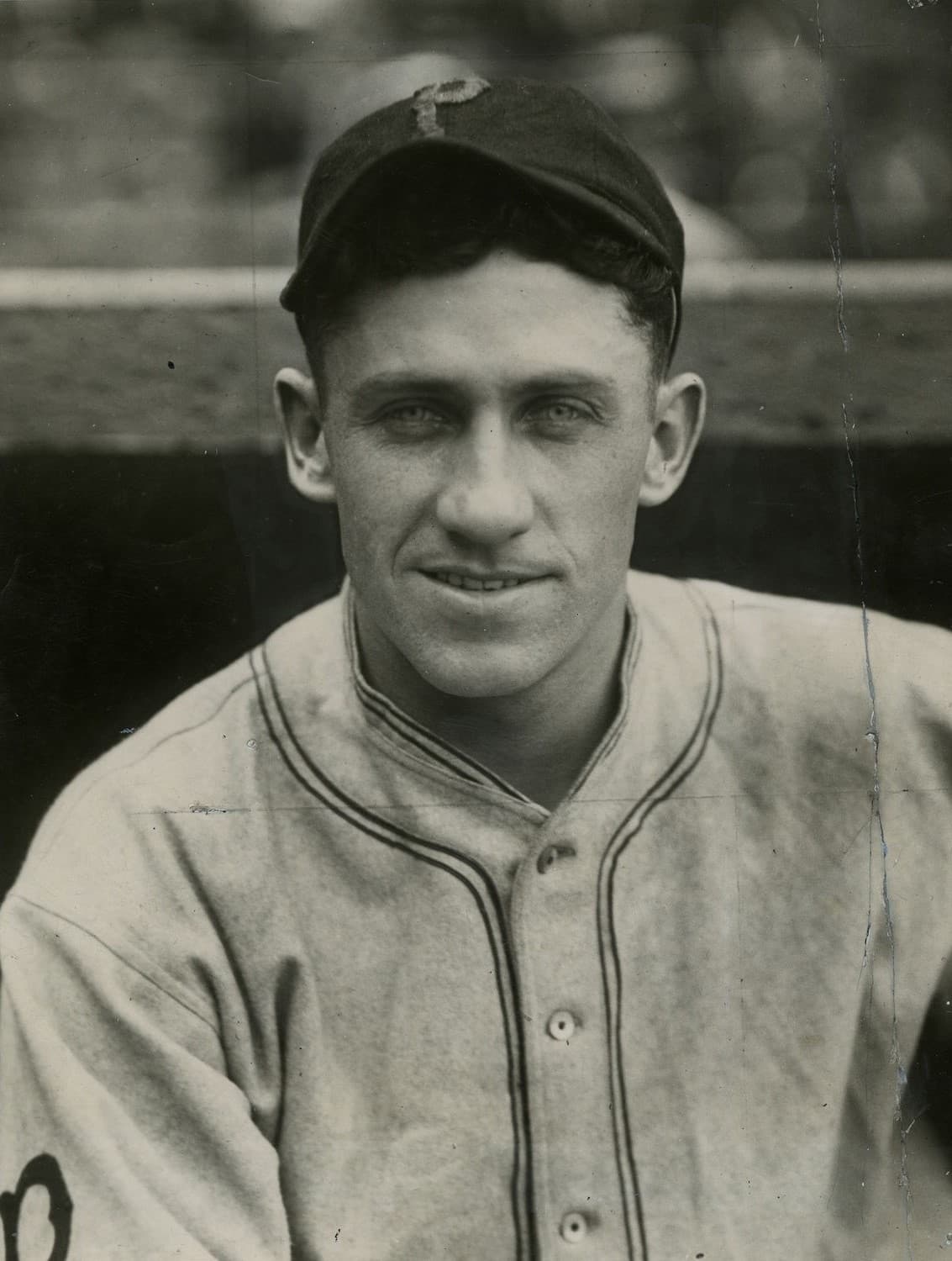
Kiki Cuyler portrait (Pirates).
Photo credit: Unknown author via Wikimedia Commons (Public domain)
Kiki Cuyler could hit, run, and throw, and he did all three at a level that made him one of the best outfielders in the National League for the better part of a decade. He batted .321 over 18 seasons, stole 328 bases, led the league in stolen bases four times, and played with a combination of speed and contact hitting that made him dangerous every time he reached base. The Veterans Committee elected him to the Hall of Fame posthumously in 1968, eighteen years after his death at 51.
Michigan
Hazen Shirley Cuyler was born on August 30, 1898, near Harrisville, Michigan, a small town on the Lake Huron shore. The nickname "Kiki" has competing origin stories. Cuyler himself said it came from teammates shortening his surname during fly ball calls in the minor leagues, though other accounts attribute it to a childhood stutter. He reached the major leagues with the Pittsburgh Pirates in 1921, played sparingly for three seasons, and then broke through in 1924 with a .354 batting average that announced his arrival as one of the league's best young hitters.
Pittsburgh
Cuyler's best years with the Pirates came in 1924 and 1925. He hit .354 in 1924 and .357 in 1925, leading the league in runs scored and triples in the latter season. The 1925 Pirates won the World Series, defeating the Washington Senators in seven games, and Cuyler drove in the winning run in the bottom of the eighth inning of Game 7 with a two-run double off Walter Johnson that gave Pittsburgh a lead they held to the end. The hit was one of the signature moments of the decade, delivered against the greatest pitcher of the era in the final game of the series.
The relationship between Cuyler and Pirates manager Donie Bush deteriorated during the 1927 season. Bush fined Cuyler $50 for indifferent play in early August and benched him after a broader dispute over lineup changes that had moved Cuyler from center field to left and dropped him in the batting order to accommodate Lloyd Waner. Cuyler sat on the bench for the remainder of the season, including the World Series against the Yankees. The Pirates lost in a four-game sweep, and many observers believed Cuyler's absence from the lineup weakened the team significantly. Pittsburgh traded him to the Chicago Cubs after the season.
Chicago
Cuyler thrived in Chicago. He hit .360 in 1929 and .355 in 1930, led the league in stolen bases in 1928, 1929, and 1930, and helped the Cubs win the 1929 National League pennant. His speed was the foundation of his offensive game. He ran the bases aggressively, took the extra base on singles and doubles, and created pressure on defenses in ways that did not always appear in traditional statistics.
He also contributed solid defense in right field, covering ground with his speed and throwing accurately to the bases. His arm was strong enough to discourage runners from testing him, and the combination of his offense and defense made him one of the most complete outfielders in the league during his peak years from 1924 through 1932.
Decline and Death
Cuyler's production declined after 1932, and he spent his final seasons with the Cincinnati Reds and Brooklyn Dodgers before retiring after the 1938 season. His career totals included 2,299 hits, a .321 batting average, 328 stolen bases, and 157 triples that reflected the speed and line-drive hitting that defined his style. He managed in the minor leagues after his playing career ended and coached briefly for the Cubs and Red Sox.
He died on February 11, 1950, in Ann Arbor, Michigan, at 51. The Veterans Committee elected him to the Hall of Fame in 1968, recognizing a career built on speed, contact, and a peak that included some of the highest batting averages in the National League during the late 1920s.