Profile
Stan Coveleski
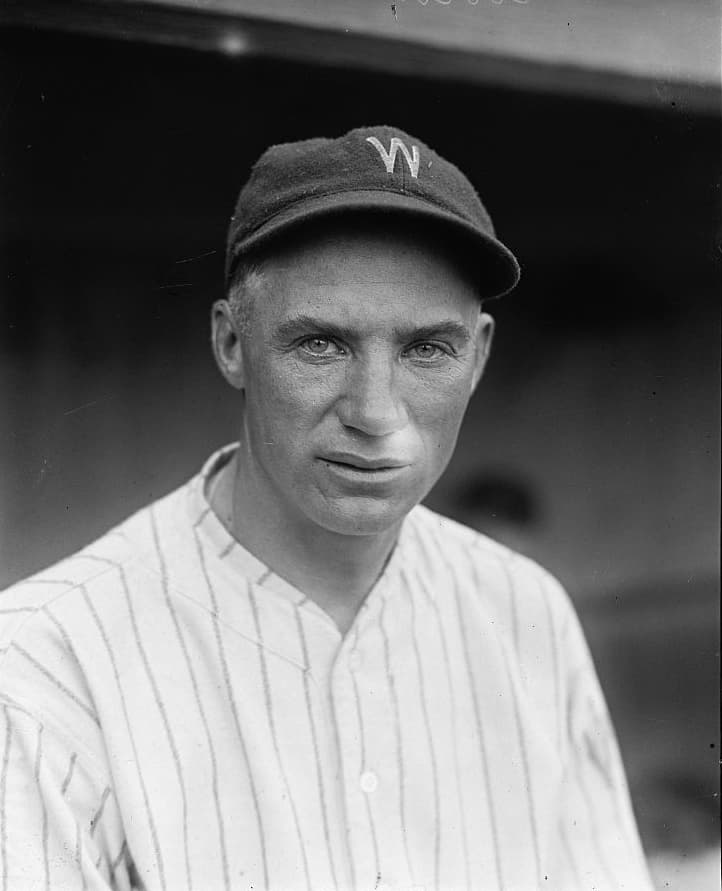
Stan Coveleski portrait.
Photo credit: Unknown author via Wikimedia Commons (Public domain)
Stan Coveleski pitched three complete-game victories in the 1920 World Series, allowing two runs total across 27 innings, and carried the Cleveland Indians to their first championship with one of the most dominant pitching performances in postseason history. He won 215 games over 14 seasons, relying on a spitball that was legal when he learned it and that he was permitted to keep throwing after the pitch was banned in 1920. The Veterans Committee elected him to the Hall of Fame in 1969.
Shamokin
Stanislaus Anthony Kowalewski was born on July 13, 1889, in Shamokin, Pennsylvania, a coal mining town in the anthracite region of the state. He was one of five brothers, and his older brother Harry also pitched in the major leagues. The family name was later anglicized to Coveleski. Stan grew up throwing rocks at tin cans in the coal town streets, developing the arm strength and accuracy that would define his pitching career, and he went to work in the mines as a boy before baseball offered a way out.
He reached the major leagues briefly with the Philadelphia Athletics in 1912, pitching in five games, and returned to the minors for three years before joining the Cleveland Indians in 1916. He became a regular starter immediately and won 15 games in his first season with the club.
Cleveland
Coveleski won 20 or more games in four consecutive seasons during his years with the Indians from 1916 through 1924, going 22-13 in 1918, 24-12 in 1919, 24-14 in 1920, and 23-13 in 1921. His spitball was his primary weapon, and he threw it with a precision that made it devastating even as the pitch fell out of favor and was eventually outlawed. The spitball moved unpredictably, dipping and darting as it approached the plate, and hitters who knew it was coming still could not square it up consistently.
The 1920 season was the defining year of his career. The Indians won the American League pennant in a tight race that was shadowed by the death of shortstop Ray Chapman, who was killed by a pitch from Carl Mays on August 16 and died the following day. The Indians rallied after Chapman's death and won the pennant, and Coveleski carried them through the World Series against the Brooklyn Robins.
The 1920 World Series was a best-of-nine format, and Coveleski won Games 1, 4, and 7, pitching complete games in all three and allowing a total of two runs on 15 hits across 27 innings. Several pitchers had won three games in a single World Series before him, but none had done it with fewer runs allowed, and Coveleski's performance remains one of the greatest in postseason history.
Washington and After
The Indians traded Coveleski to the Washington Senators after the 1924 season, and he won 20 games for Washington in 1925, helping the Senators win the American League pennant. The Senators lost the 1925 World Series to the Pittsburgh Pirates in seven games, with Coveleski pitching twice in the series.
His arm began to decline after the 1925 season, and he pitched one final year for the Yankees in 1928 before retiring. His career record of 215-142 included a 2.89 ERA, and his lifetime winning percentage of .602 reflected the consistency of a pitcher who gave his teams a strong chance to win almost every time he took the mound.
Coveleski lived longer than almost any player of his generation. He died on March 20, 1984, in South Bend, Indiana, at 94, more than half a century after his final pitch.