Profile
Bill McKechnie
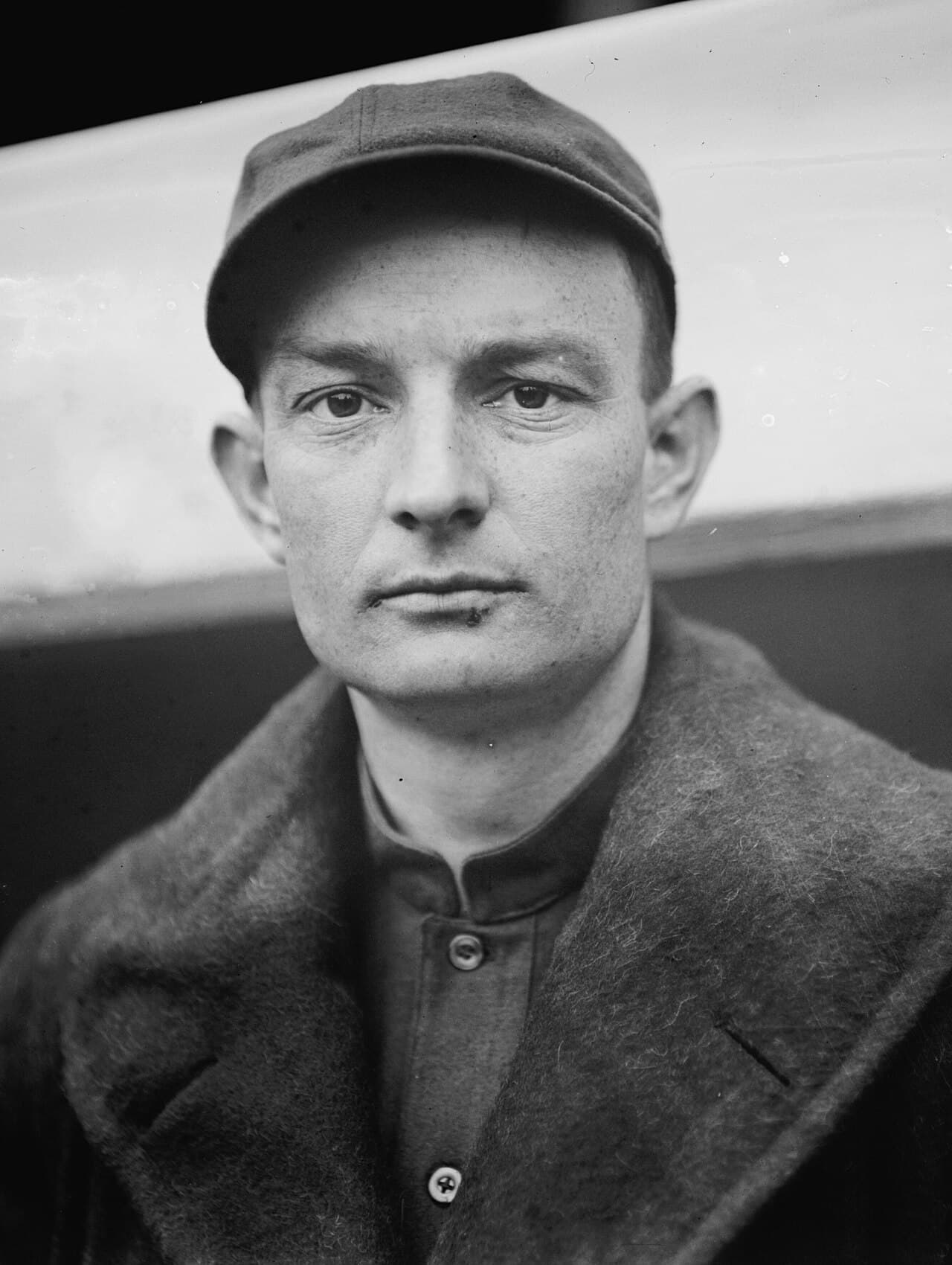
Bill McKechnie portrait (Boston NL).
Photo credit: Bain News Service / Library of Congress via Wikimedia Commons (Public domain)
Bill McKechnie managed for 25 years in the major leagues and won pennants with three different National League franchises, a feat no other manager accomplished in the twentieth century. He was called "Deacon" for his churchgoing habits and his even temperament, and the nickname suited a man who never raised his voice, never embarrassed a player in public, and built his teams around pitching and defense rather than spectacle. He won the World Series with the Pittsburgh Pirates in 1925 and the Cincinnati Reds in 1940, and the Veterans Committee elected him to the Hall of Fame in 1962.
Wilkinsburg
William Boyd McKechnie was born on August 7, 1886, in Wilkinsburg, Pennsylvania, a borough east of Pittsburgh. He played as a utility infielder in the major leagues from 1907 through 1920, appearing for the Pirates, the Boston Braves, the New York Yankees, the Indianapolis Hoosiers of the Federal League, and several other clubs. He was a modest player with a .251 career batting average and no distinguishing offensive skill, but he understood the mechanics of the game with a depth that impressed the men around him. He appeared in 846 games over parts of 11 seasons, and his value was always more evident in the dugout than at the plate.
Pittsburgh
McKechnie took over as manager of the Pittsburgh Pirates in 1922 and led them to the 1925 World Series, where they faced the Washington Senators and Walter Johnson. The Pirates fell behind three games to one and came back to win the Series in seven, including a rain-soaked Game 7 in which Pittsburgh collected 15 hits in a 9-7 victory. It was one of the most dramatic comebacks in Series history, and McKechnie's calm handling of a young roster through the deficit became his calling card.
The Pirates fired him after a disappointing 1926 season, a pattern that would recur throughout his career. McKechnie won where he managed, but front offices grew impatient with his methodical style, and he moved from city to city more often than his record warranted.
St. Louis and Boston
McKechnie managed the St. Louis Cardinals in 1928 and 1929, leading them to the National League pennant in his first year. The Cardinals lost the 1928 World Series to the Yankees in a four-game sweep, and the front office replaced McKechnie with Billy Southworth before the 1929 season. When Southworth faltered, the Cardinals fired him in July and rehired McKechnie to manage the rest of the year. He moved to the Boston Braves, where he managed from 1930 through 1937. The Braves were a poor team with little talent, and McKechnie could not overcome the roster's limitations, but his peers regarded him as one of the best managers in the league regardless of his won-lost record during those years.
Cincinnati
The Reds hired McKechnie before the 1938 season, and he built the club into a National League power within two years. He won the pennant in 1939, though the Reds were swept by the Yankees in the World Series, and won it again in 1940. The 1940 Reds defeated the Detroit Tigers in seven games for the franchise's first legitimate World Series title since 1919, the year of the Black Sox scandal. McKechnie's handling of a pitching staff led by Bucky Walters and Paul Derringer drew particular praise. He understood how to use his bullpen, how to pace his starters through the long season, and how to keep a staff healthy when other managers were burning through arms.
He managed the Reds through 1946, compiling a 744-631 record in Cincinnati and a career managerial record of 1,896 wins and 1,723 losses across 25 seasons. Three pennants with three different teams and two World Series titles made him one of the most accomplished managers in National League history.
After Managing
McKechnie served as a coach for the Cleveland Indians and the Boston Red Sox after his managing career ended, working with pitchers well into the 1950s. He was elected to the Hall of Fame by the Veterans Committee in 1962 and died on October 29, 1965, in Bradenton, Florida, at 79. His legacy rests on the pitching staffs he built and the steadiness he brought to every clubhouse he entered, a career defined less by personality than by results.