Profile
Bob Feller
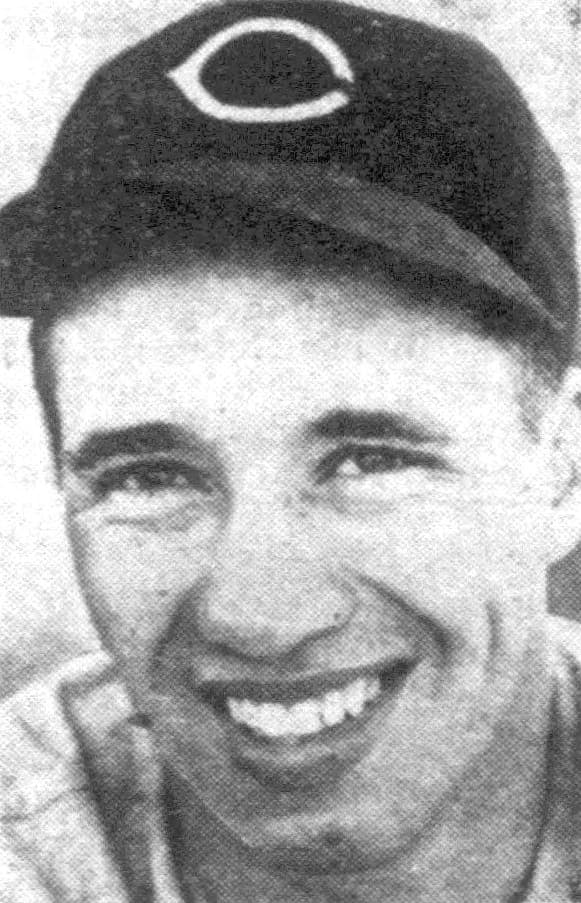
Bob Feller portrait (1953).
Photo credit: Unknown author via Wikimedia Commons (Public domain)
Robert William Andrew Feller threw a fastball that was measured, timed, and debated for decades, and nobody who faced it wanted to face it again. He won 266 games for the Cleveland Indians, struck out 2,581 batters, threw three no-hitters and 12 one-hitters, and lost nearly four full seasons to World War II. He was 17 years old when he struck out 15 batters in his first major league start and 92 when he died, still identified with the franchise he had joined as a teenager from an Iowa farm.
Van Meter
Feller was born on November 3, 1918, in Van Meter, Iowa, a town of fewer than 400 people. His father, William Feller, built a batting cage and a diamond on the family farm so his son could practice. Feller pitched for the Van Meter High School team and attracted attention from major league scouts while still in high school. The Cleveland Indians signed him in 1935 at age 16 under circumstances that later drew a formal protest from the Commissioner's office, which investigated whether the team had violated rules against signing amateur players. Commissioner Kenesaw Mountain Landis ultimately allowed Feller to remain with Cleveland.
He made his first major league start on August 23, 1936, against the St. Louis Browns and struck out 15 batters. Three weeks later, on September 13, he struck out 17 Philadelphia Athletics, breaking Rube Waddell's American League record and tying Dizzy Dean's major league mark. He was 17 years old.
Before the War
Feller became the best pitcher in the American League almost immediately. He led the league in strikeouts from 1938 through 1941, posting totals of 240, 246, 261, and 260. He won 24 games in 1939 and 27 in 1940. On April 16, 1940, Opening Day, he threw a no-hitter against the Chicago White Sox, the only Opening Day no-hitter in major league history.
His fastball was the dominant feature. Estimates of its speed ranged from the mid-90s to over 100 miles per hour, though precise measurement technology did not exist. In 1940, the Commissioner's office arranged a test in which Feller's pitch was measured against a motorcycle traveling at 86 miles per hour. The ball beat the motorcycle. The test was more spectacle than science, but it confirmed what hitters already knew.
He also threw a sharp curve that broke late and hard. The combination of velocity and movement made him nearly unhittable when he had command. When he did not, he walked batters. He led the league in walks four times during his career.
Military Service
Feller enlisted in the Navy on December 9, 1941, two days after the attack on Pearl Harbor. He was among the first major league players to volunteer for military service after the attack. He served aboard the USS Alabama as an anti-aircraft gun crew chief and saw combat in both the Atlantic and Pacific theaters, including convoy escort operations in the North Atlantic and combat in the Marshall Islands and Philippine Sea. He earned six campaign ribbons and eight battle stars.
He returned to the Indians in August 1945 and struck out 12 batters in his first start back. He had missed the 1942, 1943, and 1944 seasons entirely and most of 1945. The seasons he lost were ages 23 through 26, years when most pitchers are at their peak.
After the War
Feller picked up where he left off. In 1946, he won 26 games, struck out 348 batters (the most in the American League since Rube Waddell struck out 349 in 1904), and threw his second no-hitter, against the Yankees on April 30. He won 20 games again in 1947 and helped the Indians win the 1948 World Series, their first championship since 1920. He pitched in two games during the Series but did not win either of them.
He threw his third no-hitter on July 1, 1951, against the Detroit Tigers. He was 32 years old and no longer the overpowering pitcher of his youth, but he remained effective through guile and experience. He won 22 games in 1951 and continued pitching through 1956, finishing with a record of 266 wins and 162 losses, a 3.25 ERA, and those 2,581 strikeouts.
After Baseball
Feller was elected to the Hall of Fame in 1962 on the first ballot, receiving 93.8 percent of the vote. He remained active in baseball affairs for the rest of his life, attending events, signing autographs, and speaking on behalf of veterans. He lived in Gates Mills, Ohio, and was a fixture at Cleveland home games for decades.
He died on December 15, 2010, in Cleveland, at age 92. His record without the war years is a matter of permanent speculation. He won 107 games before enlisting and 159 after returning. What he might have won in between is unknowable, but 350 career wins was within reach, and the loss of those seasons is one of the war's many costs that do not fit neatly into a box score.