Profile
Bob Horner
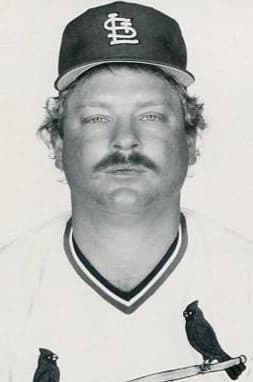
Bob Horner with the St. Louis Cardinals.
Photo credit: Unknown photographer via Wikimedia Commons
Bob Horner built a career out of being first, the rare slugger who skipped the minor leagues entirely and arrived in the majors fully formed. He was the first overall pick of the 1978 draft, the first winner of college baseball's top award, and a power hitter who homered in his major league debut and won the Rookie of the Year without ever riding a bus to a farm-team town. He hit four home runs in a single game, was driven out of baseball for a year by the owners' collusion, and lost the rest of his prime to injuries. He died in 2026 at 68.
The Sun Devil
Horner was born on August 6, 1957, in Junction City, Kansas, and grew up in Arizona, where he became one of the great college hitters in the country at Arizona State. He batted .383 with 56 home runs for the Sun Devils, was the Most Valuable Player of the 1977 College World Series that Arizona State won, and in 1978 he claimed the first Golden Spikes Award ever given, the trophy for the best college player in the land. The power was record-setting stuff, enough to make him the most coveted amateur in the country. He would not spend long waiting to use it.
Straight to the Majors
The Atlanta Braves made Horner the first overall pick of the 1978 draft, and then they did something almost unheard of. They put him straight into their major league lineup, no minor league apprenticeship at all, and he homered in his debut off the veteran Bert Blyleven. He won the National League Rookie of the Year award in just 89 games, beating out a young Ozzie Smith, a slugger who had never needed the minors to begin with.
Four in One Game
The signature day of Horner's career came on July 6, 1986, against the Montreal Expos, when he hit four home runs in a single game, joining a tiny club of players to do it. In a strange footnote, the Braves lost the game anyway, 11-8, making Horner only the second player in history to homer four times and still lose, his individual brilliance not enough to save a bad afternoon. "Once in a lifetime," he said. "The kind of day you dream about." It was the only four-homer game any player produced in the entire 1980s, a burst of power that defined him even as his team fell short around it.
The Power and the Pain
Horner could flat-out hit, and his body kept getting in the way. He finished with 218 home runs and a .277 average across 10 seasons, a high home-run rate for a player whose career kept getting interrupted, the totals far smaller than the talent. He broke his right wrist sliding in 1983 and his left wrist diving for a ball in 1984, the second injury costing him nearly a whole season, and the breakdowns never stopped. He was a feared slugger when he was on the field, which was the trouble, because the injuries kept dragging him off it just as he found his rhythm.
Exiled to Japan
The strangest chapter of his career was not his fault at all. After the 1986 season Horner became a free agent in the middle of the owners' collusion era, when the teams quietly agreed not to bid on each other's players, and despite his production not a single major league club made him an offer. So he went to Japan, signing with the Yakult Swallows for 1987, and he became a sensation, a phenomenon the country called Horner-mania, hitting 31 home runs and batting .327 in his one season there. He turned down a rich extension to come home, a slugger who had been frozen out of his own league through no fault of his own.
The End
Horner came back to the majors in 1988 with the St. Louis Cardinals, but a shoulder injury cut his season to 60 games and, as it turned out, ended his career. He retired before the 1989 season at just 31, a player who had arrived with such fanfare and left so quietly, the body finally refusing to cooperate one time too many. He later shared in the collusion settlement that compensated the players the owners had cheated, a small justice for the year that had derailed him, but the career was over, far sooner than his talent had promised.
What Might Have Been
Horner's story is a string of what-ifs, a career defined as much by what interrupted it as by what it produced. He had been a No. 1 overall pick who needed no seasoning, a four-home-run hitter, a slugger good enough to make a nation fall for him in a single season abroad, and yet the wrists and the shoulder and the collusion combined to keep his record modest. He went into the College Baseball Hall of Fame's inaugural class and the Georgia Sports Hall of Fame, honored for a brilliance that was dazzling even if it was brief. When he died in 2026, the Braves remembered the man who had built a career out of being first.