Profile
Bert Blyleven
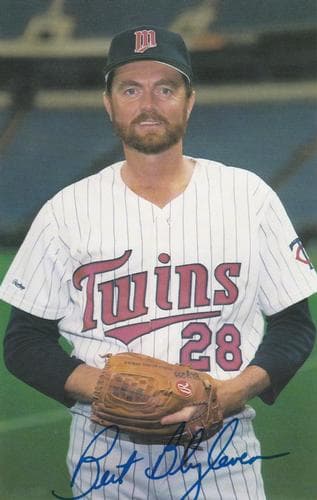
Bert Blyleven portrait in Minnesota Twins uniform, 1987.
Photo credit: Unknown photographer via Wikimedia Commons
Bert Blyleven threw one of the best curveballs the game has seen, won 287 games over 22 seasons, and struck out 3,701 hitters, fifth-most in history, and then he waited 14 years for the Hall of Fame to catch up to what the numbers had been saying all along. He won World Series rings with the 1979 Pirates and the 1987 Twins and pitched a no-hitter, but he was traded five times, pitched in chronic hard luck, and lit his teammates' shoelaces on fire for fun. He was born in the Netherlands, the first Dutch-born player in Cooperstown. The BBWAA elected him in 2011, in his 14th year on the ballot.
From the Netherlands to Garden Grove
Blyleven was born Rik Aalbert Blyleven on April 6, 1951, in Zeist, Netherlands, and came to North America as a boy when his family emigrated first to Saskatchewan and then to Southern California. He grew up in Garden Grove idolizing Sandy Koufax, and his father, wary of the arm trouble that shadowed Koufax, forbade him from throwing a curveball until he was 14. When he finally let one go, the pitch was a gift. He signed with the Minnesota Twins, reached the majors at 19 in 1970, and was good enough right away to be named the American League's top rookie pitcher.
The Knee-Buckling Curveball
The curveball made him, and he threw two of them, a big roundhouse and a sharp overhand drop out of the same fastball delivery, and the hitters who saw it never forgot it. "It was nasty, I'll tell you that," Brooks Robinson said. "Enough to make your knees buckle." Orlando Cepeda, who had stood in against Koufax himself, called Blyleven the best curveball pitcher he ever saw. The Hall of Fame plaque reaches for the same word the hitters used, a breaking ball that was cruel and knee-buckling.
The King of the Hot Foot
Blyleven was also the most notorious prankster in the game, the undisputed king of the hot foot, sneaking up on teammates in the dugout to set their shoelaces on fire with a match or a lighter. He pulled it on five different clubs, and the Angels finally taped a sign to the clubhouse fire extinguisher that read, "In case of Blyleven, pull." The same streak that made him a legend made him hard to keep around. He flipped off jeering crowds, demanded trades, and wore out his welcome again and again, dealt five times despite stuff that belonged on any team in the league.
October with the Pirates and Twins
For all the hard luck, Blyleven came up big when it counted. He threw a complete game to clinch the 1979 National League pennant for the "We Are Family" Pittsburgh Pirates of Willie Stargell, then came out of the bullpen in Game 5 of the World Series, with Pittsburgh down three games to one, and threw four scoreless innings to start the comeback that won the title in seven. Eight years later he anchored the 1987 Minnesota Twins, won Game 2 of the World Series in the racket of the Metrodome, and helped bring Minnesota its first championship. "When you put fifty-five thousand screaming people in here," he said of the dome, "it's something."
The Hard-Luck Record
Blyleven's win total never matched his pitching, because his teams so often gave him nothing to work with. He won 15 games by a 1-0 score, more than anyone since Walter Johnson, which means 15 times he threw a shutout and scraped together the single run he needed. Far more often he pitched well and lost anyway, undone by an offense that went quiet behind him. The traditional measures, wins and losses, hid how good he was, and for years they cost him with the voters who leaned on them.
The Longest Wait
That began to change when a new way of measuring pitchers arrived. Blyleven debuted on the Hall of Fame ballot in 1998 with about 17 percent of the vote and slipped the next year, a forgotten candidate until a Long Beach investor named Rich Lederer took up his case, writing and arguing and lobbying voters with the strikeouts, the shutouts, and the innings the win-loss record had buried. The numbers climbed year after year, and in 2011, in his 14th and next-to-last year on the ballot, the writers finally elected him with 79.7 percent. He had ranked fifth all-time in strikeouts and ninth in shutouts the entire time.
Circle Me Bert
By then Blyleven had become a fixture in the Minnesota broadcast booth, where the prankster found a second act. Handed a telestrator in 2002, he started circling fans who held up signs in the stands, a bit he called "Circle Me Bert" that grew into a charity draw across the state. He went into the Hall of Fame in 2011 with a Twins cap on his plaque, and the Twins retired his number 28 that summer. The king of the hot foot made one promise at Cooperstown. There would be no hot foots, he told the crowd, at least not in the first year.