Profile
Brooks Robinson
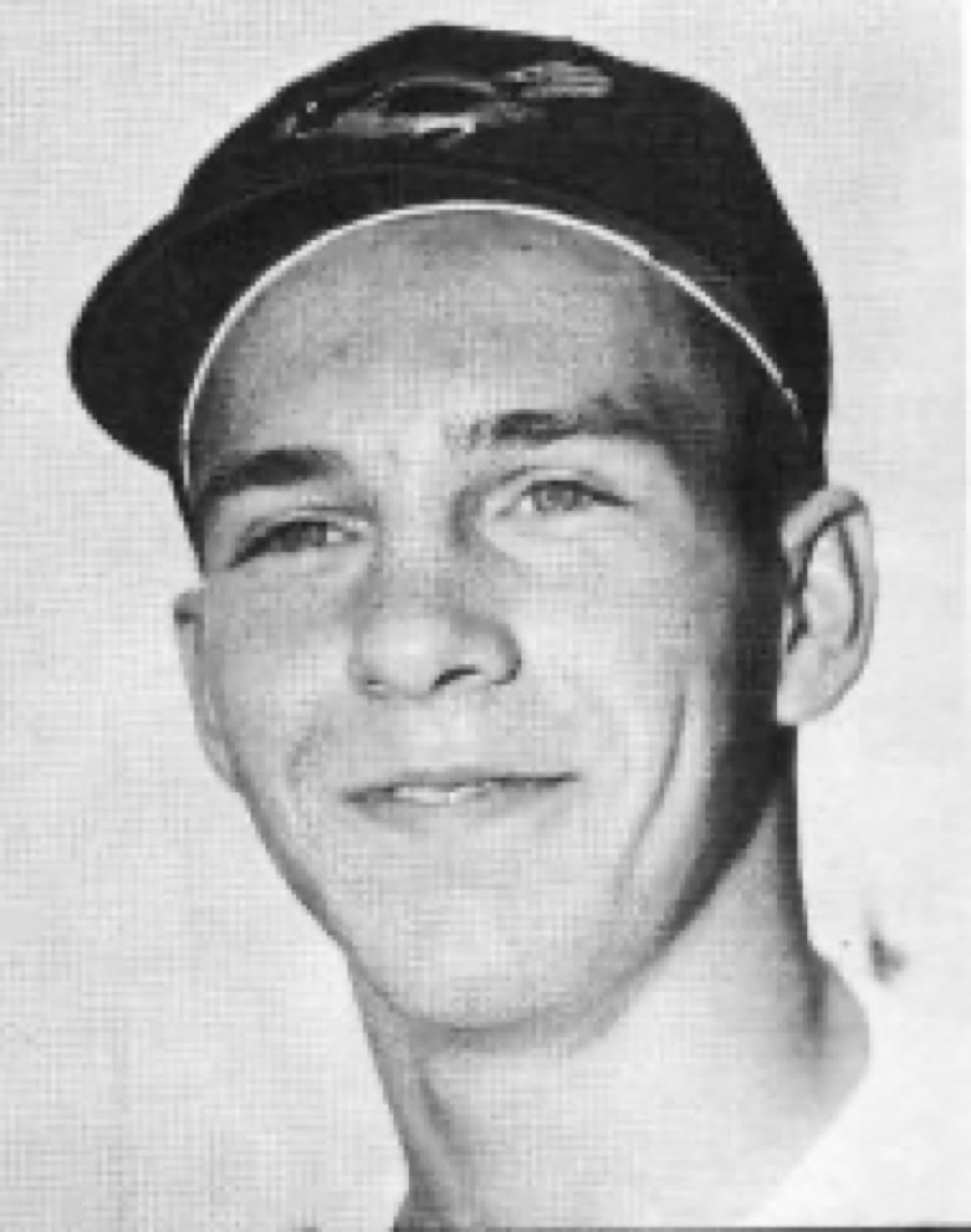
Brooks Robinson portrait, 1955.
Photo credit: From collection of User:JGHowes via Wikimedia Commons (Public domain)
Brooks Calbert Robinson Jr. played 23 seasons for the Baltimore Orioles, won 16 consecutive Gold Glove Awards, made 15 consecutive All-Star teams, and fielded his position so brilliantly that Sparky Anderson, after watching Robinson destroy the Cincinnati Reds in the 1970 World Series, told reporters, "I'm beginning to see Brooks in my sleep. If I dropped this paper plate, he'd pick it up on one hop and throw me out at first." Robinson hit .267 with 2,848 hits and 268 home runs, won the 1964 AL MVP, and earned the 1970 World Series MVP after batting .429 with nine hits and a series of defensive plays that redefined what was possible at third base. Pie Traynor watched Robinson and said, "I once thought of giving him some tips, but dropped the idea." The BBWAA elected Robinson on his first ballot in 1983 on 92 percent of the vote, the first third baseman to receive that distinction.
Little Rock
Robinson was born on May 18, 1937, in Little Rock, Arkansas. His father Brooks Sr. worked for Colonial Bakery and later became a captain with the Little Rock Fire Department. Robinson grew up delivering newspapers to 150 customers, one of whom was Hall of Famer Bill Dickey. Robinson played basketball at Little Rock Central High School and baseball through American Legion ball, turned down a full basketball scholarship from the University of Arkansas, and signed with the Orioles in 1955 for a $4,000 bonus. He chose Baltimore over the New York Giants and Cincinnati because the Orioles showed the most interest and offered the fastest path to everyday play.
Robinson debuted on September 17, 1955, at 18 and collected two hits in four at bats against the Washington Senators. He struggled in his first full seasons, hitting .239 in 1957 and .238 in 1958, and enlisted in the Arkansas Army National Guard in 1958 for six months of active duty. Robinson emerged as a star in 1960, when he won his first Gold Glove, made his first two All-Star teams, and finished third in MVP voting behind Roger Maris and Mickey Mantle.
The Vacuum Cleaner
Robinson set all-time records at third base for games (2,870), putouts (2,697), assists (6,205), double plays (618), and total chances (9,165). He led AL third basemen in fielding percentage 11 times and in assists eight times, both records. Umpire Ed Hurley said, "He came down from a higher league." Robin Roberts said Robinson had "the fastest reflexes I've ever seen." Frank Robinson, his teammate and the 1966 AL MVP, said, "He was the best defensive player at any position. I used to stand in the outfield like a fan and watch him make play after play."
Robinson won the 1964 MVP with a .317 average, 28 home runs, and 118 RBI, carrying the Orioles through September with a .464 average in the final month. The Orioles won the 1966 World Series, sweeping the Dodgers in four games with Robinson and Frank Robinson hitting consecutive home runs off Don Drysdale in Game 1. On July 15, 1960, Robinson hit for the cycle against the White Sox, the first Oriole to accomplish it.
Robinson trimmed his batting helmet to a one-inch bill with a hacksaw blade because a normal bill distracted him, and he was so particular about his glove that he would spend an entire year preparing a new one before using it in games. Chuck Estrada, a teammate, captured the paradox. "He didn't have a typical athletic body, he was kind of slump-shouldered, not a real muscular guy, and he didn't appear to have a strong arm. But then watching him play, you found out that none of that mattered, because he had great hands, a quick release, and the runner was always out."
October 1970
Robinson's defining performance came in the 1970 World Series against the Reds. He batted .429 with two home runs and six RBI across five games, but his fielding was the show. In Game 1 he made a backhanded grab down the line that robbed Lee May. In Game 3 he dove to his left to rob Johnny Bench of a hit, then grabbed a Tony Perez hopper, stepped on third, and fired to first for a double play. In Game 5 he dove to backhand a Bench smash in the ninth inning and fielded the final ground ball to end the Series. Pete Rose said, "I've never seen anything like him in my life. If we knew he wanted a car so badly, we'd have bought one for him ourselves." Robinson won the World Series MVP and the Hickok Belt as the top professional athlete of the year.
Owings Mills
Robinson's final home run, on April 19, 1977, was a walkoff pinch hit in the bottom of the 10th inning off Dave LaRoche that turned a 5-3 deficit into a 6-5 Orioles win. Robinson announced his retirement on August 21, 1977, and at his retirement ceremony on September 18, his successor Doug DeCinces presented him with the third base bag while 51,798 fans gave him a standing ovation. The Orioles retired his number 5 on April 14, 1978.
Gordon Beard, a sportswriter who covered the Orioles for decades, wrote the most quoted line about Robinson's relationship with Baltimore. "Brooks never asked anyone to name a candy bar after him. In Baltimore, they name their children after him." Robinson co-founded the Major League Baseball Players Alumni Association, served as its president from 1989 until 2023, and spent his post-playing career as an Orioles television broadcaster, a business owner, and a man who turned every autograph request into a conversation. Chuck Thompson said that when fans approached Robinson, "he complied while finding out how many kids you have, what your dad does, where you live, how old you are, and if you have a dog."
Robinson died of heart disease on September 26, 2023, at his home in Owings Mills, Maryland, at 86.