Player Profile
Clark Griffith
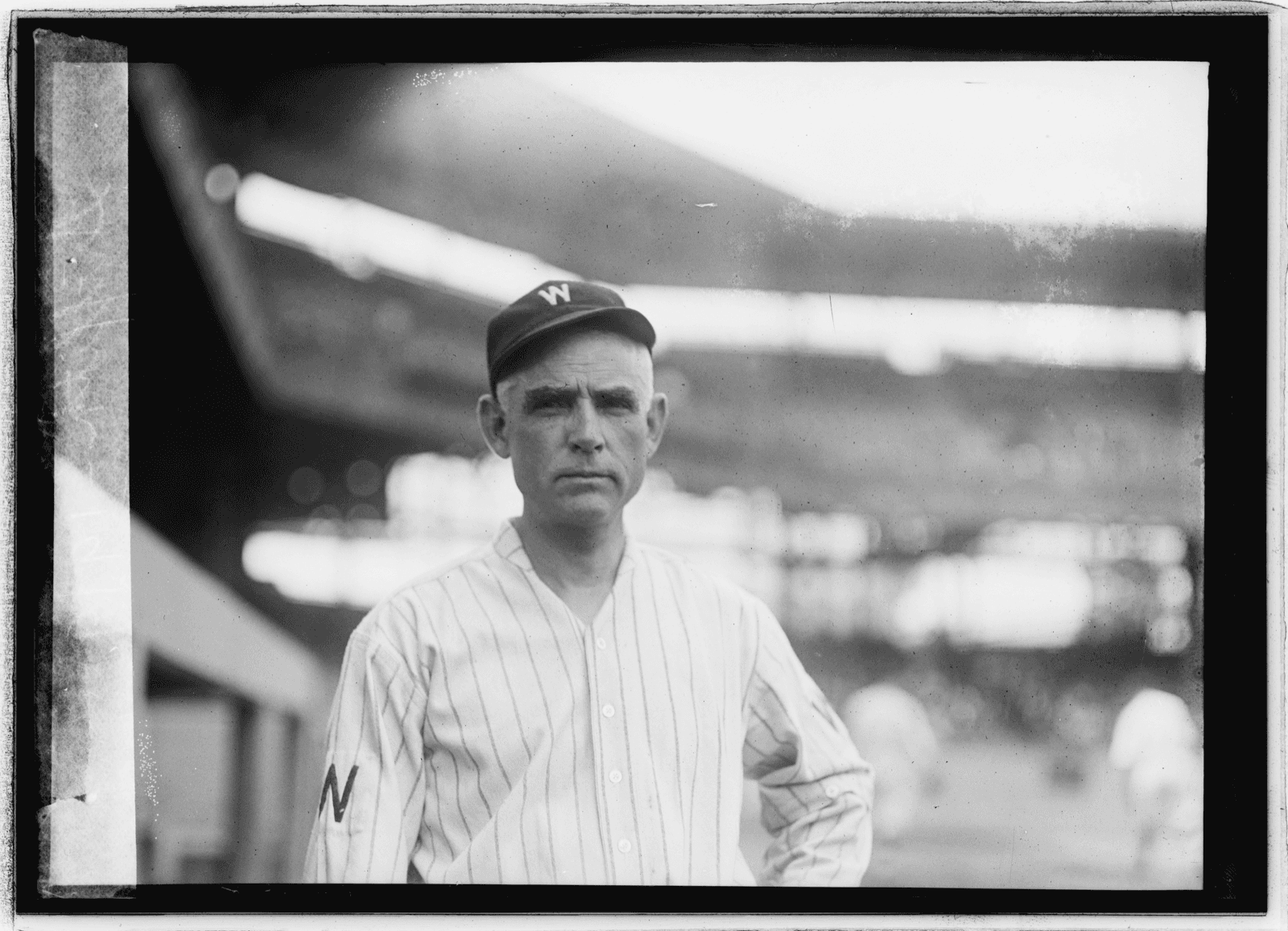
Clark Griffith portrait, 1919.
Photo credit: Bain News Service via Wikimedia Commons (Public domain)
Clark Calvin Griffith won 237 games as a pitcher, managed four major league clubs, and owned the Washington Senators for 36 years. His career spanned baseball's entire first century, from the rough beginnings of the 1890s through the postwar expansion era of the 1950s. Sportswriters called him "The Old Fox," and the name fit a man who outmaneuvered opponents on the mound, in the front office, and in the league's boardrooms for more than six decades.
Missouri and the Mound
Griffith was born on a farm near Clear Creek, Missouri, in 1869. He claimed to have started working at age 10 in the local lead mines, though some details of his early years are difficult to verify. He reached the major leagues in 1891 with the St. Louis Browns of the American Association and settled with the Chicago Colts in 1893. Over the next eight seasons, he won 20 or more games six times, relying on guile and movement rather than overpowering speed. He threw a screwball before the pitch had a widely recognized name, and he was among the first pitchers to study opposing hitters systematically, adjusting his approach based on the count and the situation.
Building the American League
When Ban Johnson organized the American League as a competitor to the National League in 1901, Griffith was one of the first prominent players to defect. He became the player-manager of the Chicago White Sox and won the first American League pennant, going 24-7 on the mound while running the club. His willingness to jump leagues and recruit other National League players gave the new circuit immediate credibility. He moved to the New York Highlanders as manager in 1903, where he oversaw a pitching staff headlined by Jack Chesbro, who won 41 games in 1904. Griffith later managed the Cincinnati Reds, compiling a respectable record without winning another pennant.
The Owner's Box
In 1912, Griffith took over as manager of the Washington Senators and bought a 10% stake in the club. Seven years later, in November 1919, he and Philadelphia grain dealer William Richardson purchased a controlling interest, and Griffith ran the franchise for the rest of his life. Walter Johnson was already on the roster when Griffith arrived, and the two built a partnership that defined Washington baseball for two decades. Johnson became the premier pitcher of his generation under Griffith's direction, and the Senators won the 1924 World Series with a team that Griffith had assembled through trades and careful scouting rather than heavy spending.
Griffith Stadium, the club's home park, bore his name and became one of the most recognizable venues in the American League. Griffith operated the franchise on thin margins, selling off players when finances demanded it and relying on Johnson's appeal at the gate to keep the organization solvent during lean stretches.
Race and the Stadium
Beginning in 1940, Griffith rented Griffith Stadium to the Homestead Grays for Negro League games throughout the decade. He profited from black baseball while refusing to sign black players to his own roster. The Senators were among the last American League teams to integrate, adding Carlos Paula in 1954, seven years after Jackie Robinson broke the color line in Brooklyn. Griffith's defenders argued that he supported black baseball financially by providing a major league venue for Negro League games. His critics pointed out that the support stopped where his own roster began.
The Last Fox
The Old Timers Committee elected Griffith to the Hall of Fame in 1946. He continued to run the Senators until his death on October 27, 1955, at age 85. His nephew, Calvin Griffith, inherited the franchise and moved it to Minnesota in 1961, where it became the Twins. Clark Griffith's career spanned six decades and three distinct roles in the game, and no other figure of his era accumulated comparable influence as a pitcher, manager, and owner.