Profile
Dazzy Vance
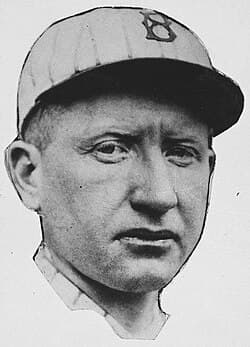
Dazzy Vance portrait, 1922.
Photo credit: Bain News Service via Wikimedia Commons (Public domain)
Charles Arthur Vance spent a decade bouncing through the minor leagues, failed in two brief major league trials, and did not become a full-time starter until he was 31 years old. Then he became the most dominant strikeout pitcher in the National League for the better part of a decade. He led the league in strikeouts seven consecutive years, won the 1924 MVP award, threw a no-hitter, and overpowered hitters with a fastball that arrived out of a whirlwind delivery and a flapping undershirt sleeve. They called him "Dazzy" because of how he dazzled hitters, and the nickname held up every time he took the mound. The BBWAA elected him to the Hall of Fame in 1955.
Orient to Brooklyn
Vance was born on March 4, 1891, in Orient, Iowa, and grew up near Hardy, Nebraska. He was tall and rangy, threw hard from the beginning, and struggled for years with control problems and a chronically sore right arm. He pitched briefly for the Pittsburgh Pirates in 1915 and for the New York Yankees in 1915 and 1918, appearing in a combined eleven games across both organizations without making any impression that suggested a future Hall of Famer.
He spent years in the minor leagues after those failed trials, pitching for teams in New Orleans, Memphis, Sacramento, and elsewhere. The turning point came while he was pitching for New Orleans in the Southern Association. A doctor there diagnosed the arm trouble that had plagued him for years and treated it, allowing Vance to rebuild his delivery and regain the velocity that his arm had been too damaged to sustain. The Brooklyn Robins purchased his contract before the 1922 season, and Vance arrived in the major leagues for good at age 31.
The Dazzler
From 1922 through 1928, Vance led the National League in strikeouts every season, a seven-year stretch of dominance unmatched by any pitcher of his era. He struck out 134 batters in 1922, 197 in 1923, and 262 in 1924, a total that led the league by more than 100 and established him as the most overpowering pitcher in the game. In 1924, he went 28-6 with a 2.16 ERA, winning the MVP award over Rogers Hornsby, who had batted .424 that season. For a pitcher to win the MVP over a .424 hitter required a season of historic proportions, and Vance delivered one.
His fastball was his primary weapon. He threw with a high leg kick and a long, sweeping arm motion that hid the ball until the last possible moment, and hitters described seeing only a blur before the pitch arrived. He also cut a slit in the sleeve of his undershirt on his pitching arm, and the flapping white fabric created an additional visual distraction for batters trying to pick up the ball against the background of the delivery. The practice was legal at the time, and Vance exploited it without apology. The league eventually banned the trick, but by then Vance had already built his reputation on velocity that needed no assistance.
He led the league in ERA three times, in 1924, 1928, and 1930, and he struck out more than 200 batters in three separate seasons. On September 13, 1925, he threw a no-hitter against the Philadelphia Phillies, a 10-1 victory that was the only no-hitter of his career. He pitched for Brooklyn teams that rarely contended for a pennant, which meant his individual brilliance played out against a backdrop of organizational mediocrity. The Robins finished in the second division during most of Vance's peak years, and his win totals suffered accordingly, but his strikeout numbers and ERA reflected how dominant he was regardless of the lineup behind him.
Decline and a Ring
Vance's velocity began to fade after 1928, though he remained an effective pitcher into the early 1930s by mixing his diminished fastball with a sharp curveball and the craft he had accumulated over two decades of professional baseball. He went 22-10 in 1928, his last great season, and continued pitching for Brooklyn through 1932. He spent time with the St. Louis Cardinals, the Cincinnati Reds, and briefly returned to Brooklyn for a final season in 1935.
In 1934, while with the Cardinals, he appeared in the World Series for the only time in his career. The Gashouse Gang, managed by Frankie Frisch and led by Dizzy Dean, beat the Detroit Tigers in seven games. Vance was 43 years old and contributed a single relief appearance in the Series. It was his only championship, earned two decades after he first tried to stick in the major leagues and failed.
He finished with a 197-140 record, a 3.24 ERA, and 2,045 strikeouts. He died on February 16, 1961, in Homosassa Springs, Florida, at age 69.