Profile
Elmer Flick
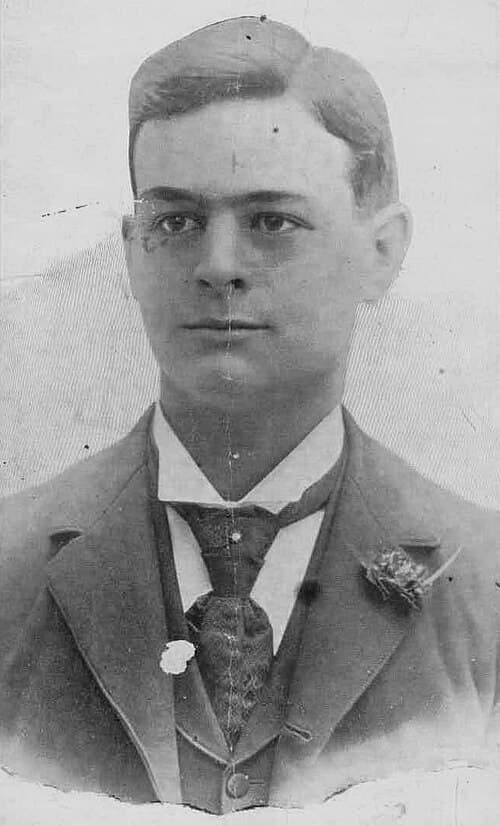
Elmer Flick portrait (1899).
Photo credit: Unknown author via Wikimedia Commons (Public domain)
Elmer Flick played 13 seasons in the major leagues, won the 1905 American League batting title, and became the answer to one of the most famous what-if questions in baseball history when Cleveland's front office declined to trade him for a young outfielder named Ty Cobb. A stomach ailment derailed his career after the 1907 season, when he was 31, robbing him of the counting statistics that would have made his case for the Hall of Fame obvious rather than debatable. The Veterans Committee corrected the omission in 1963, and by then Flick was 87 years old and had been out of the game for more than half a century.
Bedford
Elmer Harrison Flick was born on January 11, 1876, in Bedford, Ohio, a village southeast of Cleveland. He was a strong, compact outfielder with a quick bat and exceptional speed on the bases. He signed with the Philadelphia Phillies in 1898 and established himself immediately, batting .302 in his rookie season, .342 in 1899, and .367 in 1900, when he finished among the league leaders in hits, doubles, triples, and stolen bases.
Philadelphia to Cleveland
Flick batted .333 for the Phillies in 1901, and when the American League began raiding National League rosters, he signed with the Philadelphia Athletics before the 1902 season. He played only 11 games for the Athletics before a Pennsylvania court injunction, obtained by the Phillies, barred him from playing for any other team within the state. The injunction did not apply outside Pennsylvania, so the Athletics transferred Flick to the Cleveland franchise in May 1902, and he continued playing without interruption.
He thrived with the Naps. In 1905, he won the American League batting title with a .308 average, a figure that reflects the dead-ball era's suppressed offensive environment rather than any deficiency in Flick's hitting. He also led the league in triples three times and in stolen bases twice, and his combination of average, speed, and outfield defense made him one of the most valuable players in the American League during the first decade of the twentieth century.
The Trade That Never Happened
In 1907, Detroit Tigers manager Hughie Jennings reportedly proposed trading Cobb, then a 20-year-old outfielder in his third major league season, to Cleveland for Flick. Cleveland owner Charles Somers declined. Flick was 31 and an established star. Cobb was young, talented, and difficult to manage. Somers chose the proven commodity, and the decision looks worse with every passing year. Cobb went on to win 12 batting titles and compile 4,189 hits. Flick played one more full season.
The End
A mysterious stomach ailment struck Flick during the 1908 season and effectively ended his career. He played only 9 games in 1908, 66 in 1909, and 24 in 1910 before retiring. Doctors never identified the condition with certainty, and Flick himself offered few details in later interviews. Whatever it was, it reduced one of the league's best hitters to a part-time player overnight and cut short a career that, projected forward even modestly, would have produced 2,500 or more hits instead of the 1,752 he accumulated.
Ninety-Four Years
Flick returned to the Cleveland area after retirement and lived quietly for decades. The Veterans Committee elected him to the Hall of Fame in 1963, and he attended the ceremony in Cooperstown, walking to the podium at 87 to accept an honor that many of his contemporaries had not lived to see. He died on January 9, 1971, two days before his 95th birthday, one of the longest-lived Hall of Famers in history and a reminder that careers cut short by injury leave questions that statistics alone cannot answer.