Profile
Frank Thomas
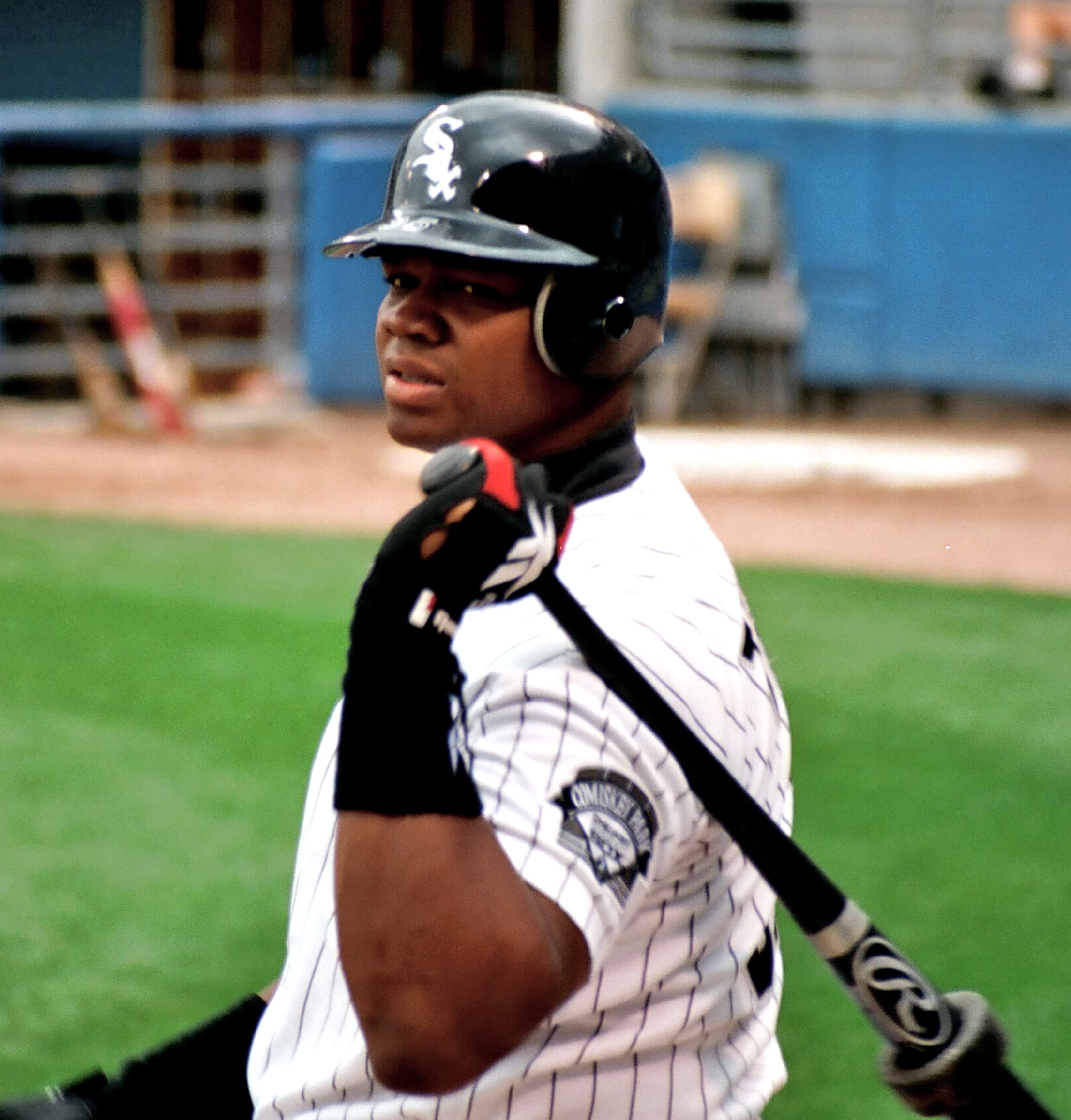
Frank Thomas in Chicago White Sox uniform, 1997.
Photo credit: Unknown photographer via Wikimedia Commons
Frank Thomas was the most fearsome right-handed hitter of the 1990s, a 6-foot-5 slugger called the Big Hurt who reached base nearly 42 percent of the time and controlled the strike zone like a man half his size. He hit 521 home runs, batted .301, won back-to-back American League MVP awards, and put together seven straight seasons no hitter in the history of the game had matched, and he did it while saying out loud that the players around him were cheating. He spent most of his career with the Chicago White Sox. The BBWAA elected him to the Hall of Fame in 2014, on the first ballot.
A Father's Lesson on Swinging at Strikes
Thomas was born on May 27, 1968, in Columbus, Georgia, the son of Frank Thomas Sr., a church deacon who bonded prisoners and delivered liquor for a living and raised his boy on a short list of rules. Put God, family, and education first. Clean your plate. And do not swing at bad pitches. "Watch the ball all the way from the pitcher's hand to the plate," his father told him, and the lesson took so deeply that the grown man would draw nearly 1,700 walks and lead his league in patience as often as in power. The discipline that defined Frank Thomas at the plate began at his father's table.
From Auburn Tight End to Seventh Pick
Thomas went to Auburn on a football scholarship, a tight end built like a wall, but baseball was the real gift. He set 14 hitting records there, hit .359 as a freshman, and grew too valuable a bat to risk on the gridiron. The Chicago White Sox drafted him seventh overall in 1989, and the broadcaster Ken Harrelson, watching him punish a baseball, handed him the name that stuck. He called him the Big Hurt, for the damage he did to the ball and to the men who threw it. "In my 30 years in the game," Harrelson said, "I've never seen anyone like Big Hurt."
The Best Hitter in the League
Thomas reached the majors in 1990 and hit .330 down the stretch as a rookie, and the American League spent the next decade trying to get him out. He stood 6-foot-5 and weighed 275 pounds and warmed up swinging a length of rebar, an intimidating sight who nonetheless worked the count like a leadoff man. "Frank is too big to be a man," his teammate Steve Lyons said, "and too small to be a horse." Pitchers could neither overpower him nor coax him out of the strike zone, and for most of the 1990s nobody in the league hit the way he did.
Seven Seasons No One Has Matched
From 1991 through 1997, Thomas hit .300 with at least 20 home runs, 100 runs, 100 runs batted in, and 100 walks every single year, seven seasons in a row, a run no hitter in the history of the game has ever matched, not Babe Ruth, not Lou Gehrig, not Ted Williams. He put up eight such seasons in all, behind only Ruth and Gehrig. Plenty of sluggers reached the home run totals and plenty of hitters drew the walks, but no one paired the power and the patience the way Thomas did for seven straight years.
Back-to-Back MVPs and the 1994 Strike
Thomas won the American League MVP in 1993 by unanimous vote, every first-place ballot, and won it again in 1994 in a season the strike cut short. He was hitting .353 with 38 home runs through 113 games when the players walked out in August, leading the league in runs, walks, slugging, and on-base percentage, with 32 home runs already in the book at the All-Star break and a Triple Crown within reach. The strike took the rest of the year and whatever records a full season would have brought. They were the two finest seasons of a career full of them.
Power and Patience
What set Thomas apart was a batting eye that belonged on a different kind of hitter. He led the American League in on-base percentage four times and in walks four times, and he finished his career reaching base at a .419 clip, a figure only a handful of hitters have ever beaten. The columnist Thomas Boswell wrote that if there were ever a new Ted Williams, a perfect blend of slugger and hitter, Thomas might be the man. He won the batting title at .347 in 1997, drove in more than 1,700 runs, and made pitchers pay whether they came after him or pitched around him.
Watching the 2005 Title from the Bench
The end in Chicago turned bitter. After 16 years Thomas felt the front office had gone cold on him, learning of the team's new direction by voicemail, and he never forgave the owner Jerry Reinsdorf for not picking up the phone himself. "I really thought, the relationship we had over the last 16 years, he would have picked up the phone," Thomas said. Injuries held him to 34 games in 2005, the year the White Sox finally won the World Series, and he watched the title he had waited his whole career for from the sideline. He threw out a ceremonial first pitch in the playoffs and stood in the noise with tears in his eyes.
Doing It the Right Way
Thomas played his best years in the heart of the steroid era and refused to keep quiet about it, calling for drug testing as early as 1995, when the commissioner was still waving the problem off. He was the only active player who agreed to talk to the investigators behind the 2007 Mitchell Report. "I had nothing to hide," he said. When he hit his 500th home run that year, he said it meant more because he had done it the right way. He did not pretend to be a saint, acknowledging that he had used amphetamines early in his career before the rules changed, which made the stand against steroids ring true rather than smug.
Cooperstown and His Father
Thomas finished his career in Oakland and Toronto, hit his 521st home run to tie Ted Williams, and retired in 2010 as a member of the White Sox, who retired his number 35. The BBWAA elected him to the Hall of Fame in 2014, the first White Sox player the writers ever chose on the first ballot. He broke down at the podium when he reached his father, who had died in 2001. "Frank Sr., I know you're watching and smiling from heaven," he said. "Without you, I know 100 percent I wouldn't be here." He closed with the rule that ran through all of it, "There are no shortcuts to success."