Profile
Harry Wright
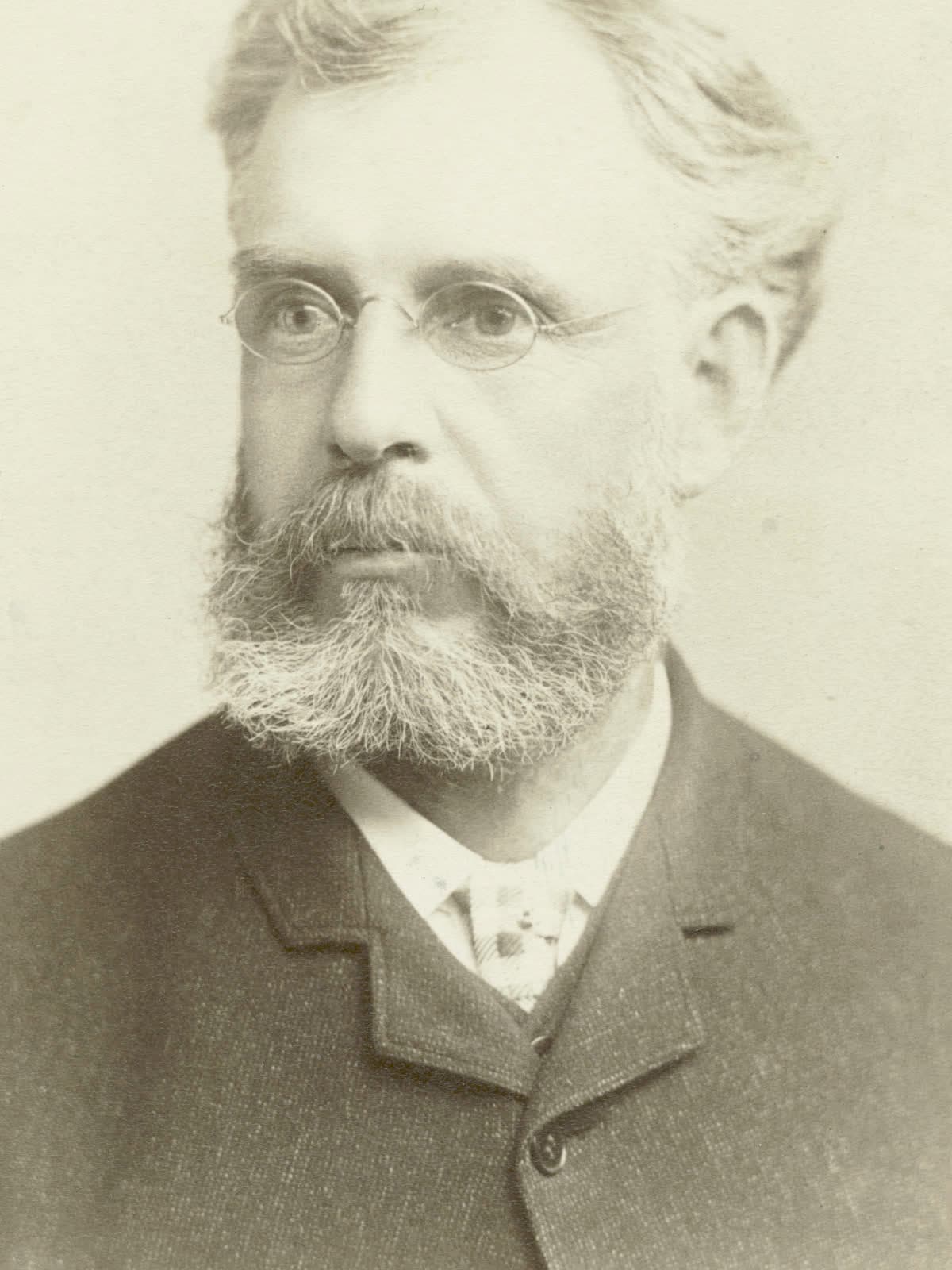
Harry Wright portrait.
Photo credit: New York Public Library via Wikimedia Commons (Public domain)
William Henry Wright organized the first openly professional baseball team, managed it through an undefeated season, and spent the next quarter-century proving that professional baseball could be run as a legitimate, self-sustaining business. He was a cricket player turned baseball evangelist, an Englishman who helped build America's national pastime into a professional sport, and the older brother of George Wright, the most celebrated player of their generation. The Veterans Committee elected him to the Hall of Fame in 1953.
Sheffield to Cincinnati
Wright was born on January 10, 1835, in Sheffield, England. His father, Samuel Wright, was a professional cricket player who brought the family to the United States when Harry was a small child, settling in New York City. Harry grew up around the cricket grounds of Manhattan and became a cricket professional himself, playing for the St. George Cricket Club, which held its matches at the Elysian Fields in Hoboken, New Jersey, the same grounds where Alexander Cartwright's Knickerbockers had played their early baseball games a decade earlier.
Wright took up baseball in the late 1850s, joining the Knickerbocker Club in 1857 as the game was spreading rapidly through urban athletic clubs. He moved to Cincinnati in 1865 to serve as a cricket professional for the Union Cricket Club, but baseball was growing faster than cricket in the Midwest, and Wright followed the momentum. By 1867, he was organizing baseball teams in Cincinnati and building a reputation as someone who understood how to assemble, train, and manage a competitive roster.
The Undefeated Season
In 1869, Wright assembled the Cincinnati Red Stockings, the first team to pay all of its players openly and to operate as a fully professional enterprise. He recruited players from across the country, including his brother George, who played shortstop and was the team's best player. Wright played center field, managed the team, arranged travel, scheduled games, negotiated with local promoters, and held the entire operation together through logistics that nobody in baseball had attempted at that scale before.
The Red Stockings traveled over 12,000 miles by rail, steamboat, and stagecoach during the 1869 season and played before an estimated 200,000 spectators across the country. They won every game they played that year, running up a winning streak that extended into 1870 before the Brooklyn Atlantics finally beat them on June 14, 1870. The exact number of consecutive victories is disputed among historians, with counts ranging from 57 to 81 or higher depending on whether exhibitions and early-1870 games are included. The precise figure matters less than what the tour demonstrated. Professional baseball could draw paying crowds in cities from coast to coast, and a well-organized team could sustain itself financially through gate receipts alone.
The National League
When the Red Stockings dissolved after the 1870 season, Wright moved to Boston and helped found the Boston Red Stockings in the National Association, the first professional baseball league, in 1871. The team became a dynasty almost immediately, winning four consecutive pennants from 1872 through 1875. Wright managed Albert Spalding as his star pitcher during those years, and the Boston club dominated the Association so thoroughly that its competitive imbalance contributed to the league's eventual collapse.
When the National League replaced the National Association in 1876, Wright's Boston club became a charter member. He managed Boston in the National League through 1881, winning two pennants in 1877 and 1878. He then managed the Providence Grays from 1882 to 1883, and the Philadelphia Phillies from 1884 to 1893, a decade-long tenure that produced no pennants but established the Phillies as a stable franchise in the league.
Wright's career managerial record stood at 1,225 wins and 885 losses across more than two decades. He was among the first managers to conduct organized pregame practice, to design batting orders tailored to opposing pitchers, and to position fielders based on hitter tendencies. He treated managing as a discipline that required preparation, observation, and adaptation rather than simply filling out a lineup card and watching the game unfold. His innovations seem obvious now because every manager who followed him absorbed them.
Death
Wright's health declined in his final years. He suffered from what contemporary accounts described as poor eyesight and general physical deterioration, and he stepped down from managing the Phillies after the 1893 season. He served briefly as chief of umpires for the National League before his condition worsened.
He died on October 3, 1895, in Atlantic City, New Jersey, at age 60. His brother George had been inducted into the Hall of Fame in 1937 as part of the Centennial class. Harry's own election by the Veterans Committee came in 1953, nearly six decades after his death, recognizing the man who had taken a gentlemen's pastime and turned it into a professional sport.