Profile
Joe Morgan
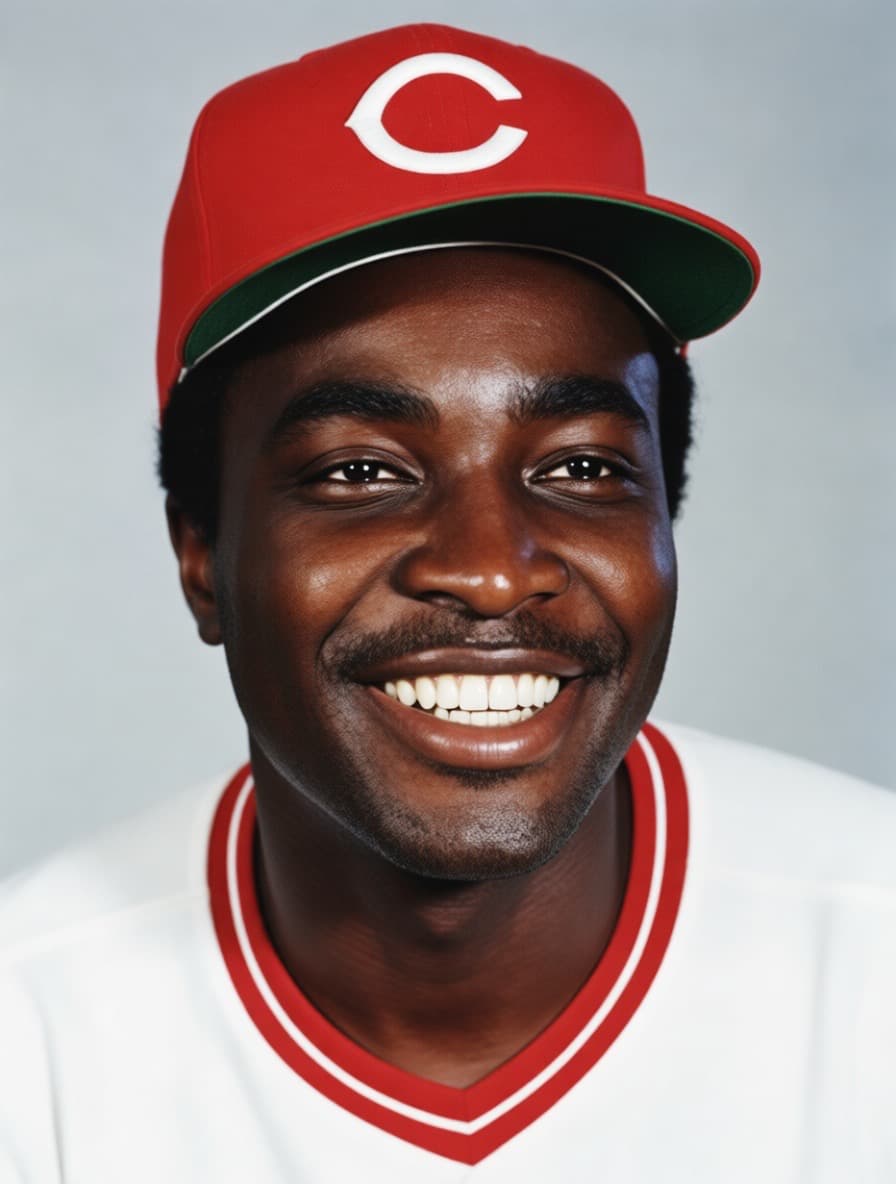
Joe Morgan portrait.
Photo credit: User-provided image via User-provided image
Joe Leonard Morgan stood five feet seven, weighed 160 pounds, flapped his back elbow like a chicken before every pitch because former second baseman and Astros coach Nellie Fox told him it would keep his swing from dropping, and played 22 seasons of baseball with a combination of power, speed, discipline, and intelligence that Bill James called the best ever produced at his position. Morgan hit 268 home runs, stole 689 bases, walked 1,865 times, won five consecutive Gold Gloves, and earned back-to-back NL MVP awards in 1975 and 1976 while anchoring the Big Red Machine alongside Johnny Bench, Pete Rose, and Tony Perez. In Game 7 of the 1975 World Series, with the score tied 3-3 in the ninth inning, Morgan singled to drive in Ken Griffey Sr. for the winning run. Sparky Anderson, who managed him through the Machine's peak, said, "That little man can do everything." The BBWAA elected Morgan to the Hall of Fame in 1990 on 81.7 percent of the ballot, and he finished his bachelor's degree at Cal State Hayward the same year.
Oakland
Morgan was born on September 19, 1943, in Bonham, Texas, the oldest of six children. His family moved to Oakland, California, when Joe was five, and his father and relatives worked at Pacific Tire and Rubber. Morgan attended Oakland City College, signed with the Houston Colt .45s on November 1, 1962, for $500 a month and a $3,000 bonus, and debuted on September 21, 1963, at 20. He played nine seasons for the Astros, developing into an All-Star but playing on teams that never contended, and on November 29, 1971, Houston traded him to Cincinnati along with Cesar Geronimo, Jack Billingham, Denis Menke, and Ed Armbrister for Lee May, Tommy Helms, and Jimmy Stewart. The deal was initially regarded as favoring Houston. It became one of the most lopsided trades in baseball history.
The elbow flap came from Fox, the diminutive White Sox second baseman who worked as a coach in the Houston organization. Fox noticed Morgan's back elbow dropping during his swing and suggested he flap it before each pitch to keep it elevated. Morgan adopted the tic and it became his visual signature, a nervous twitch that preceded one of the most disciplined swings in the game. He walked more than he struck out in 16 of his 22 seasons and remains the only player in history to record 50 extra base hits, 100 walks, and 50 stolen bases in the same season. He accomplished it four consecutive years, from 1973 through 1976.
The Machine
Morgan's first six seasons in Cincinnati produced numbers that no second baseman matched before or since. He averaged a .301 batting average with a .429 on-base percentage and .495 slugging across that span, and in 1975 he led the league in walks (132) and on-base percentage (.466) while hitting .327 with 67 stolen bases and 107 runs scored. The Reds won 108 games and defeated the Red Sox in a seven-game World Series that is still regarded as the greatest ever played. Morgan drove in the winning run in the ninth inning of Game 7 with a single off Jim Burton.
In 1976, Morgan hit .320 with 27 home runs, 111 RBI, 60 stolen bases, and 114 walks, leading the league in on-base percentage and slugging. He won his second consecutive MVP, and the Reds became the first National League team to win consecutive World Series since the 1921-22 Giants, sweeping the Yankees in four games. Anderson called it the finest he ever saw from a player. "I have never seen anyone play better than Joe has this year."
Morgan played for five teams across 22 seasons, returning to Houston in 1980 and then moving to San Francisco, Philadelphia, and Oakland. In 1983, at 40, he joined the Phillies for a final pennant run alongside Pete Rose, Steve Carlton, and Mike Schmidt on an aging squad the press called the "Wheeze Kids" because only one starter was under 30. Morgan went 4-for-4 with two home runs and a double on his 40th birthday and hit a game-tying home run off Scott McGregor in the sixth inning of Game 1 of the World Series against Baltimore. His final at bat, on September 30, 1984, with the Oakland Athletics, was a double off Mark Gubicza, and the crowd in Oakland gave him a standing ovation as he left the field for the last time.
Danville
Morgan spent 21 seasons as the lead analyst on ESPN's Sunday Night Baseball alongside Jon Miller, winning Sports Emmy Awards in 1998 and 2005. He ran three Wendy's franchises in the Oakland area, served as a special advisor to the Cincinnati Reds, and sat on the Hall of Fame's board of directors, where he pushed back against the candidacies of players linked to performance-enhancing drugs.
On March 15, 1988, undercover LAPD detectives detained Morgan at Los Angeles International Airport on suspicion of drug trafficking, based on racial profiling. Officers kneed him to the ground and handcuffed him. Morgan filed a civil rights lawsuit and won. He later reflected that being stripped of his celebrity status and treated as "another black man" was a revealing experience that stayed with him.
Morgan was diagnosed with a nerve disorder in 2015, and the condition eventually developed into leukemia. He received a bone marrow transplant from one of his daughters. Morgan died on October 11, 2020, in Danville, California, at 77. "To make it in on the first ballot is unbelievable," he said when elected in 1990. "I never stole a base without the team needing it."