Profile
John Montgomery Ward
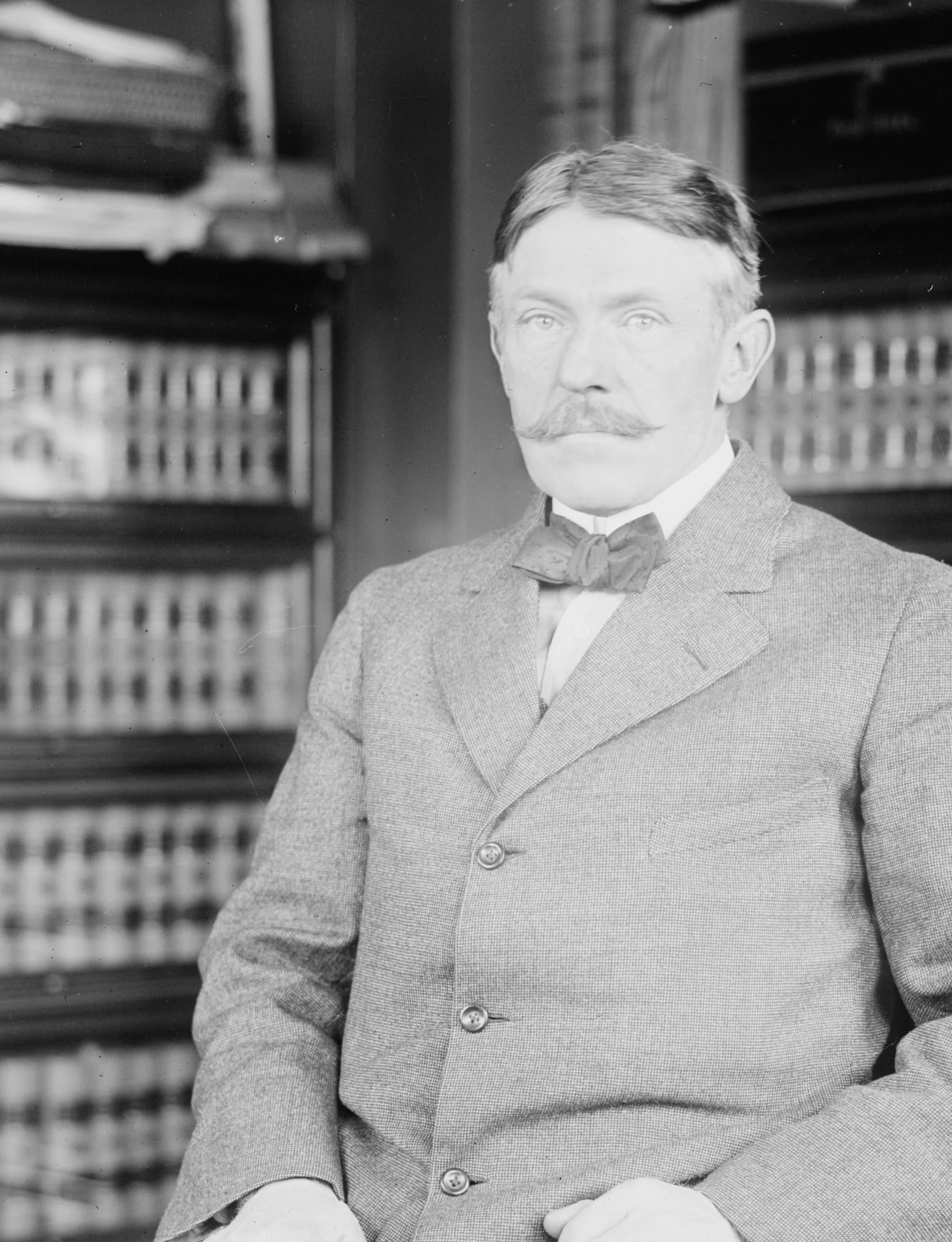
John Montgomery Ward portrait (Bain).
Photo credit: Unknown author via Wikimedia Commons (Public domain)
John Montgomery Ward pitched a perfect game at 20 years old, won 164 games before his arm gave out, reinvented himself as one of the best shortstops in the National League, earned a law degree from Columbia, founded the first players' union in baseball history, and led a revolt that created an entire rival league. He did all of this before his 30th birthday. No player in the history of the game packed more consequential action into a single career, and the Veterans Committee elected him to the Hall of Fame posthumously in 1964, nearly four decades after his death.
Bellefonte
John Montgomery Ward was born on March 3, 1860, in Bellefonte, Pennsylvania. He left home as a teenager, played semipro ball, and signed with the Providence Grays of the National League in 1878 at 18. He won 22 games in his rookie season and 47 in 1879, and on June 17, 1880, he pitched a perfect game against the Buffalo Bisons, the second perfect game in major league history after Lee Richmond's five days earlier. He was 20 years old.
Ward won 164 games over his first seven seasons, but the workload destroyed his arm. He pitched 587 innings in 1879 and 595 in 1880, and by 1884, he could no longer throw with the velocity that had made him dominant. Rather than retire, he moved to shortstop and became an excellent fielder and base runner who batted .275 over the remainder of his career. The transition from pitcher to everyday position player, at the highest level of the game, remains one of the most remarkable reinventions in baseball history.
The Brotherhood
Ward's most lasting contribution came off the field. In 1885, while playing for the New York Giants, he organized the Brotherhood of Professional Base Ball Players, the first collective organization of players in baseball history. The Brotherhood's grievances were straightforward. Owners held players to contracts through the reserve clause, which bound a player to his team indefinitely. Salaries were capped, fines were arbitrary, and players had no recourse. Ward, who had enrolled at Columbia Law School and would earn his degree in 1885, understood the legal and economic structures that kept players subordinate, and he built the Brotherhood to challenge them.
The confrontation reached its peak in 1890, when the Brotherhood launched the Players' League as a direct competitor to the National League. Ward managed and played for the Brooklyn Wonders, and several of the game's best players joined the new league, including Tim Keefe, who had been his teammate on the Giants. The Players' League lasted one season. It drew competitive attendance in several cities but lacked the financial backing to survive a prolonged war with the established leagues, and it folded after the 1890 campaign.
The failure of the Players' League did not erase what Ward had built. The Brotherhood had established the principle that players had the right to organize and negotiate collectively, a principle that would take another 90 years to produce meaningful results when the reserve clause was finally struck down in 1975. Ward was fighting battles in 1885 that Curt Flood and Marvin Miller would still be fighting in the 1970s.
Later Years
Ward returned to the National League after the Players' League collapsed and played through the 1894 season, finishing his career with a .275 batting average, 2,107 hits, and 540 stolen bases to go with his 164 pitching wins. He managed the Giants for two seasons and then practiced corporate law in New York. He married actress Helen Dauvray in 1887, though the marriage ended in divorce, and later married Katherine Waas.
He died on March 4, 1925, in Augusta, Georgia, one day after his 65th birthday. The Veterans Committee elected him to the Hall of Fame in 1964, recognizing a career that spanned pitching, hitting, managing, organizing, and lawyering with a range that no other player in the game's history has matched.