Profile
Luis Aparicio
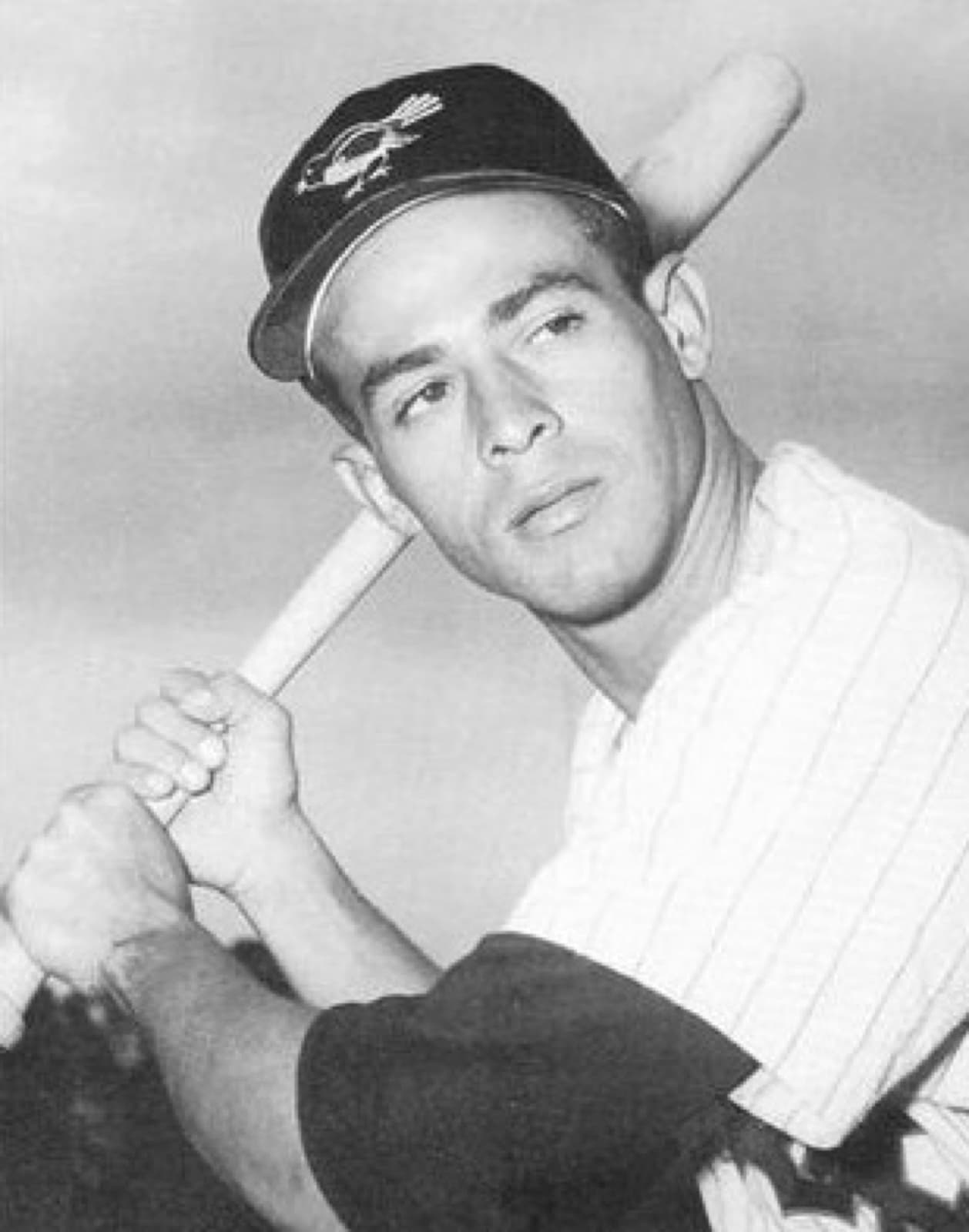
Luis Aparicio portrait, 1963.
Photo credit: Unknown author via Wikimedia Commons (Public domain)
Luis Ernesto Aparicio grew up watching his father play shortstop in Maracaibo, Venezuela, and then spent 18 seasons proving he belonged on the same field. His father Luis Aparicio Ortega was the greatest shortstop Venezuelan baseball ever produced, a player they called "El Grande de Maracaibo," and the elder Aparicio told his son what the position demanded before letting him go north. "Son, if you are going to play baseball for a living, you will have to be the number one always." Aparicio led the American League in stolen bases for nine consecutive seasons, won nine Gold Glove Awards, played 2,583 games at shortstop without ever playing another position, and anchored the 1959 "Go-Go" White Sox pennant, the franchise's first in 40 years. Bill Veeck called him "the best I've ever seen," and Ted Williams called him the best shortstop he ever watched. The BBWAA elected Aparicio to the Hall of Fame in 1984 on 84.6 percent of the ballot, making him the first Venezuelan player to receive the honor.
Maracaibo
Aparicio was born on April 29, 1934, in Maracaibo, Venezuela. His mother Herminia washed uniforms for local teams, and his father co-founded the Gavilanes de Maracaibo, a Venezuelan Winter League club that brought together players from Cuba, the United States, Panama, and across the Caribbean. Aparicio worked as the Gavilanes' batboy through his childhood, shagging flies and fielding grounders alongside professionals twice his age, absorbing the game from men who played it in three languages. His uncle Ernesto, who managed and coached in the Winter League for decades, took over the boy's baseball education and drilled him with the discipline of a man who treated the sport as a science. By the time Aparicio was 19 he was ready to play professionally, and on November 18, 1953, at his debut with the Gavilanes before roughly 7,000 fans, his father walked onto the field and placed his own bat in his son's hands. The crowd stood for the ceremony and did not sit down for 15 minutes.
The White Sox traded Chico Carrasquel to Cleveland in October 1955 to open the shortstop position, and GM Frank Lane described the replacement in terms that left no room for doubt. "We have a machine," Lane said. "His name is Luis Aparicio."
The Go-Go White Sox
Aparicio debuted on April 17, 1956, at 21 and won the Rookie of the Year award, becoming the first Latin American player so honored. He led the league with 21 stolen bases that season and did not stop leading it until 1964, a streak of nine consecutive stolen base titles that no other player has matched. In 1959 the White Sox won the pennant behind Aparicio's 56 stolen bases (more than double any other player in the majors), 98 runs scored, and the defensive partnership with second baseman Nellie Fox that Al Lopez called "the greatest keystone combo of all time." Aparicio batted .308 in the World Series, though the White Sox lost to the Dodgers in six games. Fans in Chicago invented the phrase "the Aparicio double," meaning a walk followed by a stolen base.
Aparicio's first career home run, on May 28, 1956, came off Tommy Lasorda, who later became a Hall of Fame manager. His last career home run, on September 29, 1972, came off Jim Palmer, who became one too.
Baltimore and Boston
The White Sox traded Aparicio to the Baltimore Orioles in January 1963, and he stole 57 bases in 1964, breaking George Sisler's franchise record. Aparicio won the 1966 World Series with the Orioles, sweeping the Dodgers in four games for the only championship of his career. The White Sox reacquired him in November 1967, and in 1970, at 36, Aparicio hit a career best .313 and finished 12th in MVP voting for a team that finished last.
Aparicio spent his final three seasons with the Boston Red Sox, and the most famous play of his career came in the worst possible moment. On October 2, 1972, with the AL East title on the line at Tiger Stadium, Tommy Harper and Aparicio singled to put runners at the corners. Carl Yastrzemski doubled to center, scoring Harper, but Aparicio slipped rounding third on his way home. He recovered and retreated to the bag, where Yastrzemski had also arrived. Yastrzemski was tagged out, and Reggie Smith struck out to end the inning. The Tigers won 4-1 and took the division by half a game. "I hit the bag wrong at third and I kinda slipped, but I didn't fall down," Aparicio said. "Then I hit grass and I fell."
Aparicio retired after the 1973 season with 506 stolen bases and records for games, putouts, assists, and total chances at shortstop. He never played any defensive position other than shortstop across 18 major league seasons.
Maracaibo Again
The White Sox retired Aparicio's number 11 on August 14, 1984, and in 2006 the team unveiled statues of Aparicio and Nellie Fox at the ballpark. Aparicio managed multiple Venezuelan Winter League teams, worked as a television analyst, and became a civic figure in Maracaibo. Venezuela named him Athlete of the 20th Century, and in 2014 every Venezuelan Winter League team retired his number 11. The Luis Aparicio Award, established in 2004, is given annually to the best Venezuelan player in the major leagues.
Aparicio's father died on January 1, 1971, before witnessing his son's Hall of Fame election. "I think I didn't disappoint him," Aparicio said. "I wanted him to be proud of me, and I know he definitely was." The lineage Aparicio began at shortstop continued through Dave Concepcion, Ozzie Guillen, Omar Vizquel, and dozens of Venezuelan shortstops who followed. "Baseball is so much of me," Aparicio said, "I even met my wife playing baseball."