Profile
Luke Appling
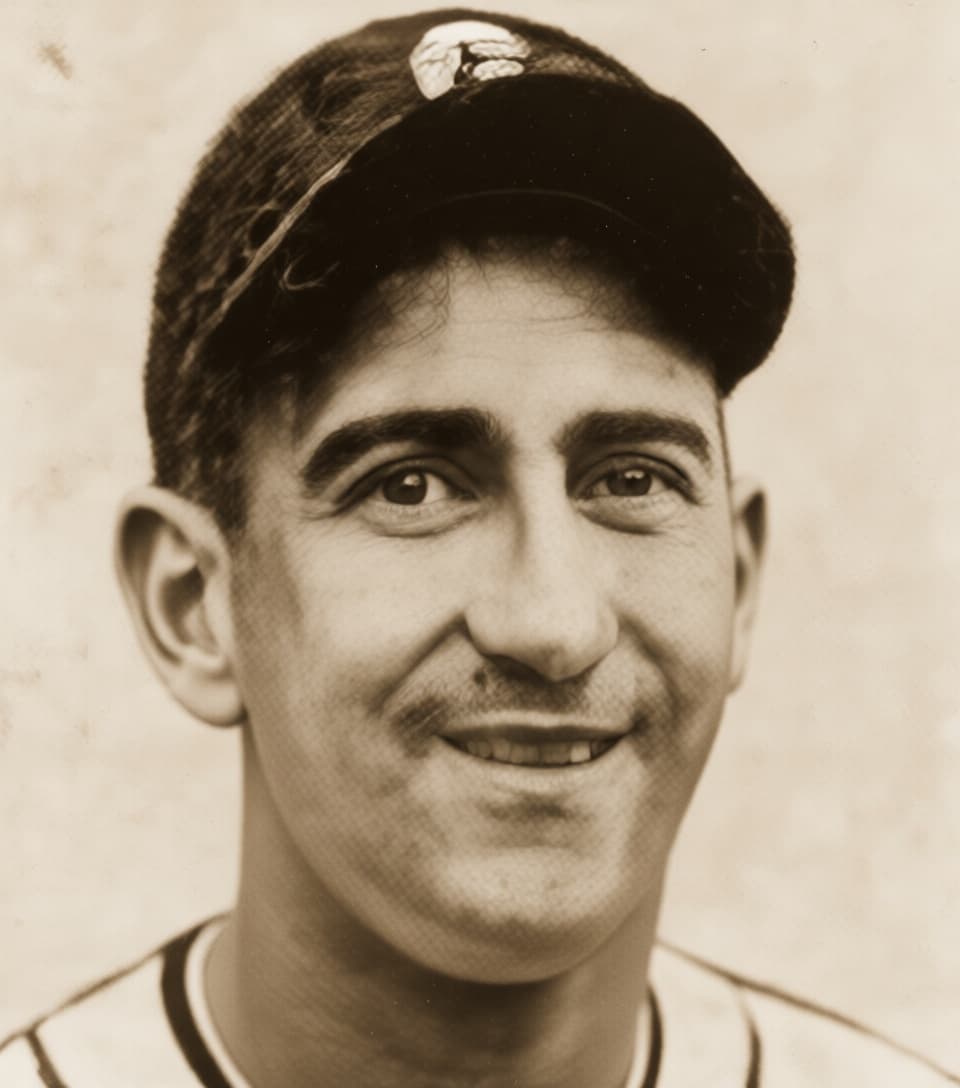
Luke Appling portrait, 1942.
Photo credit: Unknown via Wikimedia Commons (Public domain)
Luke Appling played 20 seasons at shortstop for the Chicago White Sox, complained about injuries for every one of them, and never let the complaining affect his hitting. He won two American League batting titles, compiled a .310 career average, and fouled off pitches with a persistence that tormented pitchers and delighted the fans at Comiskey Park. His teammates called him "Old Aches and Pains" because he always had something wrong with him and always played anyway, and the nickname stuck for the rest of his life.
High Point
Lucius Benjamin Appling was born on April 2, 1907, in High Point, North Carolina. He played baseball at Oglethorpe University in Atlanta before signing with the White Sox organization in 1930. He reached the majors that September and became the everyday shortstop the following year, beginning a two-decade tenure at the position that would make him the most accomplished hitter to play shortstop in the American League until the second half of the century.
The Bat
Appling was not built like a typical shortstop of his era. He stood five feet ten and weighed around 183 pounds, and he swung the bat with the approach of a contact hitter who understood the strike zone better than most of the pitchers working in it. He choked up, shortened his swing with two strikes, and sprayed line drives to all fields with a consistency that kept his batting average above .300 in 16 of his 20 seasons.
His ability to foul off pitches became legendary. Appling would work deep into counts, spoiling pitch after pitch until the pitcher either walked him or threw something he could drive. The stories about his foul balls multiplied over the years. One version held that he fouled off pitch after pitch during batting practice after the White Sox refused to give him extra baseballs for family members. In games, he reportedly fouled off as many as 24 pitches in a single at-bat before drawing a walk. Whether the exact counts were real or embellished, the reputation was earned, and pitchers across the American League dreaded long counts against him.
He won the American League batting title in 1936 with a .388 average, the highest by a shortstop in the twentieth century. He won it again in 1943 at .328, becoming one of only a handful of players to win batting titles separated by seven or more years. Between those titles, he hit .317, .303, .314, .348, and .314 over five seasons before slumping to .262 in 1942, a stretch of consistency that only a few hitters of his generation could match.
The White Sox
Appling's career coincided with one of the weakest periods in White Sox history. The franchise finished in the second division in 14 of his 20 seasons, and Appling played most of his career for teams that had no realistic hope of contending. He never appeared in a World Series. He never played in a postseason game. The White Sox of the 1930s and 1940s were a franchise still recovering from the shadow of the Black Sox scandal, and Appling was the best player on a long series of mediocre rosters.
He served in the Army during World War II, missing all of 1944 and most of 1945, returning for 18 games in September 1945 in which he batted .368. He came back full-time in 1946 at age 39. He continued to hit, batting .309 in 1946 and .306 in 1947, before his production finally declined in his last three seasons. He played his final game in 1950 at 43, finishing with 2,749 hits, a .310 lifetime average, and a reputation as the finest hitting shortstop the American League had produced.
After Playing
Appling managed in the minor leagues and coached for several major league teams after his playing career, including stints with the Tigers, Indians, Athletics, and White Sox. In 1982, at age 75, he hit a home run in the first Cracker Jack Old Timers Classic at RFK Stadium in Washington, launching a Warren Spahn pitch over the left-field fence and circling the bases to a standing ovation. It was, by several accounts, the most popular moment in the history of old-timers' games.
He was elected to the Hall of Fame in 1964 and died on January 3, 1991, in Cumming, Georgia, at 83. The White Sox retired his number 4 in 1975, and he remains the standard against which every White Sox shortstop since has been measured.