Profile
Sam Crawford
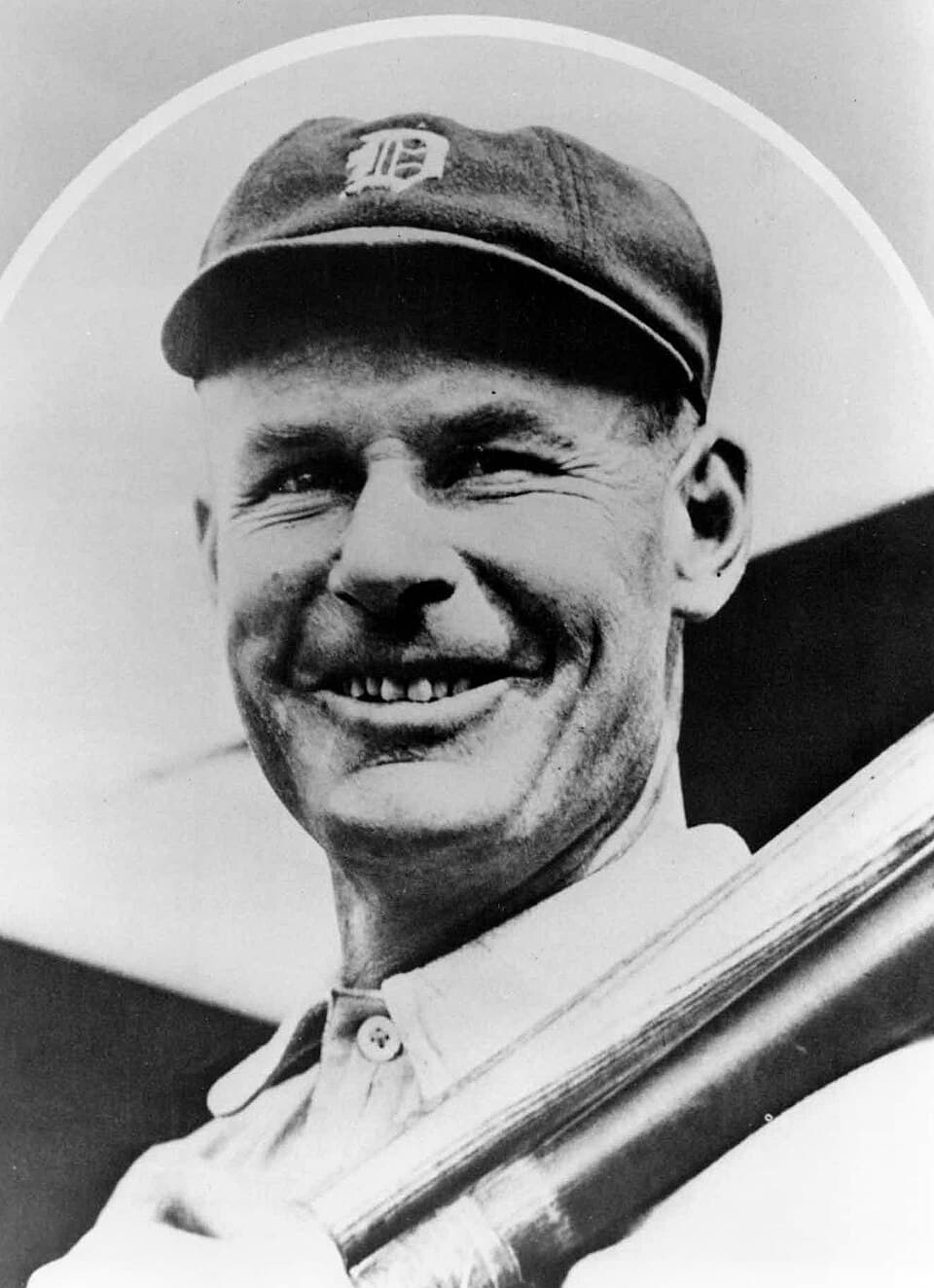
Sam Crawford portrait.
Photo credit: Bain News Service via Wikimedia Commons (Public domain)
Samuel Earl Crawford holds the all-time record for triples with 309, and nobody is going to break it. The modern game does not produce triples the way the Dead-Ball Era did, when outfield fences stood hundreds of feet from home plate, outfield grass was uneven and slow, and a fast left-handed hitter could leg out a ball in the gap before the relay throw reached third base. Crawford was that hitter for 19 seasons, first for the Cincinnati Reds and then for the Detroit Tigers, where he and Ty Cobb formed one of the most productive and contentious outfield partnerships in baseball history. The Veterans Committee elected him to the Hall of Fame in 1957.
Wahoo
Crawford was born on April 18, 1880, in Wahoo, Nebraska, a small town west of Omaha. He earned the nickname "Wahoo Sam" from his hometown, a name that stuck with him through his entire career and followed him into retirement. He played semipro ball in the region, worked as a barber's apprentice, and signed with the Chatham club in the Canadian League before moving to the Grand Rapids club of the Western League. The Cincinnati Reds purchased his contract in 1899, and he debuted that September.
He hit .307 in 31 games during his September debut and showed the power that would define his early career. In 1901, he led the National League with 16 home runs, a significant total in an era when the baseball was dead, the fences were far away, and most run production came from doubles, triples, and aggressive baserunning. He jumped to the Detroit Tigers of the American League in 1903, part of the wave of players who crossed leagues during the war between the National League and Ban Johnson's American League for talent and territorial control.
Detroit and Cobb
Crawford became the Tigers' primary run producer and the heart of their lineup for the next 15 years. He led his league in triples six times and in RBI three times, and he drove the ball into the spacious outfield gaps at Bennett Park and later Navin Field with a swing built for the era's wide-open ballparks. He hit .323 in 1907 and .311 in 1908, and when Cobb arrived in 1905, the two formed an outfield combination that gave Detroit the most dangerous offensive pairing in the league.
Between 1907 and 1909, the Tigers won three consecutive American League pennants under manager Hughie Jennings, but they lost the World Series each time. Crawford hit .238 in the 1907 Series against the Cubs, .238 in the 1908 Series against the same opponent, and .250 in the 1909 Series against the Pirates. The Tigers could not convert their regular-season dominance into a championship, and the three consecutive World Series losses defined an era of frustration that the franchise would not resolve until 1935.
The relationship between Crawford and Cobb was difficult from the beginning. Crawford was the established star when the 18-year-old Cobb arrived, and he resented the younger player's abrasive personality, relentless self-promotion, and willingness to antagonize teammates in pursuit of individual goals. Cobb clashed with nearly everyone on the roster, and Crawford was no exception. The two rarely spoke off the field and maintained a cold distance for years, but on the diamond their combined production carried the Tigers for more than a decade. Crawford hit for extra bases and drove in runs from the middle of the order, while Cobb manufactured runs with speed and aggression from the spots around him.
Crawford's best statistical season came in 1911, when he hit .378 with 217 hits, 7 home runs, and 115 RBI. He drove in more than 100 runs six times during his career. In 1914, at age 34, he hit .314 with 104 RBI and led the league with 26 triples, demonstrating the durability and the gap-to-gap power that sustained his value into his mid-thirties.
After Baseball
Crawford played his final major league season in 1917 at age 37. He finished with a .309 career batting average, 2,961 hits, 97 home runs, 1,523 RBI, and those 309 triples. He moved to the Pacific Coast League after leaving the majors and played several more seasons for the Los Angeles Angels, hitting well into his forties in the warm California weather.
He settled in Hollywood and lived quietly for decades, far from the East Coast press that had covered his playing career. He was largely overlooked for the Hall of Fame during the years when the voting focused on more recent players, though after Cobb's death in 1961, reporters discovered that Cobb had spent years writing letters to influential figures lobbying for Crawford's election. The advocacy revealed a private respect between the two men that their public relationship had never shown. The Veterans Committee had already elected Crawford in 1957, four years before Cobb died. He died on June 15, 1968, in Hollywood, California, at age 88.