Profile
Ed Barrow
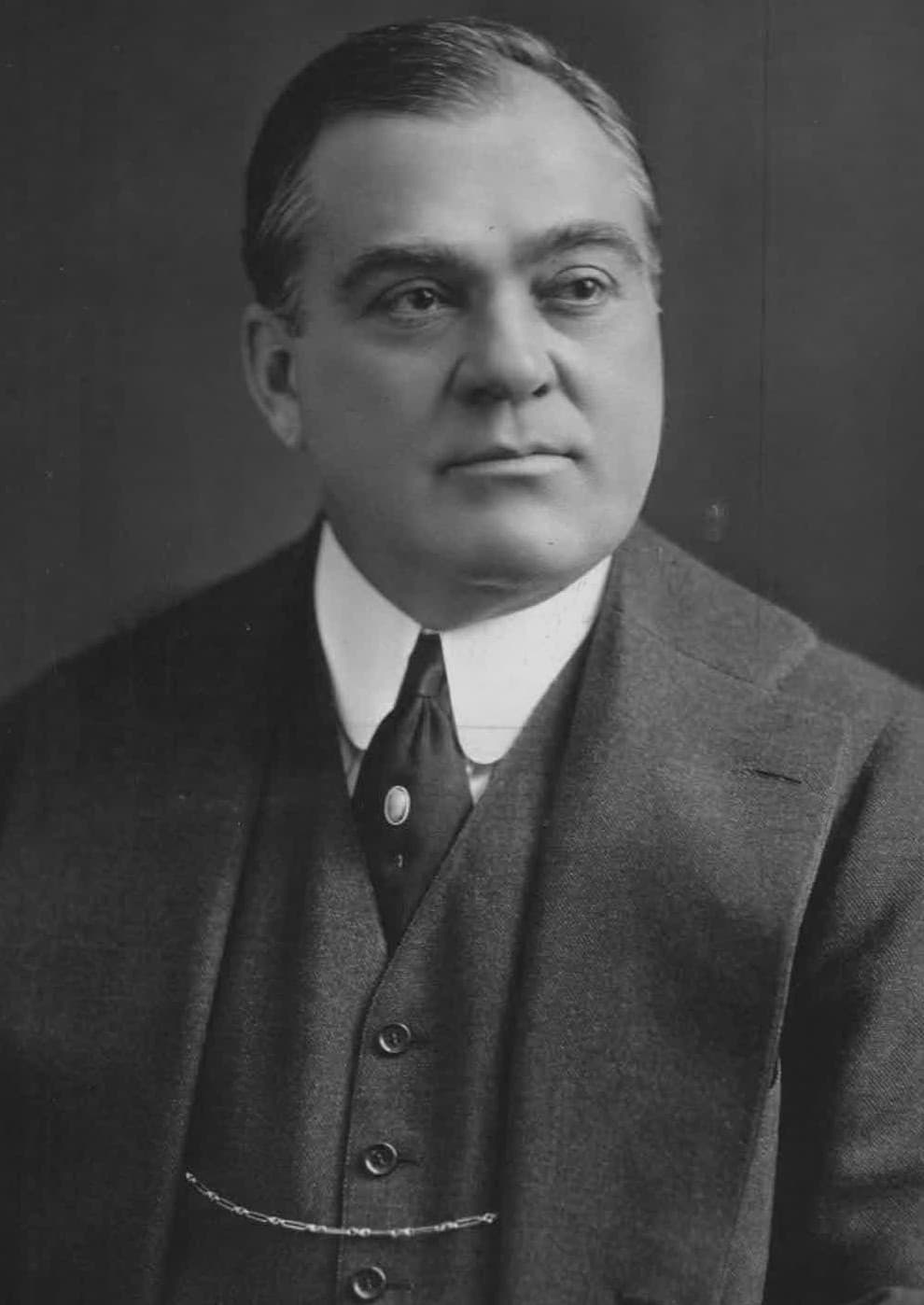
Ed Barrow portrait, 1903.
Photo credit: Unknown author via Wikimedia Commons (Public domain)
Edward Grant Barrow made two decisions that shaped the trajectory of baseball in the twentieth century. The first was converting Babe Ruth from the best left-handed pitcher in the American League into a full-time outfielder. The second was building the New York Yankees into the most successful franchise in professional sports during a quarter-century tenure as general manager. The Veterans Committee elected him to the Hall of Fame in 1953.
Springfield to Boston
Barrow was born on May 10, 1868, in Springfield, Illinois, and grew up in Nebraska and Iowa. He entered professional baseball in his mid-twenties and worked his way through the sport's lower levels as a minor league manager and executive throughout the 1890s, learning the business side of the game in the Atlantic League and the Eastern League across a decade of apprenticeship in front offices and dugouts.
He managed the Detroit Tigers for the 1903 season and part of 1904, his first taste of the major leagues, but the results were middling and he returned to the minor leagues. He ran the Eastern League, soon renamed the International League, as its president from 1911 to 1917, building a reputation as an administrator who understood both the financial and competitive dimensions of running a baseball operation. The Boston Red Sox hired him to manage their major league club in 1918.
The Ruth Decision
Barrow inherited a Red Sox roster that included Ruth, then a 23-year-old left-handed pitcher who had gone 24-13 the previous year and was widely regarded as the best left-handed pitcher in the American League. Barrow watched Ruth hit in batting practice and saw something that Ruth's previous managers had noticed but none had been willing to act on. Ruth could hit with a power and consistency that no pitcher, and few position players, could match.
Barrow began using Ruth in the outfield on days he did not pitch. Ruth hit .300 with 11 home runs in 1918, an extraordinary total for the Dead-Ball Era, and the Red Sox won the World Series, beating the Chicago Cubs in six games. By 1919, Barrow was playing Ruth in the outfield regularly, and Ruth responded by hitting 29 home runs that year, shattering the single-season record. The experiment was settled. The best pitcher in the league was a better hitter than anyone alive, and Barrow had been the first manager willing to act on that fact in a way that changed the shape of Ruth's career and the direction of the sport.
The decision was not universally praised at the time. Converting a pitcher who had won 65 games over the previous three seasons into a full-time outfielder violated the conventional wisdom of the era, and Barrow faced criticism for it. But Ruth's bat proved the critics wrong so thoroughly that within a few years nobody could remember what the objection had been.
The Yankees
When Red Sox owner Harry Frazee sold Ruth to the Yankees before the 1920 season, Barrow managed the Red Sox through the rest of that year before accepting an offer from Yankees owners Jacob Ruppert and Tillinghast L'Hommedieu Huston to become their business manager. The title functioned as general manager, and Barrow held it until Jacob Ruppert's death in 1939, when he became team president and continued to control baseball operations through 1945.
He built the Yankees into baseball's dominant franchise through a combination of player acquisitions, shrewd trades, and a farm system developed under the supervision of George Weiss, whom Barrow hired in 1932. He acquired Lou Gehrig, Joe DiMaggio, and dozens of other future stars through scouting, development, and transactions that consistently favored the Yankees over their trading partners. He hired Joe McCarthy as manager in 1931 and gave McCarthy the autonomy to run the clubhouse while Barrow controlled personnel decisions from the front office. The partnership between Barrow and McCarthy produced the most sustained run of success in baseball history.
The Yankees won 14 American League pennants and 10 World Series championships during Barrow's tenure. The dynasty spanned multiple generations of players, from the Ruth-Gehrig teams of the late 1920s and early 1930s through the DiMaggio-led clubs of the late 1930s and early 1940s. No executive in any professional sport had assembled anything comparable.
Barrow was demanding, frugal, and often difficult to work with. He fought with players over salaries, clashed with Ruth repeatedly over money and lifestyle, and ran the front office with an authoritarian grip that left little room for dissent. But the results spoke with an authority that his personality could not diminish.
Later Years
Barrow became chairman of the board when Larry MacPhail, Dan Topping, and Del Webb purchased the Yankees in January 1945. He was effectively pushed aside as MacPhail modernized the franchise's business operations, and he stepped down at the end of 1946. The transition was not smooth. Barrow had run the organization his way for a quarter century, and relinquishing control did not come naturally.
He died on December 15, 1953, in Port Chester, New York, at age 85. The Veterans Committee had elected him to the Hall of Fame earlier that year, recognizing the executive who had built the Yankees dynasty from the ground up and who had made the single most consequential player evaluation in the history of the sport when he looked at Babe Ruth and saw an outfielder.