Player Profile
Frank Chance
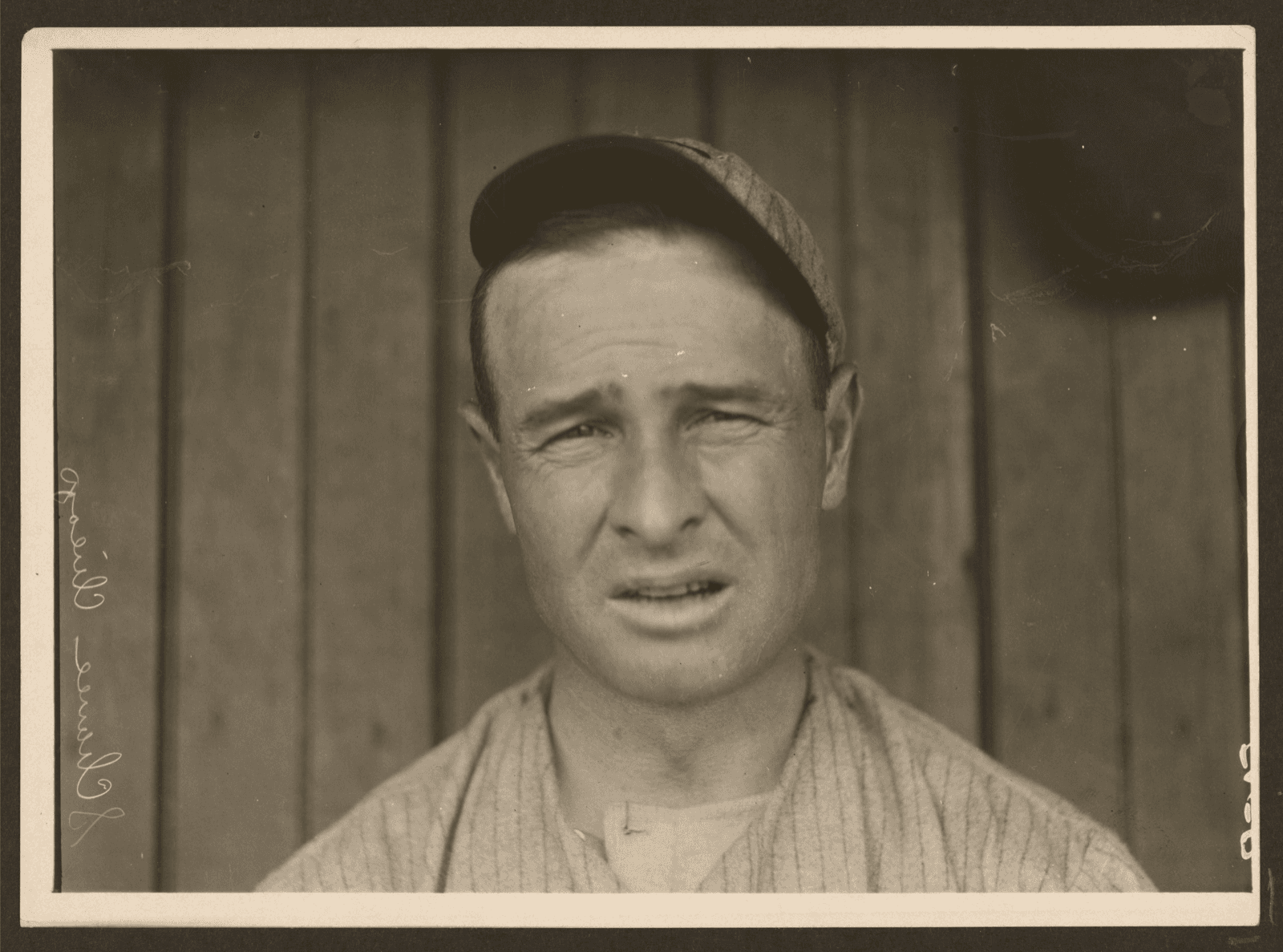
Frank Chance portrait with Chicago.
Photo credit: Bain News Service via Wikimedia Commons (Public domain)
Frank Leroy Chance played 17 major league seasons, batted .296, and managed the Chicago Cubs to four pennants and two consecutive World Series championships in 1907 and 1908. Sportswriters called him "The Peerless Leader," and for a stretch of five seasons, the title fit. He played first base in the most famous infield combination in baseball history, ran a clubhouse with an intensity that bordered on menace, and won more games in a five-year span than almost any manager before or since.
Fresno to the West Side Grounds
Chance was born in Fresno, California, in 1876, one of the few Californians playing major league baseball at the turn of the century. He joined the Chicago franchise in 1898 as a catcher, but the position wore on his body, and the club moved him to first base within a few years. The switch gave him durability and a clear path to everyday play. He hit .327 in 1903 and .310 in 1904, and he stole 67 bases in 1903, an exceptional total for a first baseman in any era.
The Cubs named him player-manager midseason in 1905 after manager Frank Selee fell seriously ill. He was 28.
Four Pennants
The 1906 Cubs won 116 games and lost 36, a winning percentage of .763 that remains the best in modern major league history. Their pitching staff, led by Mordecai "Three Finger" Brown, posted a collective ERA of 1.75. The offense led the National League in runs. They entered the 1906 World Series as overwhelming favorites and lost to the Chicago White Sox, a light-hitting team that had earned the nickname "The Hitless Wonders." The upset remains one of the most surprising results in World Series history.
Chance brought the team back. The Cubs won the World Series in 1907, taking four straight from the Detroit Tigers after a Game 1 tie, and repeated in 1908, beating Ty Cobb's Tigers again in five games. They took the pennant a fourth time in 1910 but lost the World Series to Connie Mack's Philadelphia Athletics, who had assembled their own dynasty around Eddie Collins and a deep pitching staff.
The Poem and the Reality
In 1910, newspaper columnist Franklin Pierce Adams published an eight-line poem called "Baseball's Sad Lexicon," which turned the double play combination of Joe Tinker, Johnny Evers, and Chance into the most famous infield in baseball history. The poem overstated their defensive record. The trio did not turn double plays at an unusual rate by the standards of their era. Their fame came from Adams' verse, which lodged in the public imagination and never left.
Off the field, the three men did not get along. Tinker and Evers stopped speaking to each other after a fight over a cab ride in 1905, and the silence lasted for years. Chance managed both of them and tolerated the feud as long as they performed, which they did.
Hit by Pitch
Chance crowded the plate and dared pitchers to throw inside. Pitchers hit him more than 130 times in his career, and the repeated blows to his head caused lasting damage. He suffered from severe headaches and progressive hearing loss that worsened through his thirties. After leaving the Cubs in 1912, he managed the New York Yankees for parts of 1913 and 1914, compiling a 117-168 record with weak rosters while his health continued to decline. He returned to manage the Boston Red Sox for the full 1923 season, finishing last at 61-91. He was named manager of the Chicago White Sox for 1924 but never took charge of the club.
He died on September 15, 1924, in Los Angeles, at age 47. The exact cause of death is debated, with sources citing tuberculosis of the brain, heart disease, and complications from asthma, though the blood clots and brain damage he sustained from years of beanings clearly damaged his long-term health. The Old Timers Committee elected him to the Hall of Fame in 1946 alongside Tinker and Evers, reuniting the three men in bronze decades after the poem first bound them together.