Profile
Jeff Kent
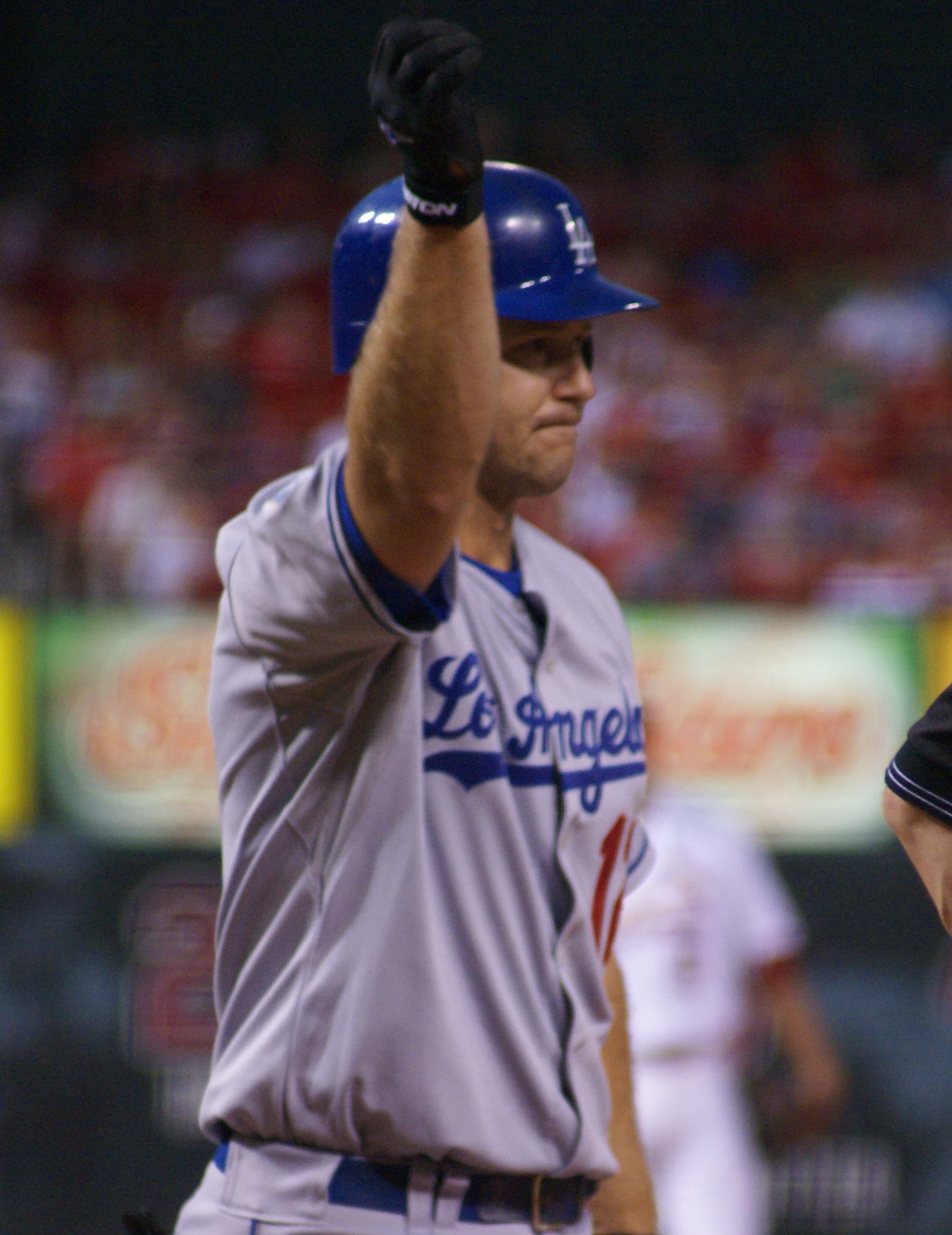
Jeff Kent portrait.
Photo credit: Unknown photographer via Wikimedia Commons
Jeff Kent hit for power from a position that rarely produces it, and he finished with more home runs as a second baseman than anyone who has ever played there. He was prickly and blue-collar and unbothered by what anyone thought of him, a fierce competitor who drove in runs by the bushel and won a Most Valuable Player award beside the greatest hitter of his era. The relationship with that teammate boiled over on national television, and the toughness defined him as much as the bat. The Contemporary Baseball Era Committee elected him to the Hall of Fame in 2026.
The Competitor
Kent was born on March 7, 1968, in Bellflower, California, the son of a motorcycle policeman, and he grew up on motocross and surfing before baseball took hold. He walked on at the University of California and set a school record for doubles as a freshman, the start of a career built on stubbornness as much as talent. The personality came with it, a guarded, combative streak that rubbed teammates and reporters the wrong way and never softened. "It's not arrogant," he said of his confidence. "It's confident." He was hard to like and easy to respect, and he hit no matter who was watching.
The Road to San Francisco
Kent reached the majors with the Toronto Blue Jays in 1992 and moved to the Mets soon after, a useful infielder without a settled position or a star's profile. The move that made him came in late 1996, when he landed with the San Francisco Giants in the deal that sent the popular slugger Matt Williams the other way, a trade San Francisco fans hated until they saw what they had received. Kent settled in at second base and started hitting like nobody at the position had in years, the late bloomer finding his game at 29. The Giants had acquired a star without knowing it.
The MVP
The peak came in 2000, when Kent put together a season that won him the National League Most Valuable Player award. He hit .334 with 33 home runs, 125 runs batted in, and 114 runs scored, the productive other half of a Giants lineup built around Barry Bonds, and he edged Bonds himself in the voting, taking 22 of the first-place ballots. He was the first second baseman to win the award in the league since Ryne Sandberg in 1984, and the recognition confirmed what the numbers had been saying for years. Hitting behind and around the most feared bat in baseball, Kent made the Giants impossible to pitch to.
The Feud
The partnership with Bonds was productive and poisonous in equal measure. The two were the engine of the Giants offense and could barely stand each other, and in 2002 the tension spilled into the open when they shoved each other in the dugout during a game, the altercation caught on television and replayed for days. Neither man pretended to be friends, and the cold professionalism between them somehow kept working, the two of them driving in runs for the same lineup while keeping their distance. That season the Giants reached the World Series and lost it to the Angels in seven games, the closest Kent came to a title.
The Record at Second Base
What sets Kent apart in history is the power he generated from second base, a position built for gloves and singles. He hit 377 home runs in his career, 351 of them while playing second, the most any second baseman has ever hit there, and he drove in a hundred runs eight times from the position, also a record. He paired the power with a .290 average, 2,461 hits, and 560 doubles across 17 seasons, the run production of a middle-of-the-order hitter from a spot in the lineup that rarely provides it. No second baseman in the history of the game hit for power the way Kent did.
The Long Wait
The Hall of Fame did not come easily. Kent spent the full 10 years on the writers' ballot and never climbed above 46.5 percent, his prickly reputation and a skeptical electorate holding down a candidacy the numbers supported. The case was always there, the home run record and the MVP and the eight 100-RBI seasons, but the writers never quite embraced him. He had to wait for a veterans committee to weigh the record without the personality in the way, and the argument for him only grew stronger as the years passed.
Cooperstown in a Giants Cap
The Contemporary Baseball Era Committee elected Kent in December 2025, naming him on 14 of 16 ballots, and he went into the Hall of Fame in 2026 alongside Carlos Beltrán and Andruw Jones. He chose a Giants cap for his plaque, San Francisco the place where he had won his MVP, reached his World Series, and done the best hitting of his life. The gruff competitor who never courted anyone's approval had outlasted the doubts, the second baseman who hit like a slugger taking his place among the greats at last.