Profile
Carlos Beltrán
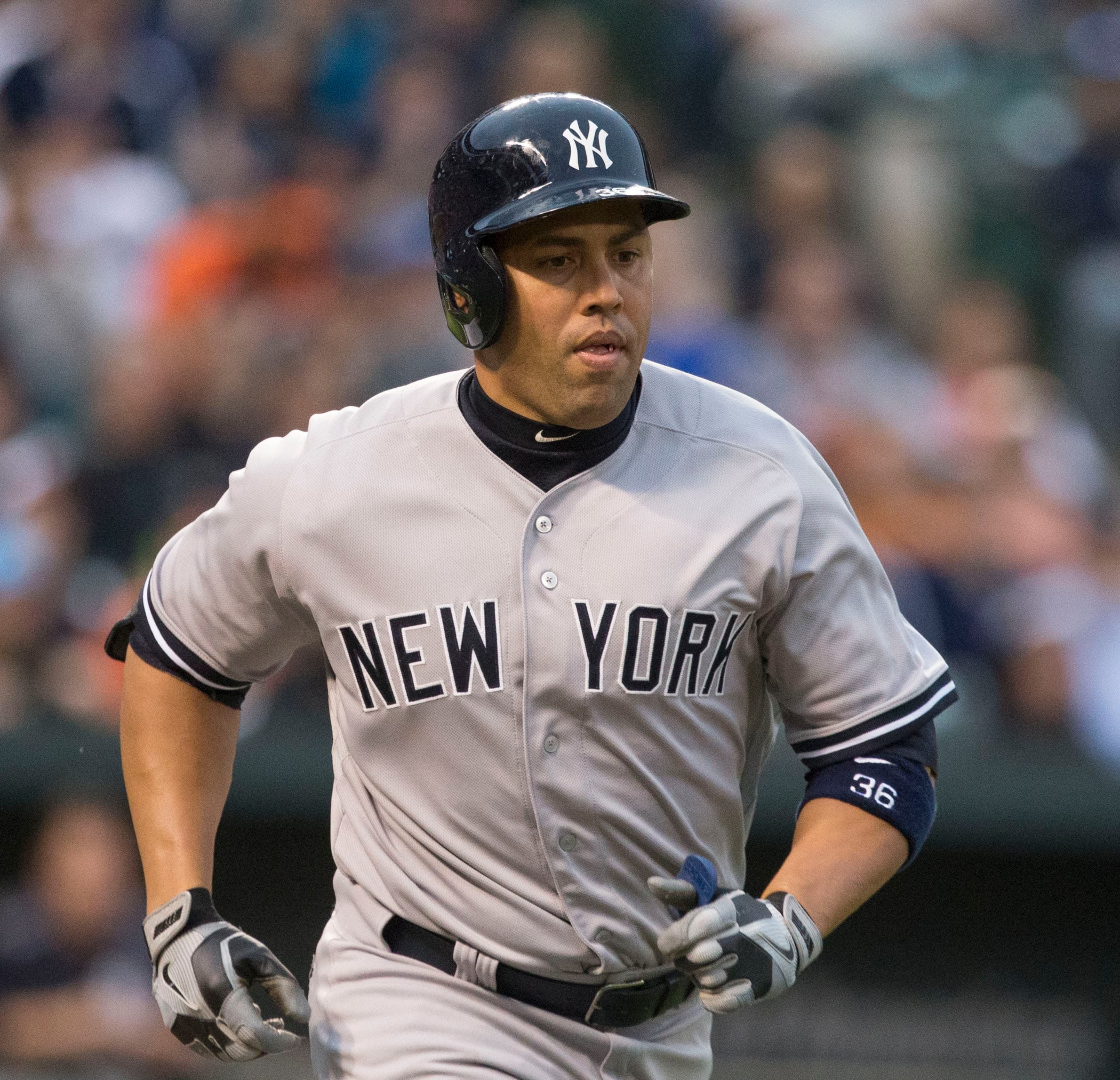
Carlos Beltran with the New York Yankees in 2015.
Photo credit: Unknown photographer via Wikimedia Commons
Carlos Beltrán did everything a baseball player can do and did most of it from both sides of the plate, a switch-hitting center fielder with power, speed, and a Gold Glove, and in October he became something close to unstoppable. He hit 435 home runs, stole bases at one of the best success rates in history, and built a postseason record that ranks among the finest anyone has produced. He won a World Series in his final season and then watched a cheating scandal attach itself to his name. The BBWAA elected him to the Hall of Fame in 2026.
Señor Octubre in the Making
Beltrán was born on April 24, 1977, in Manatí, Puerto Rico, and the Kansas City Royals signed him out of the island as a teenager. He reached the majors and won the American League Rookie of the Year in 1999, batting .293 with 22 home runs, 108 runs batted in, and 27 stolen bases, the first rookie in two decades to score and drive in a hundred runs in the same year. He was a complete player from the start, fast and powerful and smooth in center field, and he spent seven seasons in Kansas City growing into a star before a small-market team could no longer afford him. The best of him was still to come.
The Greatest October
The defining stretch of Beltrán's career came in the fall of 2004, after a midseason trade to the Houston Astros. He put together one of the great individual postseasons in history, batting .435 with eight home runs in 12 games, homering in five consecutive playoff games, the first player ever to hit four home runs in each of two series in a single October. He carried Houston to the brink of the pennant almost by himself, and he kept doing it for years, finishing with a career postseason line of .307 and a 1.021 on-base-plus-slugging across 65 games. They called him Señor Octubre, and the nickname was earned.
The Five-Tool Star
Across 20 seasons Beltrán was the rare player without a weakness. He hit 435 home runs, the fourth-most by any switch-hitter, drove in nearly 1,600 runs, and collected 565 doubles, the power half of his game. The other half was just as good, because he stole 312 bases and was caught so rarely that his 86 percent success rate stands among the best ever, and he won three Gold Gloves in center field, joining a tiny group of players with 400 home runs and 300 steals. He made nine All-Star teams and starred for the Mets, the Cardinals, the Yankees, and several other clubs, valuable everywhere he went.
The Ring and the Stain
Beltrán finally won a championship in 2017, his 20th and final season, back where his October legend had started, with the Houston Astros. The triumph did not stay clean. That Houston team had stolen signs electronically, decoding opposing catchers from a center-field camera and banging on a trash can to tip pitches to hitters, and when the commissioner's report came out in early 2020, Beltrán was the only player it named. No players were disciplined, the manager and general manager taking the fall, but Beltrán had just been hired to manage the Mets, and he and the team parted ways before he managed a single game. He did not dodge it. "We did cross the line," he said, calling the title stained.
The Hall of Fame Case
The scandal complicated a candidacy that the numbers made strong. Beltrán debuted on the writers' ballot in 2023 at 46.5 percent, the cheating fresh and the votes split, and then his support climbed steadily as the case for his career reasserted itself. He reached 84.2 percent in 2026, his fourth year on the ballot, and got in, the voters weighing the whole of a 20-year career against the one dark chapter and deciding the player belonged. The October résumé, the switch-hitting power, and the all-around brilliance had always made the case; time made it persuasive.
The Cap
When the Hall asked which team would go on his plaque, Beltrán chose the New York Mets, the franchise where he had played seven seasons and made the heart of his All-Star years. He became the third player enshrined in a Mets cap, following Tom Seaver and Mike Piazza, a small and select group for a franchise that has produced few Hall of Famers of its own. The choice reflected where he had been at his peak, a perennial All-Star and Gold Glover in New York, the center fielder a city had counted on.
Cooperstown
Beltrán went into the Hall of Fame in the summer of 2026, alongside Andruw Jones and Jeff Kent, one of the most complete players of his generation and one of its greatest postseason performers. He had crossed from a Puerto Rican childhood to the Royals to stardom across the league, and he had authored Octobers that hitters dream about, the switch-hitter who saved his best for the biggest stage. The sign-stealing chapter will always travel with his name, acknowledged and unhidden, but the plaque measures the whole career, and the whole career was the work of a great player.