Profile
Andruw Jones
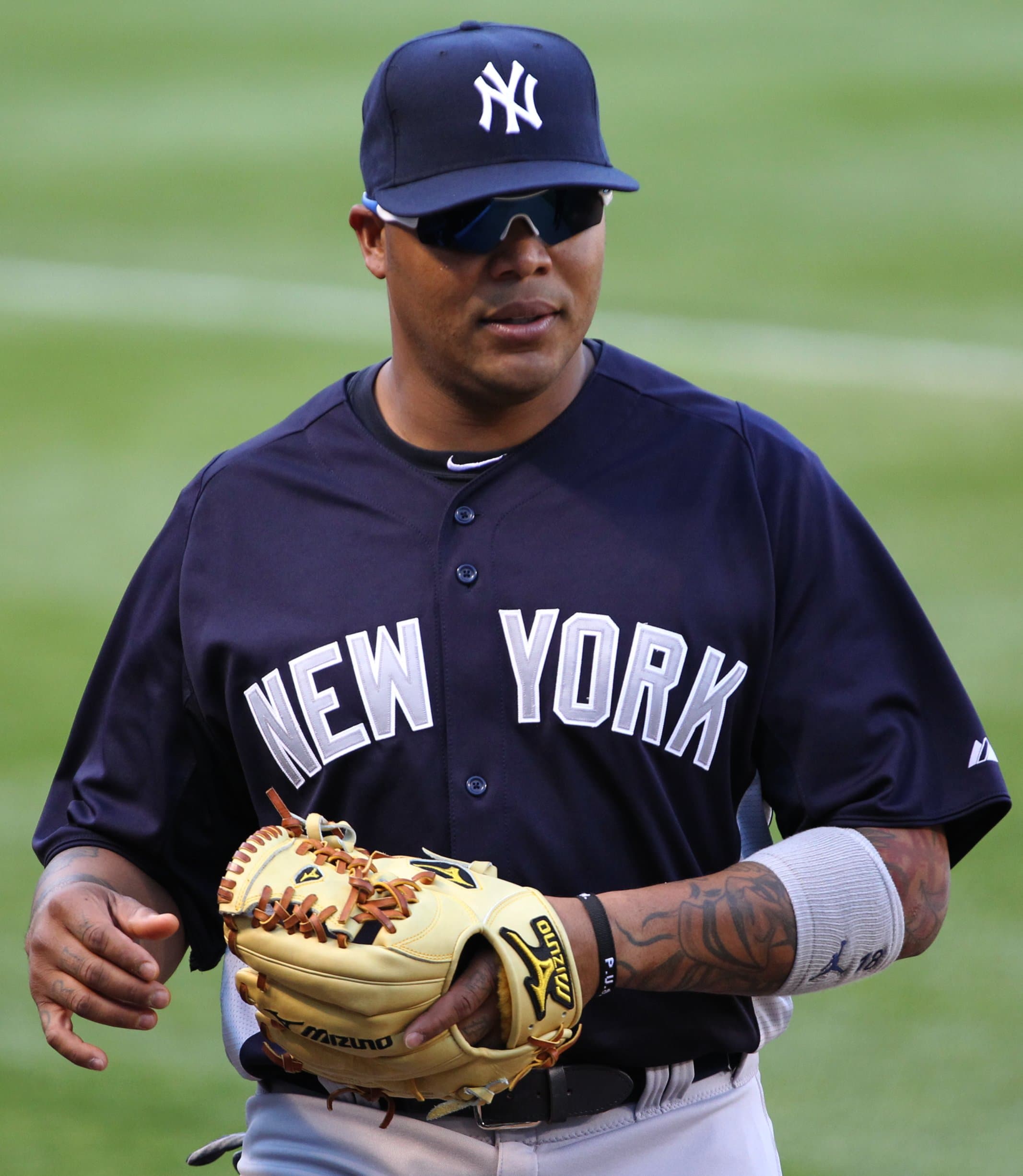
Andruw Jones in 2011.
Photo credit: Unknown photographer via Wikimedia Commons
Andruw Jones patrolled center field better than almost anyone who ever played the position, a defender so good that the advanced numbers rate his glove the most valuable of any outfielder in history. He announced himself as a teenager on the game's biggest stage, hitting two home runs in a World Series at 19, and he paired the defense with real power, 434 home runs and a season of 51. A steep decline shortened his peak and complicated his case, but the brilliance was undeniable. The BBWAA elected him to the Hall of Fame in 2026.
The Boy From Curaçao
Jones was born on April 23, 1977, in Willemstad, on the Caribbean island of Curaçao, and the Atlanta Braves signed him at 16, a raw, gifted athlete a long way from home. He rocketed through the minor leagues, and in October 1996, still 19 years old, he reached the World Series and did something no teenager had ever done. In Game 1 at Yankee Stadium, in his first two times up in the Fall Classic, Jones hit two home runs, becoming the youngest player ever to homer in a World Series, breaking a record Mickey Mantle had held. The Braves lost that series, but the kid from Curaçao had arrived in the loudest way possible.
The Best Glove in the Game
What made Jones a legend was the defense, an instinct and a range in center field that turned doubles and triples into routine outs. He won 10 consecutive Gold Gloves from 1998 through 2007, gliding to balls other center fielders could not reach and making the spectacular look ordinary, and the modern fielding metrics confirm what the eye saw. By defensive wins above replacement he grades as the most valuable defensive outfielder in the history of the game, ahead of every center fielder who came before him. He was, by the numbers and by reputation both, one of the greatest gloves baseball has produced.
Power to Match
Jones was no defensive specialist who happened to hit. He had real power, and in 2005 it peaked, when he led the major leagues with 51 home runs and 128 runs batted in and finished second in the Most Valuable Player vote to Albert Pujols. He hit in the middle of the Atlanta order for a dozen years, part of the franchise that won division title after division title, alongside Chipper Jones and the great Braves pitching. He finished with 434 home runs, a total that combined with the defense to make him, in his prime, one of the best all-around players in the sport.
The Short Peak
The thing that complicated his case was how fast it ended. Jones was a great player into his early thirties and then fell off a cliff, his body and his conditioning betraying him, and the back half of his career bore little resemblance to the front. He bounced from the Dodgers to the Rangers to the White Sox to the Yankees, a part-time player and a shadow of the center fielder he had been, and finished his career in Japan. The decline left him with career totals, a .254 average and 434 home runs, that undersold how good he had been at his best, the peak so much higher than the line suggested.
The Numbers and the Doubt
Jones carried a complicated profile into the Hall of Fame debate. The defensive value was historic and the power was real, 434 home runs and 10 Gold Gloves and a 51-homer season, but the low batting average and the short prime gave the traditional voters pause, and an off-field domestic arrest in 2012 weighed on some ballots as well. Analysts championed him from the start, pointing to the defensive numbers that placed him among the most valuable players of his era. It came down to how much a voter trusted the glove, and over time more of them did.
The Long Climb
The ballot rewarded patience. Jones debuted in 2018 at just 7.3 percent, the low average and the brief peak holding him down, and then he climbed year after year as the defensive case gained traction with the electorate. He reached 78.4 percent in 2026, his ninth year on the ballot and his next-to-last chance, clearing the bar at last. The slow rise mirrored the argument itself, a candidacy that asked voters to value greatness in the field as highly as greatness at the plate, and one that eventually persuaded enough of them.
Cooperstown in a Braves Cap
Jones went into the Hall of Fame in 2026 alongside Carlos Beltrán and Jeff Kent, the first native of Curaçao ever enshrined, a source of pride for an island that had sent him north at 16. He chose a Braves cap for his plaque, the franchise that had signed him and watched him grow from a teenage phenom into the best defensive center fielder of his time. "The Braves were the team that gave me my first opportunity," he said, "to chase the dream I wanted since I was a little kid." The boy who homered twice in a World Series at 19 had finished among the immortals.