Profile
Jim Kaat
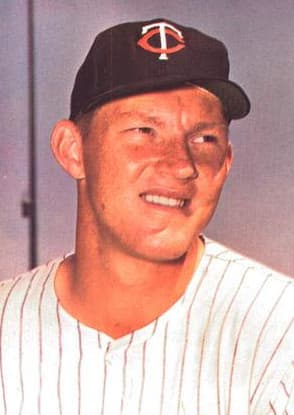
Jim Kaat in 1965.
Photo credit: Unknown photographer via Wikimedia Commons
Jim Kaat pitched for 25 years, longer than almost anyone, and did everything on a baseball field well except win the awards that should have come with it. He won 283 games, took 16 Gold Gloves with a quickness off the mound that no left-hander has matched, and matched Sandy Koufax pitch for pitch in a World Series before bowing to him. He outlasted his own fastball, reinventing himself as a reliever and winning a championship at 43, then spent decades as one of the most respected voices in the broadcast booth. The Golden Days Era Committee elected him to the Hall of Fame in 2022.
Little Jimmy
Kaat was born on November 7, 1938, in Zeeland, Michigan, into a Dutch-American family, and he was no obvious prospect, a 5-foot-10 high schooler they called Little Jimmy. A year at Hope College changed his body, and he grew to 6-foot-4 and over 200 pounds, the tall, lanky left-hander the world would come to know. The Washington Senators signed him, and he reached the majors in 1959, sticking with the franchise as it moved to Minnesota and became the Twins before the 1961 season. He worked fast and threw strikes, and he settled in for one of the longest careers any pitcher has had.
The Duel With Koufax
Kaat's peak came in the mid-1960s, and it ran straight into the best pitcher alive. In 1966 he went 25-13 and led the American League in wins, complete games, and innings, the finest season of his career, and Koufax won the only Cy Young Award given that year, when one covered both leagues. The two had met the autumn before in the 1965 World Series, the Twins against the Dodgers, and Kaat beat Koufax with a complete game in Game 2. Then Koufax beat him twice, shutting Minnesota out in Game 5 and again in Game 7 on two days' rest, and the Dodgers took the title. Kaat had been brilliant and still lost to a man having a better year.
Sixteen Gold Gloves
What set Kaat apart from every pitcher of his time was his glove. He won 16 Gold Gloves in a row, from 1962 through 1977, the most any pitcher had ever won when he retired, a record that stood until Greg Maddux passed it with 18. He pounced off the mound to field bunts and stab line drives, turning the fifth infield position into an advantage, and the durability that let him pitch a quarter-century kept the streak alive year after year. The award measured a skill that the win totals could not, and no left-hander has ever fielded the position better.
The Reliever's Ring
Kaat pitched into his forties by becoming a different pitcher. The fastball that had made him a workhorse faded, so he moved to the bullpen in his last years, a crafty left-handed reliever for the Phillies, the Yankees, and the Cardinals. In 1982, at 43, he appeared in four games of the World Series for St. Louis and won a championship at last, after more than two decades of trying, and he called it the greatest moment of his career. He had started World Series games as a young ace and finished them as an old reliever, the whole arc of a pitching life in one career.
The Awards That Never Came
For all the wins, Kaat pitched in the shadow of greater names and collected almost no individual hardware. He made only three All-Star teams and never won a Cy Young, finishing behind Koufax in his best year and getting overlooked even when he won 20 games twice for the White Sox in the mid-1970s. He won 283 games and lost 237, struck out 2,461 hitters, and pitched more than four thousand innings, the kind of bulk that usually earns a trophy or two along the way. The recognition stayed just out of reach, the steady excellence never quite spectacular enough for the voters.
The Second Career
When the pitching ended, Kaat found a second life behind a microphone that may have made him more famous than the first. He called games for the Yankees and on national television for decades, a sharp, plain-spoken analyst who won seven Emmy Awards and earned the respect of players and viewers alike. He spoke about pitching with the authority of a man who had done it for 25 years, and he stayed close to the game he had given his life to. The broadcaster kept his name current long after his playing days, a familiar voice across generations of fans.
Cooperstown
The Hall of Fame made Kaat wait the longest of waits. He spent his full 15 years on the writers' ballot without coming close, peaking below 30 percent, and then the veterans committees passed him over for years more. The Golden Days Era Committee finally elected him in December 2021, with the exact number of votes he needed, in a class that included his old Twins teammate Tony Oliva. He went in wearing a Minnesota cap, the franchise he had pitched for across 15 seasons, the durable left-hander and peerless fielder honored at 83, still around to enjoy it.