Profile
Tony Oliva
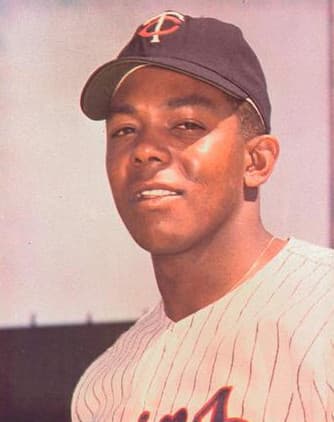
Tony Oliva in 1965.
Photo credit: Unknown photographer via Wikimedia Commons
Tony Oliva was the purest hitter of his generation for as long as his knees held up, a Cuban exile who arrived on borrowed papers and won the batting title in his very first season, then won it again in his second. He hit line drives to all fields with a swing that scouts called perfect, and he might have been one of the greatest hitters who ever lived if his body had cooperated. Instead the injuries cut him down in his prime and left a Hall of Fame case that the voters argued over for half a century. The Golden Days Era Committee elected him in 2022.
The Borrowed Name
He was born Pedro Oliva on July 20, 1938, in Pinar del Río, Cuba, and the name the world knows him by was not his own. When the Minnesota Twins signed him in 1961, he came to the United States on the documents of his brother Antonio, and the name Tony stuck to him for life. Then the door closed behind him. Castro's revolution and the break between the countries left him unable to go home, separated from his parents and many siblings for years, a young man building a baseball career in a foreign country while his family stayed beyond reach. He did not see his mother again until a reunion in Mexico nearly a decade later.
Two Titles in Two Years
Oliva announced himself with a rookie season unlike any other. In 1964 he won the American League batting title at .323, was named Rookie of the Year, and became the first player ever to take a batting crown and the rookie award in the same year. He did not slow down, winning the batting title again in 1965 at .321, the first player in history to win it in each of his first two seasons. He led the league in hits in five different years and made the All-Star team in each of his first eight, a hitter so consistent and so smooth that pitchers ran out of ways to fool him.
The Knee
The career that should have run for two decades was broken by a knee. Oliva had hurt it before, but the ruin came on June 29, 1971, when he dove for a ball off the bat of Oakland's Joe Rudi and tore the joint apart, and the seven or eight surgeries that followed never made it whole again. He had been hitting .337 at the time, on his way to a third batting title that he somehow still won that season, but the dives and the sprints were gone. He spent his last years as one of the game's first designated hitters, hitting the first home run any DH ever struck in 1973, his bat still alive even as his legs failed.
The Smoothest Swing
What everyone remembered was the swing. Oliva sprayed line drives to every part of the field with a stroke that looked effortless, and he hit .304 for his career with 1,917 hits and 220 home runs, numbers that the lost seasons make look small. He won three batting titles, led the league in hits five times, and took a Gold Glove in right field, a complete player before the injuries narrowed him to a hitter. The Twins reached the 1965 World Series with him in the lineup, losing to Koufax and the Dodgers in seven games, the one Series of his career. The talent was enormous, and the body would not let it run its course.
A Twin for Life
Oliva never left Minnesota. He stayed with the Twins for decades after his playing days, a coach and an instructor and an ambassador, beloved across the state in a way few players ever are. He helped develop a young Kirby Puckett and passed his hitting knowledge to a generation of Twins, the smooth swing living on in the players he taught. The fans adored him, and the franchise retired his number 6 in 1991, honoring the Cuban kid who had become a Minnesota institution. He had given the team his whole life, and it gave him a permanent place in return.
The Cruelest Wait
Few players suffered the Hall of Fame process longer than Oliva did. He fell short on the writers' ballot, and then the veterans committees turned the wait into torture, leaving him eight votes shy in 2011 and then, in 2014, exactly one vote short, close enough to taste. He waited another seven years, an old man wondering if the call would ever come, until the Golden Days Era Committee finally elected him in December 2021. He went in with a Twins cap, alongside his old teammate Jim Kaat, at 83 years old, the recognition arriving so late that the wonder was that it arrived at all.
What Might Have Been
The case for Oliva always carried a ghost, the player he would have been with two good knees. For eight seasons before the injury he was among the best hitters in the game, a batting champion and an All-Star every year, on a trajectory that pointed toward the inner circle of Cooperstown. The knee took that away and left a shorter, smaller record that the voters could not quite agree on, the greatness real but incomplete. He made the Hall in the end on the strength of what he did, and the imagination filled in the rest, the smoothest swing of his time stopped before its time.