Profile
Joe Gordon
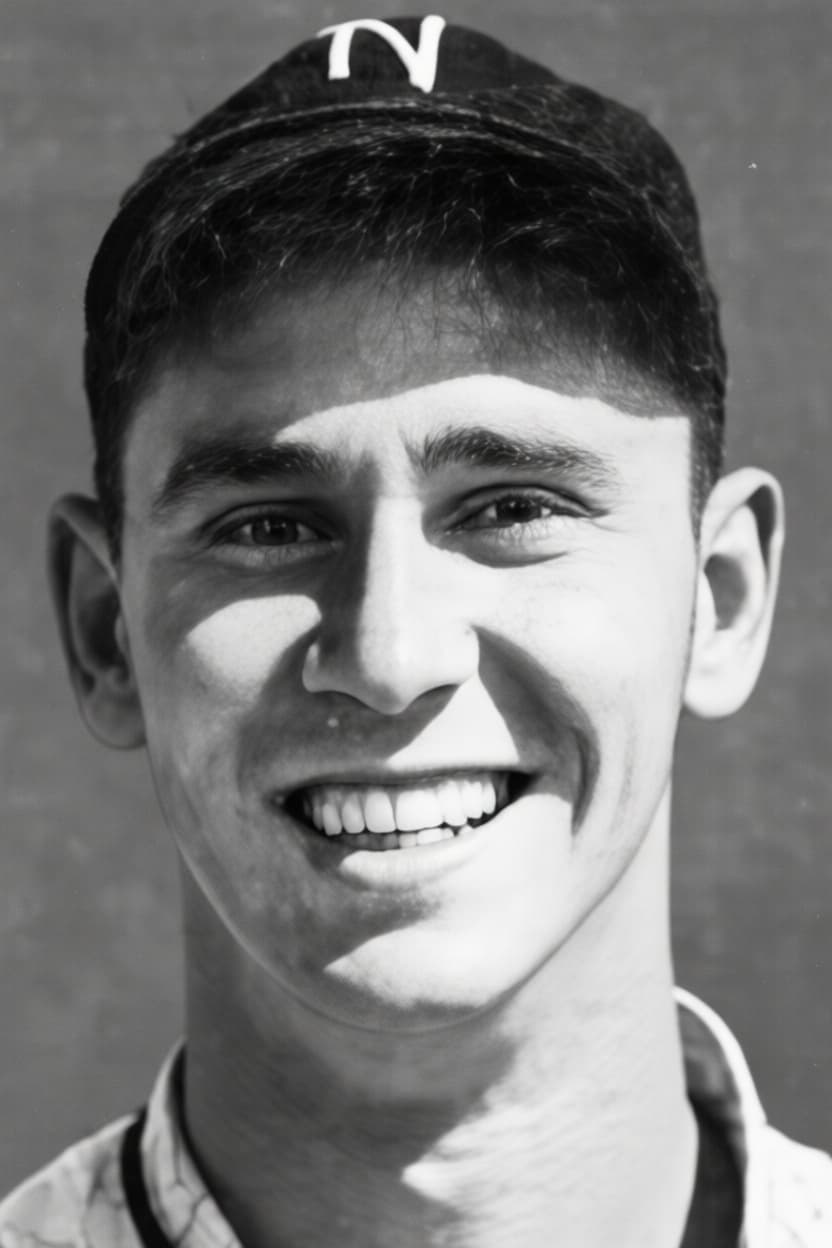
Joe Gordon portrait, 1942.
Photo credit: Unknown photographer via Wikimedia Commons
Joseph Lowell Gordon played the violin in the Portland Symphony Orchestra at 14, studied gymnastics at the University of Oregon, and turned second base into a stage. He played 11 major league seasons for the New York Yankees and Cleveland Indians, hit 253 home runs (the first American League second baseman to hit 20 in a season, and he did it seven times), won the 1942 AL MVP over Ted Williams' Triple Crown, won five World Series championships, served in the Army Air Force during World War II, and when Larry Doby arrived in Cleveland as the American League's first black player, Gordon was the first teammate to throw with him. Manager Joe McCarthy said, "The greatest all-around ballplayer I ever saw, and I don't bar any of them, is Joe Gordon." The Veterans Committee elected him to the Hall of Fame in 2009, 31 years after his death.
Portland
Gordon was born on February 18, 1915, in Los Angeles, California. His family moved to Portland, Oregon, when he was four. His father Benjamin died during Gordon's childhood. His older brother Jack introduced him to sports. Gordon attended Jefferson High School, earned All-Portland honors in baseball, played football, and studied the violin with enough discipline to perform in the Portland Symphony at 14.
Gordon enrolled at the University of Oregon, majored in physical education, and competed in baseball, football, gymnastics, soccer, and the long jump. His batting average of .358 ranked fourth in school history. His gymnastics training gave him reflexes and body control that translated directly to the acrobatic plays he would make at second base for the rest of his career. He joined Sigma Chi and played violin in the college orchestra. Oregon inducted him into their Hall of Fame in 1992.
The Yankees
The Yankees signed Gordon out of college and sent him to the Oakland Oaks of the Pacific Coast League in 1936, where he hit .300 and played shortstop. He moved to second base with the Newark Bears in 1937, hit .280 with 26 home runs on a team that went 109-43 (often called the greatest minor league team ever assembled), and reached the Yankees in 1938.
Gordon hit 25 home runs as a rookie, setting the American League record for home runs by a second baseman. He broke his own record with 28 in 1939, 30 in 1940, and 32 in 1948, and the 1948 mark stood until Bret Boone hit 36 in 2001. The Yankees swept the Chicago Cubs in the 1938 World Series, and Gordon batted .400 in four games. He hit 28 home runs in 1939, 30 in 1940, and won World Series rings in 1939 and 1941. In the 1941 Series against Brooklyn, he batted .500 and turned five double plays in a five-game victory.
Leo Durocher, managing the Dodgers in that 1941 Series, said, "We're not afraid of DiMaggio or Keller. The man we fear is Gordon."
Gordon won the 1942 AL MVP, batting .322 with 18 home runs and 103 RBI while carrying a 29-game hitting streak. Ted Williams won the Triple Crown that season, hitting .356 with 36 home runs and 137 RBI, and still finished second. The voters rewarded Gordon's role on the pennant-winning Yankees (103-51) over Williams' second-place Red Sox, nine games back.
Gordon won a fourth championship in 1943 as the Yankees beat the Cardinals in five games. He entered the Army Air Force in 1944 and spent the next two years stationed in Hawaii.
Cleveland
Gordon returned from military service in 1946, but injuries (a severed tendon, a chipped bone, a fractured thumb) reduced him to a .210 season. The Yankees traded him to the Cleveland Indians on October 11, 1946, for pitcher Allie Reynolds, a deal widely considered one of the most consequential trades in baseball history. Reynolds went on to throw two no-hitters and anchor multiple championship staffs. Gordon found a second life in Cleveland.
In 1947, Gordon hit 29 home runs and led the American League in assists at second base. More significantly, when Larry Doby joined the Indians as the first black player in the American League, Gordon was the teammate who made it bearable. Doby recalled the isolation. "I felt all alone," he said. "Then Joe Gordon yelled, 'Hey kid, come on. Throw with me.' Joe Gordon was a class guy."
Gordon hit 32 home runs in 1948, setting the American League record for a second baseman (a mark that also stood until 2001), and helped Cleveland win the World Series over the Boston Braves, hitting a home run in the clinching Game 6. Bobby Doerr said, "There ought to be a law against having two guys like Gordon and Lou Boudreau on the same team."
Gordon retired after the 1950 season. He departed the Yankees after exactly 1,000 games and 1,000 hits, the only player in history with those precise figures.
Flash
Gordon managed in the Pacific Coast League, where he hit .299 with 43 home runs as a player-manager for Sacramento in 1951. He managed the Cleveland Indians from 1958 through mid-1960, compiling a 184-151 record, and then became the central figure in the strangest transaction in baseball history. On August 3, 1960, Indians GM Frank Lane traded Gordon to the Detroit Tigers for Tigers manager Jimmy Dykes, the only manager-for-manager swap in major league history. Neither team improved. Gordon later managed the Kansas City Athletics under Charlie Finley in 1961 and the expansion Kansas City Royals in 1969 before stepping away from the game.
Gordon finished with 1,530 hits, 264 doubles, 253 home runs, 975 RBI, and a .268 batting average across 1,566 games and 11 seasons. He made nine All-Star teams, won five World Series championships, and led the league in assists four times. His gymnastics training at Oregon made him the most acrobatic second baseman of his era, and a Wall Street Journal study of defensive range ranked him the best among 30 candidates examined for the greatest Yankees position players.
Gordon died of a heart seizure on April 14, 1978, in Sacramento, California, at 63. He asked that no funeral be held. His daughter Judy, who delivered his Hall of Fame induction speech in 2009 before 21,000 people at Cooperstown, said, "We consider Cooperstown and the National Baseball Hall of Fame as his final resting place, to be honored forever." The nickname they gave him was "Flash," after the comic-book hero, because that was how fast he moved across the diamond and how quickly he disappeared after the game was over.