Profile
Lou Boudreau
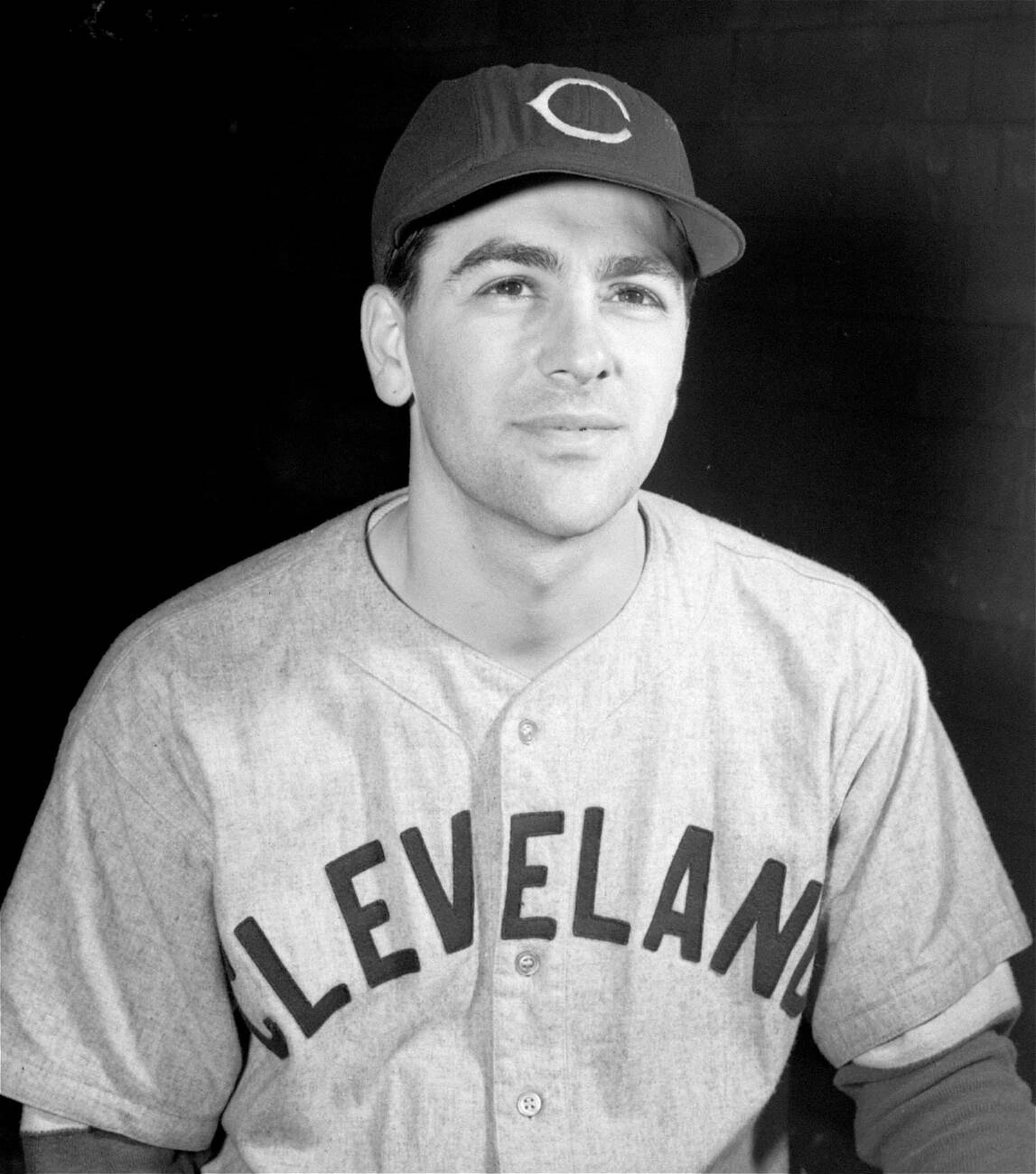
Lou Boudreau portrait, 1942.
Photo credit: RF / Associated Press via Wikimedia Commons (Public domain)
Lou Boudreau managed himself. He was the player-manager of the Cleveland Indians from age 24, the youngest full-time manager in the major leagues in the twentieth century, and his best season in both roles came simultaneously in 1948, when he batted .355, won the American League MVP award, and led Cleveland to a World Series championship. He spent nearly a decade making every lineup decision and then playing shortstop in the lineup he had written, and no one in baseball did both jobs better at the same time. The BBWAA elected him to the Hall of Fame in 1970.
Harvey
Louis Boudreau was born on July 17, 1917, in Harvey, Illinois, a suburb south of Chicago. His father, Louis Sr., was a machinist of French-Canadian descent who played semipro baseball and passed his love of the game to both of his sons. His mother, Birdie Henry Boudreau, was of Jewish and German descent, and her parents were observant Orthodox Jews. His parents divorced when Lou was seven, and he split his time between them throughout his childhood. His older brother Albert also played ball, but Lou was the one who drew attention.
He attended Thornton Township High School in Harvey, which had no baseball team, so he channeled his athletic ability into basketball and excelled. At the University of Illinois, he captained both the basketball and baseball teams, led the Illini to a Big Ten basketball championship in 1937, and earned All-American honors in basketball in 1938. The basketball career came at a cost. Years of pounding the hardwood damaged his ankles severely enough to require taping before every baseball game for the rest of his career, and the chronic condition earned him a 4-F military classification during World War II. The Cleveland Indians signed him after his junior year, and he reached the major leagues in 1938.
Cleveland
Boudreau became the starting shortstop in 1940, batting .295 in his first full season and fielding the position with a range and instinct that separated him from every other shortstop in the league. He led American League shortstops in fielding percentage eight times across his career and collected more hits than any player in the decade of the 1940s, finishing with 1,578 for the ten-year span. On November 25, 1941, the Indians named him player-manager at 24 years old. The club's board of directors had initially voted 11-1 against appointing him, but owner Alva Bradley was persuaded by George Martin, a Sherwin-Williams executive on the board, and the decision stood. Observers doubted that a player so young could handle both jobs. Boudreau handled them for nine seasons.
In 1947, he personally introduced Larry Doby around the Cleveland clubhouse when Doby became the first black player in the American League, helping to ease the integration of a team navigating unfamiliar territory.
The Boudreau Shift
Boudreau's most famous tactical innovation emerged on July 14, 1946, during a doubleheader at Fenway Park against the Boston Red Sox. In the first game, Boudreau went 5-for-5 with four doubles and a home run, while Ted Williams went 4-for-5 with three home runs. Between games, Boudreau conceived a radical defensive alignment. He moved himself to the right side of second base and shifted all four infielders to the right half of the diamond, daring Williams to hit to the opposite field. Williams stepped out of the batter's box and asked umpire Bill Summers whether the alignment was legal. Summers confirmed it was. Williams stepped back in and grounded out to Boudreau. The alignment became known as the Boudreau Shift. Williams occasionally slapped singles through the left side, but he refused to change his approach in any fundamental way, and the shift anticipated by more than six decades the defensive positioning strategies that became standard across baseball in the 2010s.
1948
Boudreau's 1948 season was the culmination of everything he had been building since taking over as manager. He batted .355 with 199 hits, 18 home runs, 106 RBI, and 98 walks against just 9 strikeouts in 560 at-bats, one of the most disciplined offensive seasons in league history. He managed the Indians through a three-team pennant race with the Yankees and Red Sox, adding Satchel Paige to the roster in July. Paige went 6-1 and helped carry the pitching staff through the final months.
The regular season ended with Cleveland and Boston tied, forcing the first tiebreaker game in American League history. Boudreau selected left-hander Gene Bearden, a knuckleball pitcher, to start at Fenway Park on October 4, a decision that surprised observers who expected a right-hander against Boston's lineup in their home park. Boudreau started himself at shortstop and went 4-for-4 with two home runs, driving in the runs that carried Cleveland to an 8-3 victory.
The Indians defeated the Boston Braves in the World Series in six games, giving Cleveland its first championship since 1920. Boudreau won the MVP award with 22 of 24 first-place votes. He remains the only player-manager in modern baseball history to win both the MVP award and a World Series championship in the same season.
The Broadcast Booth
The Indians dismissed Boudreau as manager after the 1950 season, and he played two final years with the Boston Red Sox before retiring as a player in 1952. His career totals included a .295 batting average, 1,779 hits, and 789 RBI across 15 seasons, with eight All-Star selections. He managed the Red Sox from 1952 to 1954, the Kansas City Athletics from 1955 into 1957, and the Chicago Cubs in 1960, though none of those tenures matched what he had achieved in Cleveland. His overall managerial record stood at 1,162-1,224.
The Cubs tenure began under unusual circumstances. Jack Brickhouse had recruited Boudreau as a color commentator for Cubs broadcasts on WGN radio in 1958. Partway through the 1960 season, the Cubs asked Boudreau to swap roles with manager Charlie Grimm. Boudreau moved to the dugout and Grimm moved to the broadcast booth, and the Cubs finished in last place. After that single season managing, Boudreau returned to the microphone and stayed there for more than two decades, becoming one of the most familiar voices in Chicago sports. His broadcasting career with the Cubs on WGN lasted roughly thirty years before the station declined to renew his contract ahead of the 1988 season. He was 71 years old.
His wife, Della DeRuiter, whom he had married in 1938 and met at Thornton High School, died in 1999. Boudreau died on August 10, 2001, at St. James Medical Center in Olympia Fields, Illinois, at 84. He was buried at Pleasant Hill Cemetery in Frankfort, Illinois, survived by four children and ten grandchildren.