Profile
Larry MacPhail
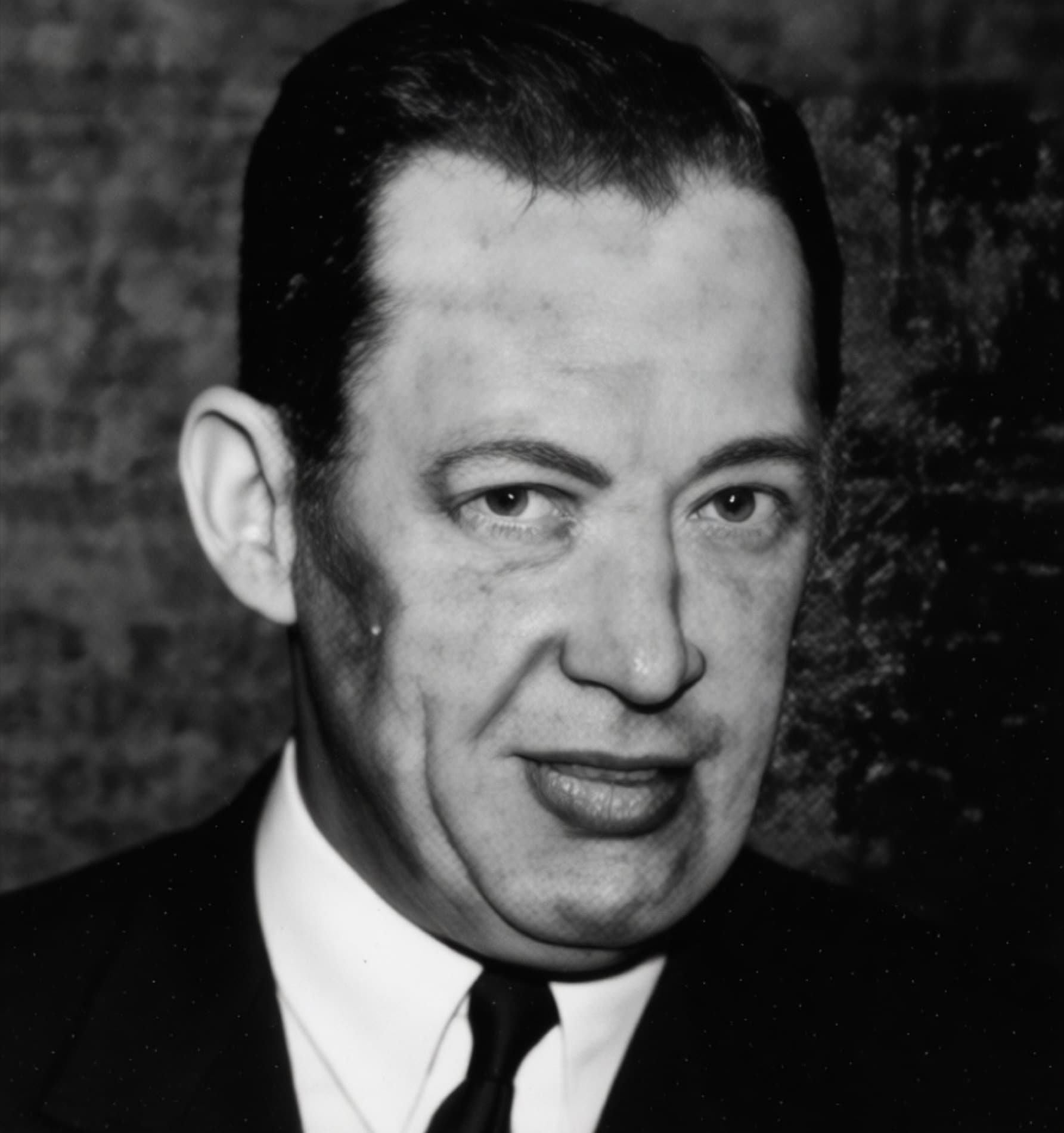
Larry MacPhail portrait.
Photo credit: User-provided image via User-provided image
Leland Stanford MacPhail introduced night baseball to the major leagues, put games on the radio with professional announcers, flew his team between cities by airplane, and built three franchises into pennant contenders before destroying his own career in a drunken tantrum at a World Series celebration. Leo Durocher, who managed under him in Brooklyn, defined the man precisely. "There is a thin line between genius and insanity," Durocher said, "and in Larry's case it was sometimes so thin you could see him drifting back and forth." His grandson Andy put it another way. MacPhail was "a genius when sober, brilliant when he had one drink and a raving lunatic when he had too many." The Veterans Committee elected him to the Hall of Fame in 1978. His son Lee was elected in 1998, making them the only father-son pair in Cooperstown.
Cass City
MacPhail was born on February 3, 1890, in Cass City, Michigan. His father William Curtis was a Scottish immigrant who ran a store and later a bank. MacPhail graduated from Staunton Military Academy at 16, attended Beloit College and the University of Michigan, and completed a law degree at George Washington University by the time he was 20. He befriended Branch Rickey in law school, a relationship that shaped both their careers and eventually destroyed their friendship.
MacPhail served as an artillery captain in France and Belgium during the First World War, where he was wounded in combat. In January 1919, he accompanied Colonel Luke Lea, a former U.S. senator from Tennessee, on an unsanctioned mission to the Netherlands to arrest the exiled Kaiser Wilhelm II and transport him to the Paris Peace Conference for a war crimes trial. The mission failed. MacPhail reportedly stole an ashtray from the Kaiser's residence and barely avoided imprisonment.
Three Franchises
MacPhail opened a law practice in Columbus, Ohio, after the war and in 1930 acquired an option on the struggling minor league Red Birds. Rickey brokered the sale and MacPhail became team president, building a new stadium, installing lights, and outdrawing the parent St. Louis Cardinals by 1932. A rift with Rickey over the roster sent MacPhail to Cincinnati, where Rickey recommended him for the general manager's job. "A wild man at times," Rickey told Reds owner Powel Crosley, "but he'll do the job."
MacPhail rebuilt the Reds from the ground up. On May 24, 1935, President Franklin D. Roosevelt pressed a button at the White House to turn on the floodlights at Crosley Field, and the Reds defeated the Phillies 2-1 in the first major league night game before 20,000 fans. MacPhail hired Red Barber as the team's broadcaster, initiated team air travel, and built the foundation of the club that won the pennant in 1939 and the World Series in 1940, both after MacPhail left Cincinnati. Heavy drinking led to altercations with police, and he was forced out after the 1936 season.
Brooklyn rescued him. The Dodgers were in dire financial straits when the Brooklyn Trust Company called MacPhail in 1938 to run the franchise. MacPhail hired Durocher as manager, brought Red Barber along from Cincinnati, installed lights at Ebbets Field, acquired Pee Wee Reese and Pete Reiser, and built the team that won its first pennant since 1920 in 1941. Radio broadcasts helped the Dodgers outdraw the Yankees by 100,000 fans. MacPhail resigned in September 1942 to accept an Army commission for the Second World War, and Rickey replaced him.
After the war MacPhail assembled a syndicate with Dan Topping and Del Webb to buy the New York Yankees. As team president he instituted a $5,000 minimum salary, a modest pension plan, and a $25 weekly spring training allowance that players called "Murphy money." The 1947 Yankees won 97 games and defeated Rickey's Brooklyn Dodgers in the World Series.
The Biltmore
The celebration after Game 7 ended MacPhail's baseball career. Rickey rebuffed MacPhail's congratulations on the field. "I am taking your hand only because people are watching us," Rickey told him. "Don't you ever speak to me again." MacPhail entered the Yankees clubhouse drunk, hurled insults at the room, punched a sportswriter, and announced his resignation. The scene continued at the victory party at the Biltmore Hotel, where MacPhail announced his retirement again through tears. The next day Topping and Webb bought out the 57-year-old MacPhail for $2 million, and he never worked in baseball again.
MacPhail purchased a 400-acre farm near Bel Air, Maryland, raised Black Angus cattle, and bred thoroughbred racehorses. He served briefly as president of Bowie Race Track before being removed for, among other offenses, "using profanity to three horse owners." His health declined through cancer of the larynx in 1952 and cancer of the intestines in 1957, both of which he survived. MacPhail died on October 1, 1975, at a nursing home in Miami, at 85, two days after Casey Stengel.