Profile
Miller Huggins
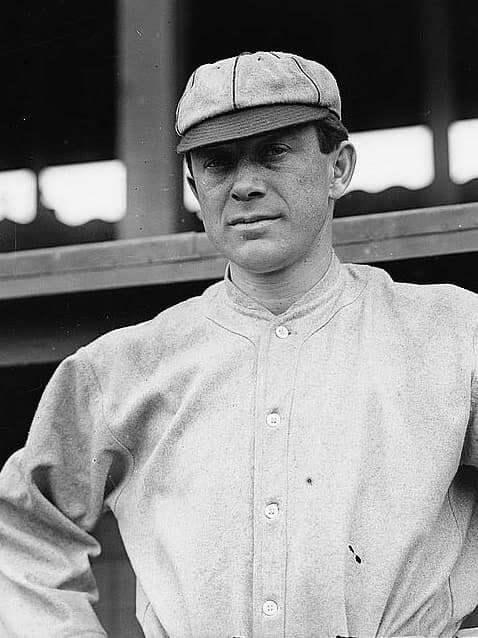
Miller Huggins portrait by Bain.
Photo credit: Unknown author via Wikimedia Commons (Public domain)
Miller Huggins stood five feet six inches tall and weighed 140 pounds, and he managed Babe Ruth, who stood six feet two and weighed 215 and did not enjoy being told what to do. The relationship between the small, quiet manager and the largest personality in baseball history defined the New York Yankees of the 1920s, a dynasty that won six American League pennants and three World Series titles under Huggins's direction. He died during the 1929 season at 50, and his players, including Ruth, wept openly at the funeral.
Cincinnati
Miller James Huggins was born on March 27, 1878, in Cincinnati, Ohio. He attended the University of Cincinnati, where he studied law and earned a degree, though he never practiced. He was a switch-hitting second baseman with little power but sharp plate discipline, and he reached the major leagues with the Cincinnati Reds in 1904. He played for the Reds through 1909, then moved to the St. Louis Cardinals, where he served as both player and manager beginning in 1913. His career batting average was .265 over 13 seasons, but his value lay in his ability to get on base. He led the National League in walks four times.
St. Louis
Huggins managed the Cardinals from 1913 through 1917, never finishing higher than third place but earning a reputation as one of the smartest tactical minds in the league. He was meticulous about preparation, studied opposing hitters and pitchers with an intensity that was unusual for the era, and handled his roster with a calm authority that belied his small stature. When the Yankees came looking for a new manager after the 1917 season, American League president Ban Johnson recommended Huggins personally.
The Yankees
Huggins took over a Yankees franchise that had never won a pennant. Within three years, they won their first, taking the 1921 American League title with a roster that included Ruth, whom the Yankees had acquired from the Boston Red Sox before the 1920 season. The Yankees lost the 1921 and 1922 World Series to the New York Giants, both played at the Polo Grounds, but won their first championship in 1923, the inaugural season at Yankee Stadium.
The relationship between Huggins and Ruth was the central tension of the dynasty. Ruth resisted authority, broke curfew, ignored training rules, and tested Huggins constantly. Huggins fined Ruth $5,000 and suspended him in August 1925 after a prolonged stretch of defiance, a punishment that was the largest fine ever levied on a player at the time. Ruth appealed to team owner Jacob Ruppert, who backed Huggins. The incident established Huggins's authority once and for all, and the team's performance improved immediately afterward.
The 1927 Yankees are widely considered the greatest team in baseball history. Ruth hit 60 home runs, Lou Gehrig drove in 173 runs, and the team went 110-44 before sweeping the Pittsburgh Pirates in the World Series. Huggins managed the roster with the light touch that great teams require, keeping egos in check and ensuring that the extraordinary talent on the field translated into wins rather than chaos. The 1928 Yankees won another pennant and swept the Cardinals in the World Series, giving Huggins back-to-back titles and six pennants in eight years.
Death
Huggins fell ill during the 1929 season. He developed a carbuncle under his left eye that became infected, and the infection spread rapidly. He entered the hospital on September 20, 1929, and died five days later, on September 25, at St. Vincent's Hospital in New York. He was 51 years old. The initial diagnosis was erysipelas, a bacterial skin infection, but the infection progressed to pyaemia, a form of blood poisoning that, in the era before antibiotics, was almost always fatal.
The Yankees erected a monument to Huggins in center field at Yankee Stadium in 1932, the first of the famous monuments that would eventually include Ruth and Gehrig. The Veterans Committee elected him to the Hall of Fame posthumously in 1964, 35 years after his death. His career managerial record of 1,413 wins and 1,134 losses includes three World Series titles and a winning percentage that reflects the dynasty he built from a franchise that had won nothing before he arrived.