Profile
Monte Irvin
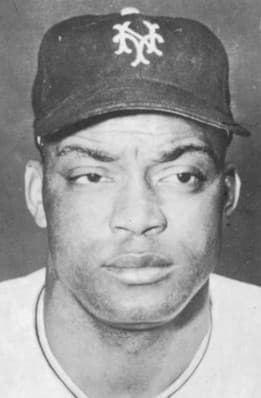
Monte Irvin portrait (1955).
Photo credit: Unknown author via Wikimedia Commons (Public domain)
Monte Irvin spent the best years of his career in the Negro Leagues, arrived in the majors at 30 with his peak behind him, and still played well enough to help the New York Giants win the 1951 pennant. He hit .312 with 24 home runs and 121 RBI that season, stole home in Game 1 of the World Series, and finished third in the National League MVP voting. What he might have done with a full major league career is one of the great unanswered questions of baseball's integration era. The Hall of Fame inducted him in 1973.
Alabama and New Jersey
Monford Merrill Irvin was born on February 25, 1919, in Haleburg, Alabama, a small town near the Florida border. His family moved to Orange, New Jersey, when he was a child, and he grew up in a household that valued education and athletics. At Orange High School, he was a four-sport star who earned sixteen varsity letters in football, baseball, basketball, and track. College recruiters pursued him, but the financial realities of the Depression and the racial barriers of the late 1930s limited his options.
The Eagles
Irvin signed with the Newark Eagles in 1938 at the age of 19 and quickly established himself as one of the best players in the Negro National League. He batted over .300 consistently and played both the outfield and shortstop with the kind of athleticism that made scouts and managers compare him to the best players in the game at any level. The Dodgers reportedly offered Irvin the chance to integrate the major leagues through scout Clyde Sukeforth, but Irvin declined, feeling that military service had left him physically and mentally unprepared for the burden. Jackie Robinson became the choice instead.
In 1946, after Irvin returned from military service, the Eagles won the Negro League World Series over the Kansas City Monarchs in seven games. Irvin hit .462 in the series, and the Eagles team that year, which included Larry Doby, was one of the strongest in Negro Leagues history. Cool Papa Bell, playing for the Homestead Grays that season, removed himself from the batting race so that Irvin could win the Negro National League batting title, believing it would help Irvin attract a major league contract.
The Giants
The New York Giants signed Irvin in 1949, and he made his major league debut on July 8, two years after Robinson had broken the color line with the Dodgers. Irvin was 30 years old, and the combination of military service and a leg injury suffered during winter ball had taken years off his prime. He spent most of 1949 and 1950 adjusting to major league pitching and recovering physically.
In 1951, everything came together. Irvin hit .312 with 24 home runs and a league-leading 121 RBI, and he was a critical part of the Giants team that overcame a 13-game deficit to the Brooklyn Dodgers and won the pennant on Bobby Thomson's home run on October 3. In the World Series against the Yankees, Irvin went 11-for-24 and stole home in the first inning of Game 1, sliding in ahead of Yogi Berra's tag. The Giants lost the series in six games, but Irvin's performance was the finest individual effort of the fall.
Later Years
A broken ankle in spring training 1952 cost Irvin most of that season and accelerated the decline of a career that had started too late. He hit .329 in 1953 but was never the same physically after the injury. The Chicago Cubs selected him in the minor league draft after the 1955 season, and he retired following the 1956 campaign with a .293 major league batting average over eight seasons.
Irvin spent 16 years working in the commissioner's office, serving as a liaison between baseball and the community and advocating for greater recognition of Negro Leagues players and their records. He died on January 11, 2016, in Houston, at 96. His contemporaries never stopped talking about what might have been. Roy Campanella called him the best all-around player he had ever seen, saying Irvin in the early 1940s had been twice the player he was even in 1951.