Profile
Andy Cooper
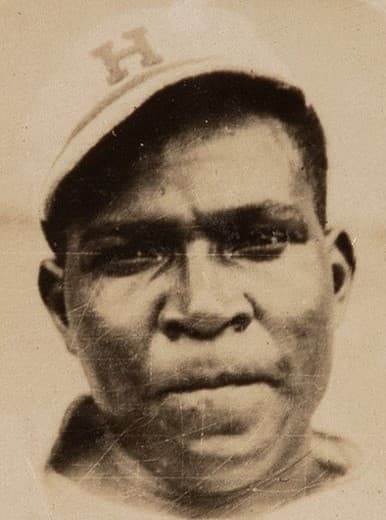
Andy Cooper portrait in Habana uniform.
Photo credit: Unknown photographer via Wikimedia Commons (Public domain)
Andrew Lewis Cooper pitched with his left hand for 22 seasons in the Negro Leagues, managed the Kansas City Monarchs to three pennants in four years, won 116 games, posted a .644 winning percentage, and taught Buck O'Neil how to play the game. O'Neil called him "the best manager I ever played for, a father figure and a teacher. With Andy, you felt like you were violating a trust if you broke the rules." Cooper threw a fastball that ran, a curveball with a tight release, and a screwball, and he controlled all of them with a precision that left hitters swinging at pitches they could not reach. He died of heart failure at 44, still the Monarchs' manager, and the Special Committee on Negro Leagues elected him to the Hall of Fame in 2006, 65 years later.
Waco
Cooper was born on April 24, 1897, in Washington County, Texas, between Austin and Houston. His parents Robert and Emma raised him near Waco. He attended A.J. Moore High School and registered for the draft in June 1918, serving in France during World War I.
Cooper returned from the war and signed with the Wichita Colored Giants in 1919. A scout described him as having "world of stuff, speed, and a good baseball bean." In 1920, he joined the Detroit Stars for the inaugural season of the Negro National League.
Detroit
Cooper pitched for the Detroit Stars from 1920 through 1927 and again in 1930. Pete Hill managed the Stars during Cooper's first two seasons, and catcher Bruce Petway took over around 1922 and transformed Cooper from raw talent into an elite pitcher across four seasons of instruction. By 1923, Bill James ranked Cooper as "the best Negro league pitcher" of that year. Cooper went 16-7 with a 3.64 ERA.
In 1925 Cooper posted his finest winning percentage, going 12-2 with a 2.88 ERA. Willie Simms recalled Cooper as "one of the smartest guys about the game of baseball." "He knew how to get the pitch on hitters inside and out, make 'em break up their bats, and he'd laugh at 'em."
In 1927, Cooper defied his league contract to join the Philadelphia Royal Giants on a barnstorming tour of Japan. He started and won all eight games with a 1.63 ERA. Historian Kazuo Sayama credited the tour as "inspiration for the start of professional baseball in Japan in 1936." Cooper received a $200 fine and a suspension upon his return, though the suspension was never enforced.
Kansas City
The Monarchs acquired Cooper via trade in 1928, and he won 15 games in 1929 as Kansas City captured the Negro National League pennant with a 62-17 record. Cooper returned briefly to Detroit in 1930, where he led the Stars to the second-half title but missed most of the playoff series with an injury, appearing in relief in Games 2 and 7.
After barnstorming tours through Hawaii and across the Pacific with the Philadelphia Royal Giants from 1927 through 1934, Cooper rejoined the Monarchs in 1933. The team offered him the manager's job in 1935, but he declined. He accepted in 1936.
Cooper managed the Monarchs to three pennants in four years from 1937 through 1940, compiling a 173-89-4 record (.660 winning percentage). In 1937, he pitched all 17 innings of a 2-2 tie against the Chicago American Giants, allowing two runs in the first inning and nothing after, striking out seven and walking four. The Pittsburgh Courier wrote that Cooper "rose to the heights," striking out Turkey Stearnes and forcing a double play with the bases loaded.
Hilton Smith joined the Monarchs staff under Cooper's management. "Andy Cooper was a smart manager, a great teacher," Smith said. "A student of baseball. He would take me aside and just sit there and talk to me." Buck O'Neil played for Cooper and remembered him with reverence. "He was the best manager I ever played for," O'Neil said. "A father figure and a teacher."
Cooper pitched in the 1936 East-West All-Star Game, throwing a scoreless sixth inning, and managed the West team in 1938 and 1940, going 1-1.
The Column
Cooper wrote a "Stove League" column for The Negro Star in Wichita during the 1934-35 offseason, discussing pitching philosophy and strategy. "Besides ambition and hard work, it takes headwork, strategy, and psychology," he wrote. "A pitcher must practice control." Russ J. Cowans of the Chicago Defender confirmed this assessment after Cooper's death, writing, "Cooper could almost put the ball any place he wanted it to go." "He had a keen knowledge of batters. He knew the weakness of every batter in the League."
Cooper suffered a heart ailment during the 1941 preseason that prevented him from attending spring training. His mother Emma brought him back to Waco to recover. He died on June 3, 1941, of heart failure, before he could return to the Monarchs. He was 44.
Cooper finished with 116 wins, 64 losses, a .644 winning percentage, a 3.58 ERA, and 719 strikeouts across 288 games and 1,603 innings. He was buried at Greenwood Cemetery in Waco, Texas. His son, Andy Cooper Jr., attended the Hall of Fame induction ceremony in 2006 at 77 and told reporters, "You've got to remember anything that pertained to black people back then has only been uncovered in recent years."