Profile
Buck O'Neil
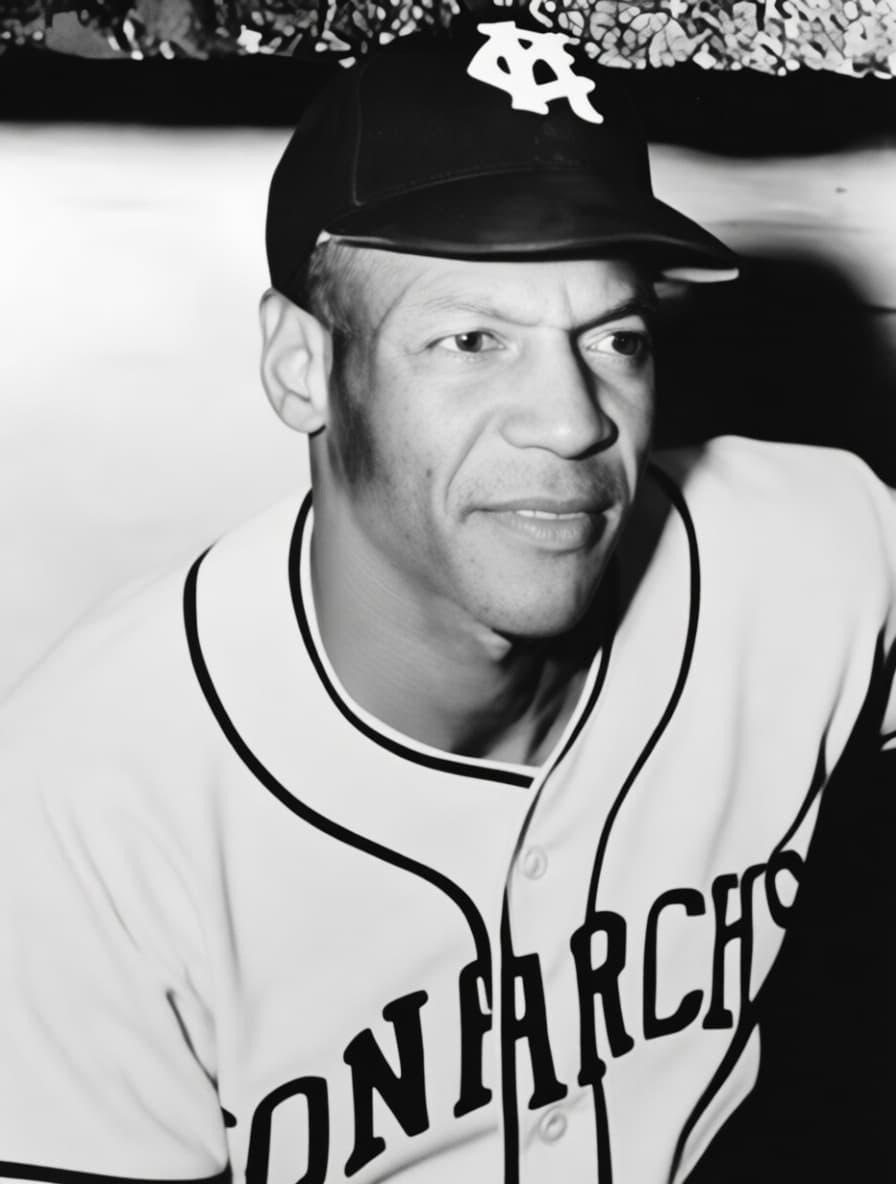
Buck O'Neil portrait.
Photo credit: Unknown photographer via Wikimedia Commons (Public domain)
John Jordan "Buck" O'Neil was a first baseman and manager in the Negro Leagues who became, in the final decades of his life, the most important ambassador the game of baseball has ever had.
Florida
John Jordan O'Neil Jr. was born on November 13, 1911, in Carrabelle, a fishing village on the Florida panhandle. His grandfather Julius had been brought to America on a slave ship as a boy and took the surname of his former owner after emancipation. O'Neil's father worked in a sawmill, later ran a pool hall in Sarasota's Newtown neighborhood, and became a foreman in the celery fields. In 1920 the family moved south to Sarasota, where his mother found work cooking for the Ringling circus family.
Sarasota hosted spring training for major league teams, and the young O'Neil watched players like Babe Ruth and Lefty Grove up close, though segregation meant he could never play alongside them. His uncle, who worked on the railroad, took him to West Palm Beach in the winters to watch Negro League games, and those trips gave him an ambition that shaped the rest of his life. When O'Neil finished elementary school in 1926, segregation barred him from attending Sarasota High School, so he received a scholarship to Edward Waters College, a historically black institution in Jacksonville, where he earned his diploma and completed two years of college.
He played semipro baseball for teams in Sarasota, Tampa, and Miami from the mid-1920s through the early 1930s, then barnstormed through the Depression with pickup clubs that crossed the country. In 1935, at the National Baseball Congress tournament in Wichita, Kansas, he saw Satchel Paige pitch for a team from Bismarck, North Dakota, and the encounter confirmed for O'Neil that the Negro Leagues were where he belonged. He joined the Memphis Red Sox in 1937 and the Kansas City Monarchs the following year.
Kansas City
With the Monarchs, O'Neil won two Negro Leagues pennants as a player and managed the team to several more. He was a capable hitter, batting .288 for his career in documented games, and by all accounts an exceptional leader. After his playing career, he scouted for the Chicago Cubs and in 1962 became the first African American coach in major league history, though the role was more symbolic than functional. The Cubs did not allow him to manage.
O'Neil might have been forgotten, as so many Negro Leagues figures were, if not for Ken Burns. In the 1994 PBS documentary Baseball, O'Neil appeared as an interview subject and stole the series. His warmth, his eloquence, and his refusal to express bitterness about the injustices he had endured made him the breakout personality of a 19-hour film. He told stories about Satchel Paige and Josh Gibson and the bus rides and the boarding houses with such joy that viewers came away understanding not just the injustice of segregation but the richness of the world it tried to suppress.
After the documentary, O'Neil became a public figure. He gave speeches. He raised money. He championed the creation of the Negro Leagues Baseball Museum in Kansas City, Missouri, which moved to its permanent home in 1997. He was the museum's public face, greeting visitors, signing autographs, and telling stories until his health failed.
In 2006, a special committee considered 39 candidates for the Baseball Hall of Fame from the Negro Leagues era. Seventeen were inducted. O'Neil, who had been widely expected to be among them, fell one vote short of the threshold needed for induction.
O'Neil, who was 94, handled the snub with the same grace he had shown his entire life. "Shed no tears for Buck," he told reporters. "No, man, no. I've had a beautiful, beautiful life." He died on October 6, 2006, at the age of 94.
In 2022, a new committee inducted O'Neil into the Baseball Hall of Fame, 16 years after his death. His daughter, who accepted the honor, said her father would have been pleased but not surprised. He had always known he belonged.