Profile
Ben Taylor
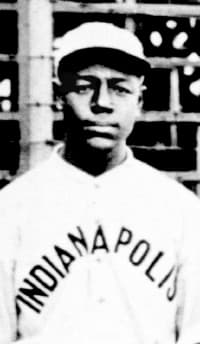
Ben Taylor portrait, 1915.
Photo credit: Unknown photographer via Wikimedia Commons (Public domain)
Benjamin Harrison Taylor was the youngest of seven sons born to a Methodist minister in Anderson, South Carolina, and the fourth brother to play professional baseball. He started as a pitcher, went 22-3 in his second season, then moved to first base and became so good at it that sportswriters compared him to George Sisler. He batted .328 across 999 documented games from 1908 through 1929, hit over .300 in 16 seasons, managed six clubs, and then spent his final years teaching a young outfielder named Buck Leonard how to play the position he was leaving behind. Leonard said, "I got most of my learning from Ben Taylor. He helped me when I first broke in with his team. He had been the best first baseman in Negro baseball up until that time, and he was the one who really taught me to play first base." The Special Committee on Negro Leagues elected Taylor to the Hall of Fame in 2006, 53 years after his death from pneumonia in Baltimore.
Anderson
Taylor was born on July 1, 1888, in Anderson, South Carolina. His father Isham was a Methodist minister born in 1840. His mother Adeline Hayne raised ten children, including seven sons. Four of the Taylor brothers played professional baseball. The oldest, C.I. Taylor, attended Clark College, served with the Tenth U.S. Cavalry during the Spanish-American War, founded the Birmingham Giants in 1904, moved the team to Indianapolis as the ABCs in 1914, and co-founded the Negro National League with Rube Foster. Candy Jim Taylor played third base for two decades and became the winningest manager in the Negro League era with 955 victories across 27 seasons and two Negro World Series championships. Steel Arm Johnny Taylor pitched professionally from 1903 through 1920 and won all 14 games he pitched for St. Paul in 1909.
Ben was the baby, and he learned from all of them. He debuted as a pitcher for C.I.'s Birmingham Giants in 1908 at 20 and posted a 22-3 record in 1909. By 1911, pitching for the St. Louis Giants, he reportedly went 30-1 including exhibitions. The St. Louis Globe-Democrat called him "one of the best colored pitchers in the country" as late as June 1912. He gradually converted to first base and never looked back.
Indianapolis
Taylor played under Rube Foster with the Chicago American Giants in 1913 before joining his brother C.I.'s Indianapolis ABCs, where he became the best defensive first baseman in black baseball. Teammates said he "made the other infielders look good by digging out low throws" and that he "made difficult plays with such ease that they appeared routine." The Indianapolis Star wrote in 1921, "Nobody has anything on Ben when it comes to covering first or cracking the apple."
On October 17, 1915, the ABCs defeated a team of major league All-Stars 3-2 at Federal League Park. Taylor handled 20 chances without an error and drove in the winning run in the 12th inning. The Indianapolis Freeman called him "Old Reliable Ben Taylor" and wrote that he "accepted twenty chances without a skip."
In the 1916 western championship, the ABCs defeated Rube Foster's Chicago American Giants four games to one. Taylor went 11 for 18 with three stolen bases across the five games, the defining team achievement of his playing career.
C.I. Taylor died of pneumonia on February 23, 1922, at 47. Ben replaced him as manager of the ABCs and compiled a 63-42-2 record that season while batting .370. He called his brother's former rival Oscar Charleston "the greatest outfielder that ever lived, greatest of all colors. He can cover more ground than any man I have ever seen. His judging of fly balls borders on the uncanny."
Washington and Baltimore
Taylor founded the Washington Potomacs in 1923 as an independent club playing at American League Park. On May 10, a street parade preceded the first home game, the crowd topped 4,000, and Taylor received a display of 200 roses. The Potomacs joined the Eastern Colored League in December 1923, but the team struggled financially and Taylor moved on.
He managed the Baltimore Black Sox from 1926 through 1928, a tenure marked by a cement truck sideswiping the team automobile and leaving Taylor with cuts that required 20 stitches. He traded slugger John Beckwith to Harrisburg to improve clubhouse discipline. He moved Jud Wilson from first base to right field to keep himself in the lineup.
In 1921, Taylor batted .392 in 88 games with 131 hits, 20 doubles, seven triples, and 73 RBI. In 1922, he hit .370 with 125 hits and 29 doubles. The Kansas City Times wrote, "Ben Taylor, the big left hand first sacker, is considered one of the hardest hitters in baseball." The Richmond Times-Dispatch said he "is said to be the equal of George Sisler."
The Teacher
Taylor's greatest contribution came after his playing days wound down. Operating the Baltimore Stars in 1933, he spotted a young player named Buck Leonard on a team in Portsmouth, Virginia, and recruited him. Leonard was playing right field at the time. Taylor, aging out of playing himself, taught Leonard how to play first base from the ground up, transferring decades of knowledge about footwork, positioning, and how to dig throws out of the dirt.
Leonard went on to become one of the greatest first basemen in baseball history and entered the Hall of Fame in 1972. He always credited Taylor. Todd Bolton of the Hall of Fame committee said in 2006, "In terms of black baseball, I think it's been acknowledged for generations among black players and historians that Taylor was the greatest first baseman in the first part of the 20th century."
The Biographical Encyclopedia of the Negro Baseball Leagues described him as "modest, easygoing, and soft-spoken, a true gentleman who maintained a fair and professional demeanor." His gravestone at Arbutus Cemetery in Baltimore reads, "A Graceful Player. A Superb Teacher, & A True Gentleman."
Taylor broke his left arm in a fall late in life. The arm was not properly set, leading to infection and amputation. He operated a poolroom, a shoeshine parlor, and a cleaning and pressing business in Baltimore, and he secured rights to print game programs for the Baltimore Elite Giants at Bugle Field. He died of pneumonia on January 24, 1953, in Baltimore, at 64.
Taylor finished with a .328 batting average, 207 doubles, 71 triples, 39 home runs, 701 RBI, and 110 stolen bases across 999 documented games in the Seamheads Negro Leagues Database. His brothers C.I. and Candy Jim were among the 39 finalists considered by the 2006 Special Committee but were not elected. Oscar Charleston selected Ben Taylor as first baseman on his all-time All-Star team in 1949, and the 1952 Pittsburgh Courier poll named him to the All-Time Negro League second team at first base.