Profile
Oscar Charleston
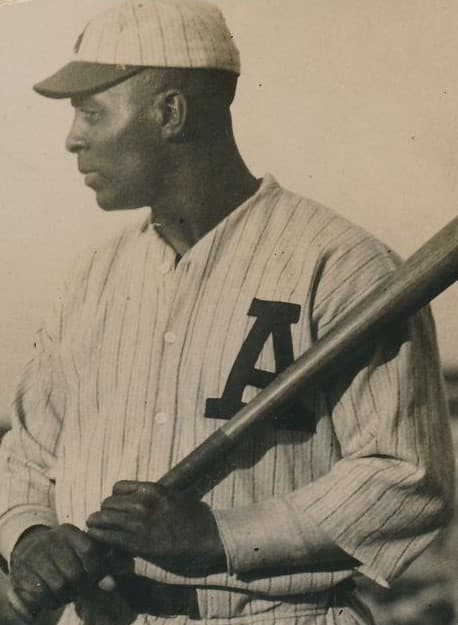
Oscar Charleston with Almendares club.
Photo credit: Unknown author via Wikimedia Commons (Public domain)
Oscar Charleston played in the Negro Leagues from 1915 through 1941 and was, by the judgment of virtually everyone who watched him, the most complete player the game had produced. He hit .365 over his career, won three Triple Crowns, and covered center field with a combination of speed, power, and instinct that left witnesses reaching for the same conclusion from different angles. Bill James ranked him the fourth greatest player in baseball history. John McGraw said of him, "If Oscar Charleston isn't the greatest baseball player in the world, then I'm no judge of baseball talent." The Hall of Fame inducted him in 1976.
Indianapolis
Oscar McKinley Charleston was born on October 14, 1896, in Indianapolis, Indiana, the seventh of eleven children. His father Tom worked as a construction laborer. At 15, Charleston enlisted in the Army and was assigned to the 24th Infantry Regiment, a Buffalo Soldier regiment, serving in the Philippines, where he ran track and played baseball against local teams. He returned to Indianapolis in 1915, joined the Indianapolis ABCs at 18, and by his second season had established himself as the best player in the Negro Leagues.
Center Field
Charleston was barrel-chested and powerfully built, and he played center field so shallow that he was practically a fifth infielder, relying on his speed to cover the ground behind him. He hit left-handed with tremendous power to all fields and ran the bases with an aggression that intimidated opponents and teammates alike. In 1921, playing for the St. Louis Giants, he hit .434 with 15 home runs and 31 stolen bases in 60 games, one of the finest offensive seasons in Negro Leagues history. He won three Triple Crowns over the course of his career, more than any other player in American professional baseball.
He played for more teams than any star of his era should have needed to, a consequence of the Negro Leagues' unstable economics. He moved from the ABCs to the Lincoln Stars, the Harrisburg Giants, the Hilldale Club, the Homestead Grays, and the Pittsburgh Crawfords, where he served as player-manager alongside Josh Gibson, Satchel Paige, and Cool Papa Bell in the early 1930s. The Crawfords roster that Charleston managed may have been the most talented team in the history of black baseball.
Charleston did not tolerate racism passively. Stories followed him from city to city, including an account of ripping the hood off a Klansman in Florida and confronting hostile crowds who thought a black man should accept abuse quietly. His physical presence backed up every confrontation, and he was among the most feared men in the game for reasons that extended well beyond what he did with a bat.
After the Field
In 1945, Branch Rickey hired Charleston to manage the Brooklyn Brown Dodgers, the Negro League team Rickey used as a scouting front for his plan to integrate the major leagues. Charleston recommended players to Rickey's scouts and helped persuade the Dodgers organization to sign Roy Campanella. He spent his final years managing the Philadelphia Stars and developing young players, doing the work of a man who understood that the next generation would have opportunities his own had been denied.
Charleston died on October 5, 1954, in Philadelphia, at 57. The Hall of Fame inducted him in 1976. In 2024, MLB officially integrated Negro Leagues statistics into its historical record, and Charleston's .365 career batting average confirmed what his contemporaries had always known about where he stood in the history of the game.