Profile
Bill McGowan
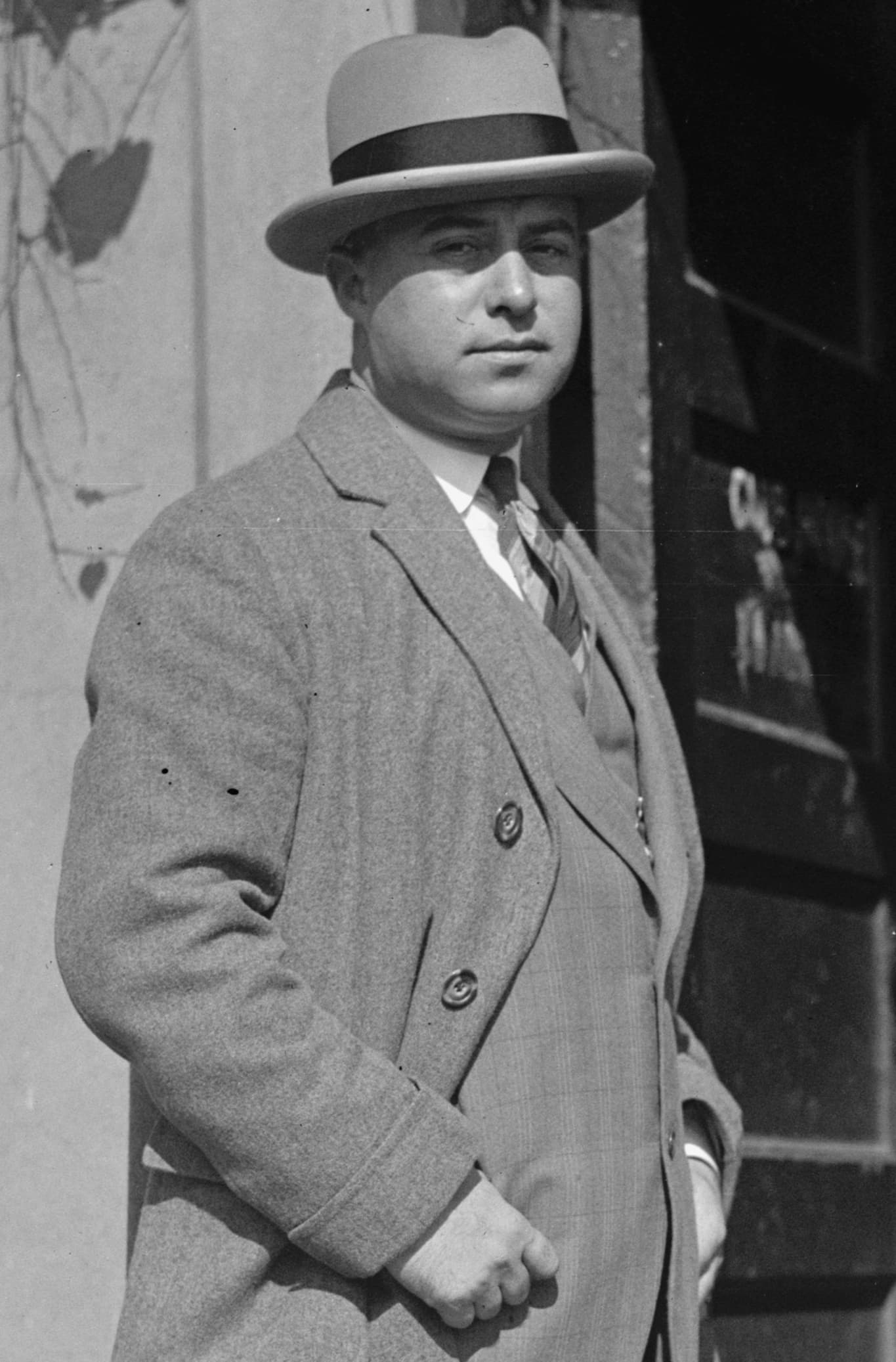
Bill McGowan portrait.
Photo credit: Unknown author via Wikimedia Commons (Public domain)
William Aloysius McGowan weighed 135 pounds, stood on an umpire's plate for 30 American League seasons, and called 2,541 consecutive games without missing a single inning, a streak that ran from 1925 to 1940 and exceeded Lou Gehrig's consecutive games record by 411. Ted Williams called him "one of the sharpest guys with balls and strikes I ever saw. I'd say he was probably 99.9 percent right." Clark Griffith, who owned the Washington Senators for more than three decades, called him "the greatest baseball umpire I've ever seen." McGowan worked eight World Series, four All-Star Games, ejected Babe Ruth during his first spring training, and founded the umpire school that trained professional umpires for nearly 90 years. His Hall of Fame plaque says he "came close to being exception to old adage that fans don't pay to see the umpire." The Veterans Committee elected him posthumously in 1992, 38 years after his death.
Wilmington
McGowan was born on January 18, 1896, in Wilmington, Delaware. His father John emigrated from England and operated three bars in Wilmington before managing a hotel, and John died of pneumonia in 1909 when Bill was 13. McGowan took up boxing in high school and lost his first professional bout by first-round knockout, earning the nicknames "Canvasback" and "K.O." He umpired his first game at 16, a semipro contest in Newark, Delaware, in 1912, and misrepresented his age to break into the Tri-State League the following year. He worked his way through the Virginia League, the International League, and the Southern Association, where he landed after being fired from the International League in August 1922 for punching a player and a policeman. Southern Association president John D. Martin gave him a second chance.
McGowan debuted in the American League on April 14, 1925, at Shibe Park in Philadelphia, working third base for a game between the Red Sox and Athletics. His streak of 2,541 consecutive games began that day and did not end until September 3, 1940, when neuritis kept him home. During spring training in 1925, Ruth was the biggest name in the game, and McGowan ejected him. "I know who you are and I know your reputation," McGowan told him, "but when I'm wearing this blue suit, you're just another ballplayer. Get out."
Number One
McGowan's strike call was a clenched fist raised four inches above his head, and his theatrical gestures behind the plate drew the attention of fans who normally paid no attention to the umpire at all. Sportswriter Shirley Povich explained why McGowan generated so few arguments despite his fiery temperament. "Disputes start with questionable decisions, and McGowan's decisions commanded respect, even from the hostile players." Despite 30 seasons, he ejected fewer players than any contemporary AL umpire because the quality of his calls left nothing to argue about. Joe McCarthy, the Yankees manager, instructed his players not to challenge McGowan, "because he's the best ball and strike man there is."
McGowan founded his umpire school in 1938, initially running classes at the University of Maryland near his Chevy Chase home. He partnered with fellow umpire Red Ormsby in 1939 and moved the school to Jackson, Mississippi, then later to Florida, where it operated from January through March each year. Enrollment peaked at 251 students in 1947, with 95 percent attending on the G.I. Bill. After McGowan's death, Al Somers ran the school until 1977, when the Wendelstedt family took over. It operated as the Wendelstedt Umpire School in Ormond Beach, Florida, for nearly five decades before holding its final class in 2026, a direct descendant of the program McGowan started in his living room.
Silver Spring
McGowan wrote for The Sporting News, Liberty, and Esquire, ran a syndicated newspaper column called "Three and Tuh" that appeared in 30 papers, and worked as a public speaker at sports dinners and military camps during the Second World War. When Mickey Vernon asked McGowan why he was so good, McGowan answered, "Because I'm the best umpire in the business. I'm number one." Jim Honochick, a fellow umpire, confirmed the self-assessment. "The very best umpire that I ever worked with. A superstar."
McGowan suffered two heart attacks within less than a week in December 1954, compounded by the diabetes he carried for years. He died on December 9, 1954, at his home in Silver Spring, Maryland, at 58. Every major league umpire attended the funeral, along with AL President Will Harridge, Senators owner Clark Griffith, and manager Bucky Harris. He was buried at Cathedral Cemetery in Wilmington, the city where he first put on the blue suit and discovered that calling balls and strikes came more naturally to him than landing punches.